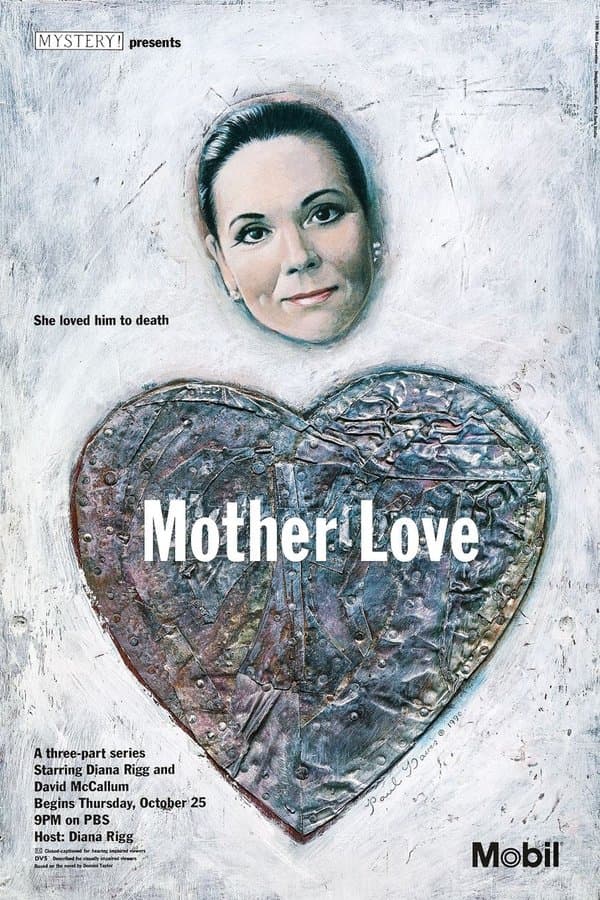
Mother Love
1989 • Drama
A seemingly perfect couple's life unravels when the husband's eccentric mother acts on intense jealousy, seeking revenge through a series of incidents implicating her ex-husband, his new wife, and an old friend, then leading to murder.
Buy related books from Amazon
As an Amazon Associate I earn from qualifying purchases. Read the full disclosure.
Why you should read the novel
Before you press play on the 1989 TV series, experience the original source: Mother Love by Domini Taylor. The novel’s psychological depth, razor-edged suspense, and intimate focus on obsession deliver a richer, more unsettling journey than any screen can fully capture.
Reading the Mother Love novel places you directly inside the characters’ shifting motives and fears, revealing layers of backstory and nuance that a four-part adaptation can only hint at. If you crave dark, elegant psychological thrillers, the book’s precision and insight are irresistible.
For fans of British noir and intelligent suspense, choosing the novel over the series offers unfiltered tension, elegant prose, and a haunting exploration of control, desire, and betrayal. Discover why the book remains the definitive Mother Love experience.
Adaptation differences
Book vs series: the biggest difference is interiority. The novel gives sustained access to the characters’ thoughts, rationalizations, and private histories, sharpening motives and moral ambiguity. The 1989 BBC adaptation, while gripping, must externalize that psychology through performance and visual cues, inevitably streamlining what the book can unpack in detail.
Structure and pacing also diverge. The novel develops its dread with measured escalation and layered subplots; the miniseries, shaped for episodic tension, compresses timelines, consolidates scenes, and emphasizes cliffhangers. These choices make the show propulsive, but the book’s gradual suffocation has a colder, more lingering chill.
Character shading differs subtly. On the page, small gestures, memories, and self-deceptions accumulate to create a complex portrait of possessiveness and need. On screen, star performances and direction tilt tone—heightening menace in some moments, and in others drawing unexpected sympathy—creating a distinct feel from Domini Taylor’s precise psychological calibration.
Thematic emphasis and resolution feel different as well. The adaptation prioritizes visual shock and narrative clarity, while the novel leans into moral ambiguity and psychological fallout. Without spoiling specifics, the book’s conclusion resonates as an inward reckoning; the series delivers a sharper, more immediate jolt, leaving a different aftertaste for viewers than readers.
Mother Love inspired from
Mother Love
by Domini Taylor