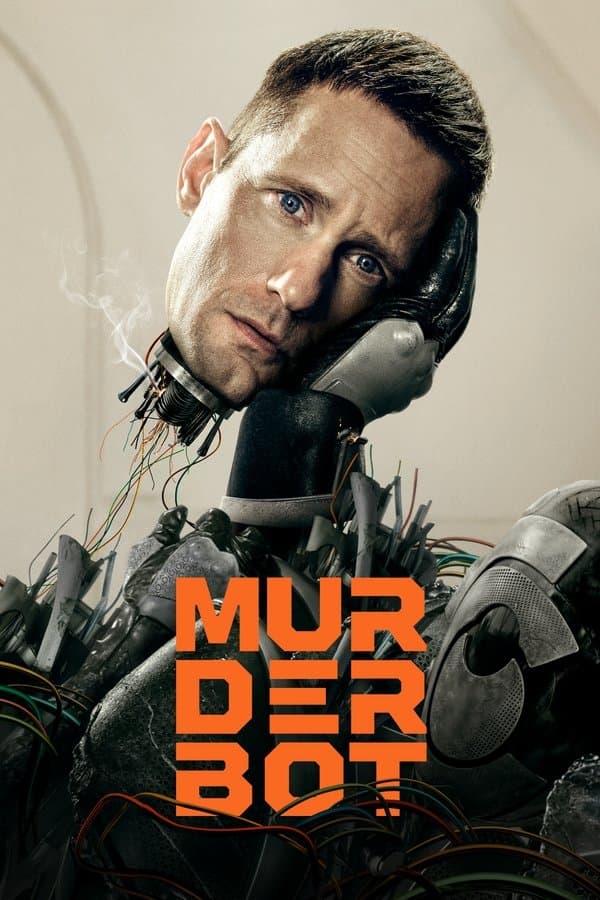
Murderbot
2025 • Comedy, Drama, Sci-Fi & Fantasy • TV-MA
In a high-tech future, a rogue security robot secretly gains free will. To stay hidden, it reluctantly joins a new mission protecting scientists on a dangerous planet... even though it just wants to binge soap operas.
Buy related books from Amazon
As an Amazon Associate I earn from qualifying purchases. Read the full disclosure.
Why you should read the novels
If the Murderbot (2025) TV series caught your eye, the original Murderbot books by Martha Wells deliver the pure, unfiltered experience. The first-person voice—wry, anxious, and piercingly honest—drives every scene, immersing you in the SecUnit’s thoughts in a way no screen can fully match. Start with All Systems Red to meet the award-winning antihero that redefined character-driven science fiction.
Beyond the thrills, The Murderbot Diaries builds a rich, corporate-dominated universe with sharp social commentary. The books linger on consent, autonomy, identity, and found family, giving space for quiet character beats and moral nuance between action set pieces. You’ll get deeper lore, smarter satire, and emotional payoffs that reward close reading.
Reading the source material is the best way to appreciate why this story became a phenomenon. The novellas are brisk and bingeable, and the later novels broaden the scope without losing heart. Experience Murderbot’s authentic tone and layered worldbuilding before (or after) you stream the adaptation.
Adaptation differences
Murderbot (2025) translates Martha Wells’s intensely internal, first-person narration into on-screen dialogue, action, and visual cues. That shift alone changes the feel: the books let you live inside a sardonic SecUnit’s head, while TV must externalize thoughts with performance, voiceover, or added scenes. Expect a different rhythm to the humor and anxiety, with snarky asides and internal panic rendered through expressions, staging, and editing rather than pages of candid self-commentary.
Structure often changes from page to screen. The Murderbot books began as tight, episodic novellas; TV seasons commonly streamline timelines, combine missions, or merge side characters for momentum. You may notice condensed plotlines, reordered reveals, and clearer through-lines for a season arc, making the adaptation feel faster and more mission-driven than the source material’s quieter investigative beats.
Visual worldbuilding also reshapes the story. Designs for SecUnits, drones, habitats, and corporations must be concrete and readable on television, which can simplify tech, rename brands, or standardize interfaces. Action is typically heightened—chases, firefights, and set pieces get more screen time—while some procedural sleuthing or technical problem-solving that unfolds in the books via internal diagnostics is presented as collaborative scenes among the cast.
Character emphasis can shift as well. The series may expand human roles, add backstory, or sharpen antagonists to anchor emotional arcs, whereas the books foreground Murderbot’s evolving boundaries, consent, and trust at a more intimate scale. Themes remain—autonomy, personhood, corporate power—but TV often states them more directly. Reading the novels reveals subtler shades of motive, ethics, and humor that a fast-moving adaptation can only hint at.
Murderbot inspired from
Network Effect
by Martha Wells
Exit Strategy
by Martha Wells
Rogue Protocol
by Martha Wells
System Collapse
by Martha Wells
Fugitive Telemetry
by Martha Wells
Artificial Condition
by Martha Wells
All Systems Red
by Martha Wells