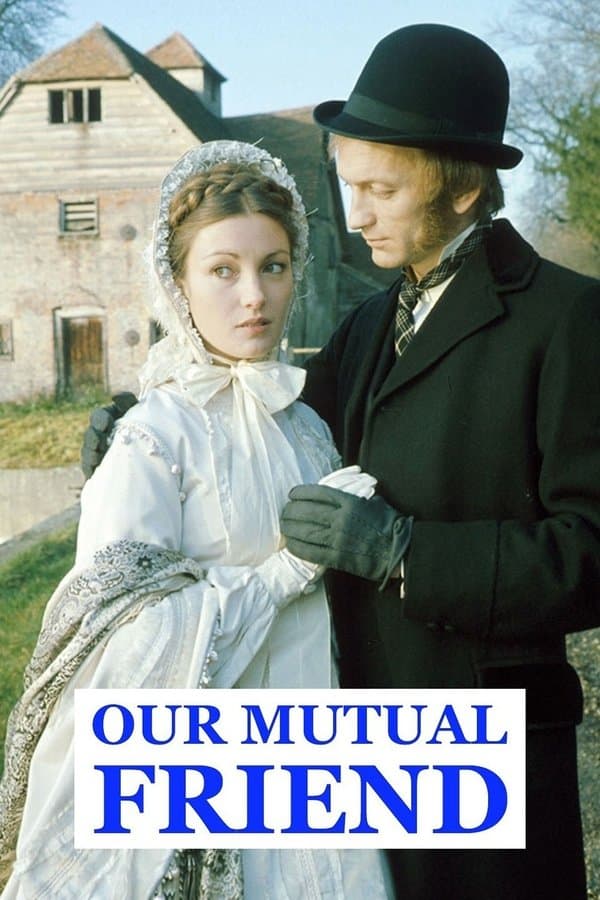
Our Mutual Friend
1976 • Drama
After his father's will stipulates he must marry Bella Wilfer to inherit his fortune, John Harmon fakes his death to avoid the marriage and the threats on his life. He returns as John Rokesmith and becomes the secretary for the Boffins, who inherit Harmon's estate following his alleged death.
Buy related books from Amazon
As an Amazon Associate I earn from qualifying purchases. Read the full disclosure.
Why you should read the novel
Before you stream the TV version, experience Our Mutual Friend by Charles Dickens in the form he intended. The novel’s rich satire of money, class, and identity unfolds through intricate subplots, unforgettable voices, and razor-sharp irony that television can only hint at. Reading the book lets you savor Dickens’s humor, social critique, and suspense at your own pace.
Adaptation differences
Because Our Mutual Friend is a sprawling, serialized Victorian novel, the 1976 adaptation necessarily compresses timelines, consolidates scenes, and pares back digressions. The series streamlines the inheritance mystery and interlocks key revelations sooner and more cleanly for viewers, while the book luxuriates in prolonged suspense, layered clues, and authorial misdirection.
Character emphasis also shifts. The adaptation foregrounds the central romances and primary conflicts—Bella Wilfer, John Rokesmith/John Harmon, Eugene Wrayburn, Lizzie Hexam—while trimming the screen time of social satellites and comic grotesques. As a result, figures such as the Veneerings, the Lammles, Silas Wegg, and Mr. Venus typically feel less expansive than in Dickens’s pages, where their motives and machinations are developed through extended scenes and authorial commentary.
Tone and theme are recalibrated. Dickens’s narrator needles the hypocrisies of wealth, philanthropy, and fashion with sustained irony that no camera can replicate. The 1976 series leans more into romance, mystery, and moral clarity, often softening extremes—such as Boffin’s calculated “miser” performance—to keep sympathies legible, whereas the novel courts reader discomfort before revealing its ethical design.
Set pieces and resolutions are adapted for visual impact. River sequences, confrontations, and recoveries tend to be condensed and less brutal on screen, while the novel dwells on psychological fallout and social consequences. Legal intricacies, coincidences, and the symbolic meaning of the dust mounds are simplified or made more visual in the series, whereas the book uses them as sustained metaphors about value, identity, and the marketplace of Victorian society.
Our Mutual Friend inspired from
Our Mutual Friend
by Charles Dickens