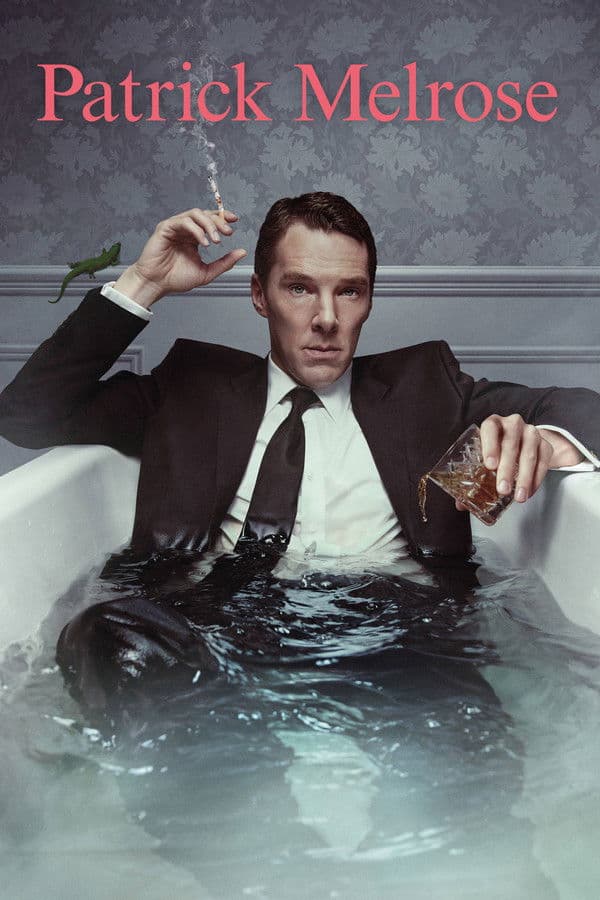
Patrick Melrose
2018 • Drama • TV-MA
A critical and often humorous look at the upper class, tracking the protagonist's harrowing odyssey from a deeply traumatic childhood through adult substance abuse and, ultimately, toward recovery.
Buy related books from Amazon
As an Amazon Associate I earn from qualifying purchases. Read the full disclosure.
Why you should read the novels
Before watching or rewatching the TV series, discover the Patrick Melrose novels by Edward St Aubyn, where the story’s scalpel-sharp wit, moral clarity, and devastating honesty first took shape. St Aubyn’s prose delivers a precision and psychological depth that no screen can fully replicate.
Across Never Mind, Bad News, Some Hope, Mother’s Milk, and At Last, you will encounter the unfiltered interior life of Patrick, the corrosive privileges of the English upper class, and the slow, unsentimental work of recovery. The novels’ rhythm, irony, and voice make every page an immersion that rewards careful reading and rereading.
If you value literary fiction with dark humor, social satire, and emotional intelligence, read the Patrick Melrose books instead of settling for the adaptation. These modern classics offer richer context, bolder insights, and a lasting, thought-provoking experience that continues well beyond the final page.
Adaptation differences
The series is notably faithful, mapping each episode to one novel, yet it compresses timelines, trims subplots, and combines minor characters for pacing. As a result, some satirical side portraits and social textures are streamlined to fit a five-hour arc.
A major difference is interiority. St Aubyn’s free-indirect style and razor-edged inner monologue drive the books; the show must externalize that psychology through performance, visuals, and sparse voiceover. Bad News, largely an interior New York odyssey on the page, becomes a more outward, hallucinatory experience on screen with added or expanded interactions to convey Patrick’s spiraling mind.
Perspective also shifts. Mother’s Milk includes memorable sections from young Robert’s point of view; the adaptation reduces this child’s-eye narration to keep focus on Patrick and the family’s immediate conflicts. More broadly, the series redistributes childhood-abuse memories as recurring flashbacks across episodes, whereas the novels tend to concentrate and then refract those traumas through Patrick’s evolving consciousness.
Tone and closure differ subtly. The books sustain an astringent, ironic ambiguity about redemption; the show emphasizes visual catharsis and a slightly clearer forward movement by the finale. Certain threads—such as the New Age foundation and inheritance maneuvers—are simplified, and some satirical set pieces (notably in the grand country-house social world of Some Hope) are condensed to keep momentum on Patrick’s central emotional arc.
Patrick Melrose inspired from
Mother's Milk
by Edward St Aubyn
Bad News
by Edward St Aubyn
Some Hope
by Edward St Aubyn
Never Mind
by Edward St Aubyn
At Last
by Edward St Aubyn