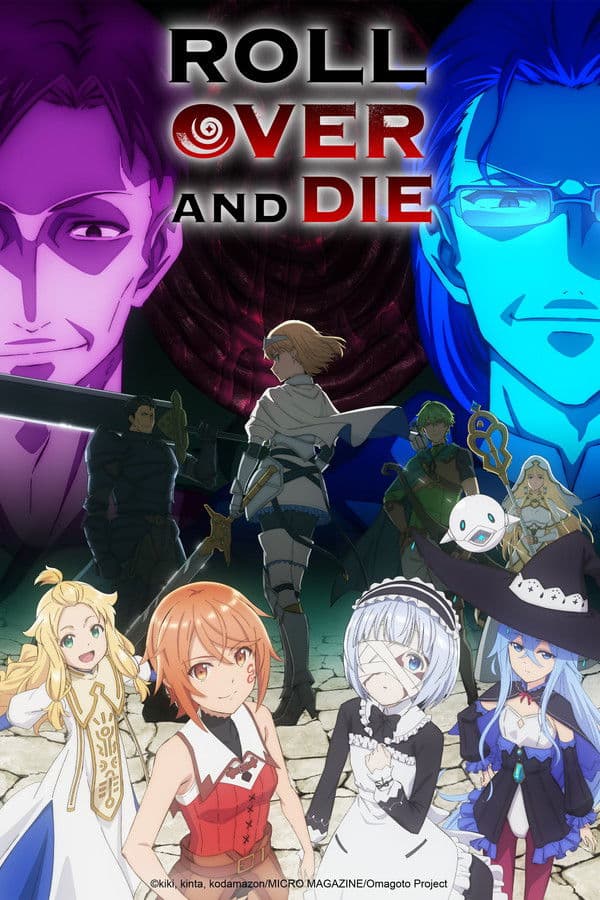
ROLL OVER AND DIE: I Will Fight for an Ordinary Life with My Love and Cursed Sword!
2026 • Action & Adventure, Animation, Drama, Sci-Fi & Fantasy • TV-MA
Flum wasn't chosen for her strength—she has none. No magic, no skill, only an ability called “Reversal” that even she doesn't understand. So why did God place her in the hero's party? After being betrayed and sold into slavery, Flum is abused and eventually thrown to monsters for entertainment. Now faced with death, Flum must choose: be devoured or take up a cursed sword said to kill its wielder.
Buy related books from Amazon
As an Amazon Associate I earn from qualifying purchases. Read the full disclosure.
Why you should read the novels
Before you watch the 2026 TV series, read the English light novels of ROLL OVER AND DIE. Kiki’s original vision delivers unfiltered dark-fantasy stakes, morally fraught choices, and a tender yuri core that adaptations rarely capture in full.
On the page, you live inside the protagonist’s head—feeling every setback, every small victory, and the slow, hard-won trust that fuels her relationship. The novels unpack trauma, agency, and the cursed-sword mechanics with clarity, weaving rich worldbuilding and razor-sharp tension chapter after chapter.
Seven Seas’ English editions (paperback and ebook) are accessible, atmospheric, and bingeable. Prefer visuals? The manga by Sunao Minakata complements the prose with intense action and expressive characterization—making both formats the best way to experience the story before (or instead of) the show.
Adaptation differences
Pacing and scope often shift in TV. Expect early arcs to be compressed, side quests trimmed, and plot beats reordered to fit season length. The books linger on aftermaths and healing, giving emotional weight that a weekly broadcast schedule tends to streamline.
Tone and content standards can differ. The light novels portray brutality, slavery, body horror, and systemic cruelty with stark detail; television frequently softens on-screen violence, shortens disturbing sequences, or implies them off-camera. Reading preserves the full intensity of Kiki’s grimdark vision.
Characterization and romance nuance change with format. The novels’ interior monologues reveal fears, boundaries, and consent, shaping a slow-burn yuri relationship built on trust. On screen, inner thoughts become glances and dialogue, which can accelerate chemistry, merge scenes, or reduce complexity for secondary characters.
Worldbuilding and mechanics face simplification. The game-like status system, curse inversion, and political–religious conspiracy are deeply explained in prose. A TV adaptation may show results without full exposition; the books map rules, loopholes, and consequences in detail—clarifying motivations and raising stakes that casual viewing might miss.
ROLL OVER AND DIE: I Will Fight for an Ordinary Life with My Love and Cursed Sword! inspired from
ROLL OVER AND DIE: I Will Fight for an Ordinary Life with My Love and Cursed Sword! (Manga Adaptation)
by Kiki, Sunao Minakata
ROLL OVER AND DIE: I Will Fight for an Ordinary Life with My Love and Cursed Sword! (Light Novel Series)
by Kiki