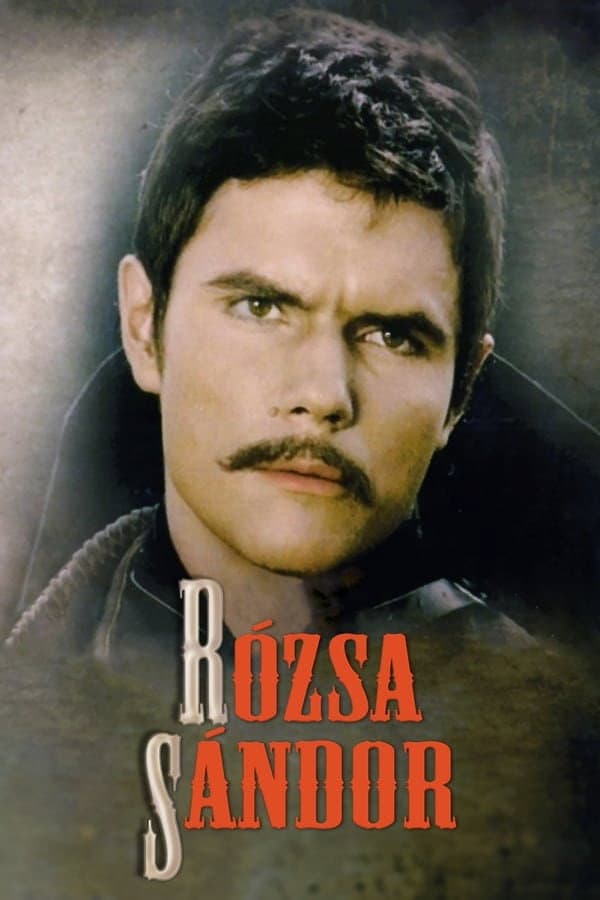
Rózsa Sándor
1971 • Action & Adventure, Drama
The rise and fame of Sándor Rózsa, the infamous outlaw of 19th century Hungary.
Buy related books from Amazon
As an Amazon Associate I earn from qualifying purchases. Read the full disclosure.
Why you should read the novels
If the 1971 TV series Rózsa Sándor captured your imagination, step into the original literary world crafted by Zsigmond Móricz. The novels deliver richer motives, inner conflicts, and the authentic voice of Hungary’s Great Plain—elements screen time can only hint at. Reading the source lets you meet the legendary outlaw on his own terms, line by line.
Móricz’s Rózsa Sándor novels weave gripping outlaw exploits with nuanced social history, from village life to shifting loyalties in a turbulent 19th century. The books offer layered context, cultural detail, and moral ambiguity that reward careful reading and illuminate how legends are made—and unmade—by time, politics, and memory.
Choose the books for deeper character development, fuller subplots, and Móricz’s vivid prose. Explore available English-language editions or translations of Rózsa Sándor Leaps His Horse and Rózsa Sándor Frowns to experience the timeless storytelling that inspired the series—and appreciate every scene with new insight.
Adaptation differences
Scope and structure change substantially from page to screen. The novels span multiple volumes and arcs, but a limited-episode format compresses events, condenses timelines, and streamlines travel, heists, and reprisals into tighter, cliffhanger-ready stories. Many slower-burning chapters and side paths are reduced or omitted to maintain TV pacing.
Character complexity is also reshaped. On the page, Rózsa Sándor’s psychology unfolds through inner doubts, shifting loyalties, and moral gray zones; secondary figures gain intricate backstories that challenge the outlaw’s choices. The adaptation emphasizes action and clearer hero–villain lines, often blending or simplifying characters to clarify motivations quickly for viewers.
Historical framing and themes differ. The novels present a broad social canvas—peasant life, local officials, informants, and the shadow of imperial power—allowing multiple perspectives on justice and rebellion. The series, produced in the early 1970s, tends to foreground collective struggle and more direct class readings, and it moderates depictions of brutality, romance, and lawlessness to fit broadcast sensibilities.
Tone and texture shift from literary to visual storytelling. Móricz’s dense language, folklore-infused atmosphere, and ethnographic detail create a textured, immersive world with extended dialogues and interior monologues. The adaptation favors visual symbolism, faster beats, and episodic resolutions; it introduces composite scenes and altered outcomes to deliver momentum, while the novels linger in ambiguity and consequence.
Rózsa Sándor inspired from
Rózsa Sándor Leaps His Horse
by Zsigmond Móricz
Rózsa Sándor Frowns
by Zsigmond Móricz