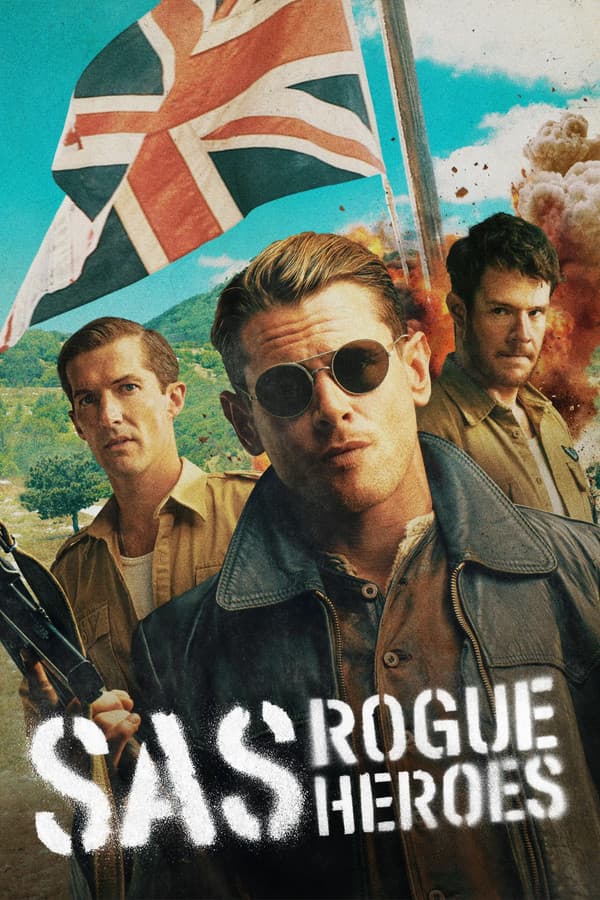
SAS Rogue Heroes
2022 • Action & Adventure, Drama, War & Politics • TV-MA
The dramatised account of how the world’s greatest Special Forces unit, the SAS, was formed under extraordinary circumstances in the darkest days of World War Two.
Buy related books from Amazon
As an Amazon Associate I earn from qualifying purchases. Read the full disclosure.
Why you should read the novel
Love the adrenaline of SAS Rogue Heroes on TV? Read the source: Ben Macintyre’s SAS: Rogue Heroes: The Authorized Wartime History, the definitive, deeply researched account of Britain’s audacious WWII special forces. If you’re searching for the SAS Rogue Heroes book that inspired the series, this is the must-read.
Macintyre blends page-turning storytelling with primary sources—diaries, after-action reports, and interviews—to reveal David Stirling, Jock Lewes, and Paddy Mayne as complex innovators. You’ll get crisp context on the desert war, tactics, and the LRDG partnership that made the SAS possible, all grounded in documented history.
Choosing the book over the series gives you verified timelines, nuanced motivations, and myth-busting clarity, plus photographs and maps. For authentic World War II special forces history—SEO-friendly for readers comparing show vs. book—start with Ben Macintyre’s SAS Rogue Heroes.
Adaptation differences
Tone and style differ sharply. The SAS Rogue Heroes TV series uses a punk-rock soundtrack, hyper-stylized action, and swaggering narration; Ben Macintyre’s book is sober, meticulously sourced nonfiction grounded in archives and veterans’ testimonies. If you’re comparing SAS Rogue Heroes series vs book, expect cinematic flair on screen and documented clarity on the page.
Several characters and relationships are dramatized or composite on television. The show’s Eve Mansour is a fictional creation to embody Allied intelligence links; the book focuses on documented figures. Paddy Mayne’s volatility is heightened on screen, including the oft-told “punching a superior officer” origin; the book presents conflicting evidence and a more measured portrait drawn from records and testimonies.
Timelines and operations are compressed for pacing. Raids and training sequences are combined, some events are relocated, and individual exploits are reassigned to streamline the narrative. The series simplifies the LRDG’s logistical role and gives German adversaries clearer faces, whereas the book details distributed decision-making and the frequently anonymous, attritional nature of desert warfare.
Evidence and emphasis also diverge. The TV adaptation invents dialogue, adds anachronistic slang, and amplifies romance and Cairo nightlife; the book supplies citations, maps, photographs, and careful context. For readers seeking what really happened—and when—the book is the authoritative guide, while the show serves as a stylish, mythmaking introduction.
SAS Rogue Heroes inspired from
SAS: Rogue Heroes: The Authorized Wartime History
by Ben Macintyre