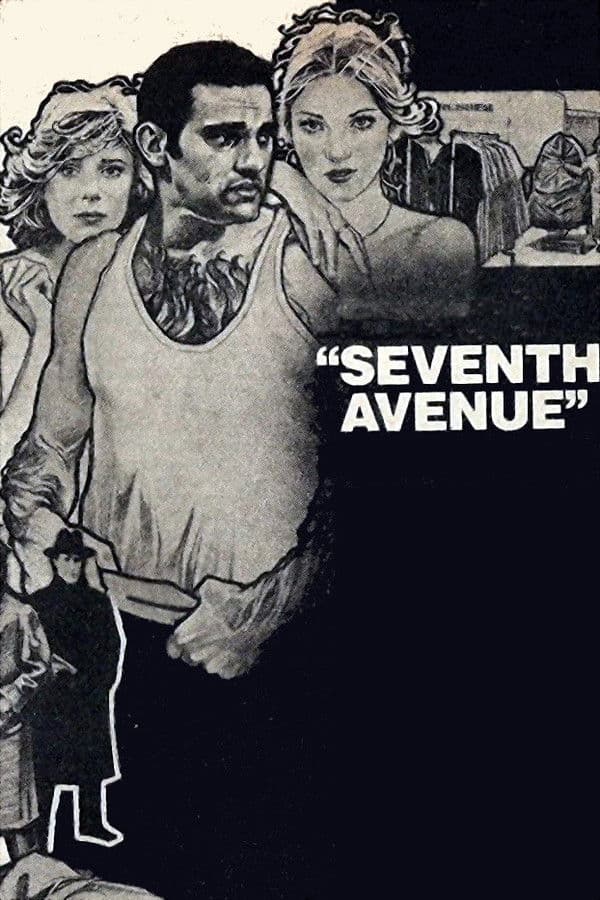
Seventh Avenue
1977 • Drama
A poor young man from New York's Lower East Side determines to overcome his status, and through hard work rises to become a power in the garment industry.
Buy related books from Amazon
As an Amazon Associate I earn from qualifying purchases. Read the full disclosure.
Why you should read the novel
Before you watch the 1977 TV adaptation, discover the original power and sweep of Norman Bogner’s novel Seventh Avenue. The book delivers a deeper, more intimate journey through New York’s garment district—rich with atmosphere, ambition, and the true cost of success.
Bogner’s storytelling captures the grit and glamour of Depression-era and wartime New York with vivid detail, layered characters, and compelling momentum. On the page, the stakes feel sharper, the rivalries cut deeper, and the triumphs and heartbreaks resonate long after you close the book.
If you love character-driven historical drama and the American Dream told with unflinching honesty, read Seventh Avenue by Norman Bogner. Experience the complete vision of the story the miniseries introduced—authentic, immersive, and unforgettable.
Adaptation differences
As with many network miniseries of the 1970s, Seventh Avenue condenses a wide-ranging, multi-year saga into a limited runtime. The show streamlines chronology, groups turning points into set pieces, and uses montages where the novel builds momentum gradually, changing the rhythm and pacing of the rise-to-power narrative.
Characters in the television version are often combined or refocused to serve episodic storytelling. Several secondary relationships and workplace rivalries that unfold over many chapters in the book are simplified, merged, or omitted, reducing the moral ambiguity and slow-burn tensions that Norman Bogner develops on the page.
Tone and content also shift to suit prime-time standards of the era. The miniseries softens or implies elements the novel treats more directly—violence, sexuality, labor strife, and the harsher business tactics—while placing comparatively greater emphasis on romance and melodramatic beats for televised appeal.
Finally, the book offers richer interiority and industry detail: negotiations, fabric and production nuances, supplier politics, and the cultural pressures of immigrant communities. The series conveys some of this visually but trims complexity; motivations are externalized, and resolutions tend to be tidier than the novel’s more layered, psychologically driven conclusions.
Seventh Avenue inspired from
Seventh Avenue
by Norman Bogner