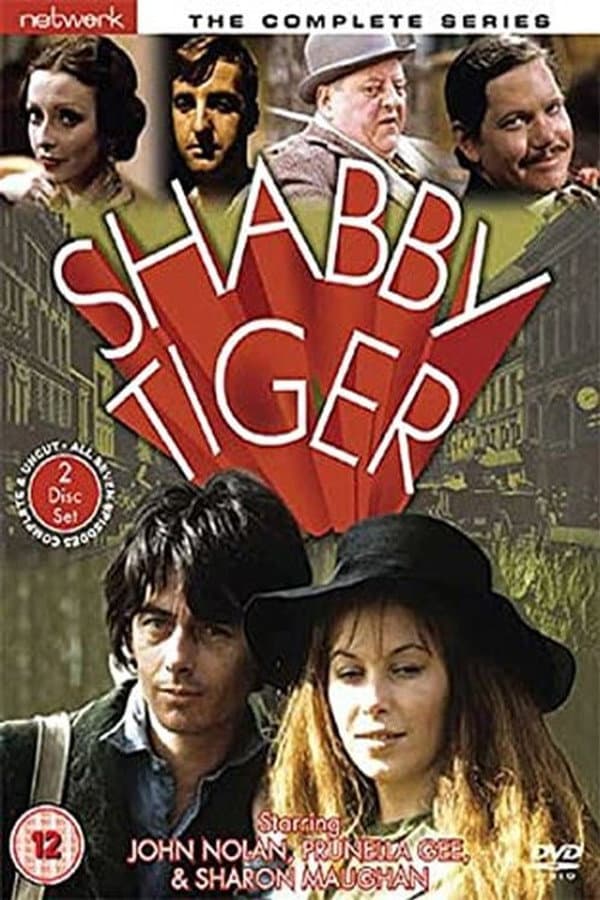
Shabby Tiger
1973 • Drama
Nick Faunt, a Manchester millionaire's son, leaves home at the height of the Depression to become an artist. When he meets Irish serving girl, a strange love story begins.
Buy related books from Amazon
As an Amazon Associate I earn from qualifying purchases. Read the full disclosure.
Why you should read the novels
Before you stream the 1973 TV adaptation, experience Howard Spring’s original vision in Shabby Tiger and its companion novel Rachel Rosing. The books immerse you in 1930s Manchester with vivid, layered storytelling that television can only hint at.
On the page, Spring gives Rachel and Nick the kind of interior life, social context, and moral complexity that make every choice feel earned. His prose captures bohemian ambition, class pressures, and the pulse of a city in upheaval—details that reward slow reading and reflection.
Readers who love British historical fiction, character-driven sagas, and rich period atmosphere will find the novels unmissable. Pick up the English editions by Howard Spring today to discover the complete narrative the series only samples.
Adaptation differences
The 1973 TV series Shabby Tiger compresses and reshapes material from Howard Spring’s novels Shabby Tiger and Rachel Rosing. Where the books unfold across broader timelines and separate arcs, the show foregrounds a tighter, romance-led throughline.
In print, Rachel Rosing and Nick Faunt are developed through interior monologue, backstory, and nuanced social observation. On screen, several motivations are externalized, secondary figures are combined or reduced, and character transformations happen faster to suit episodic pacing.
The novels emphasize social realism—workplace tensions, artistic patronage, class mobility, and the costs of bohemian life—alongside the love story. The adaptation spotlights glamour, fashion, and melodrama, softening some of the grittier economic and cultural textures.
Plotwise, the series trims subplots, reorders events, and streamlines career and financial stakes to maintain momentum. Certain outcomes read as more open-ended or bittersweet in the books, while the TV scripts aim for clarity and closure within limited screen time.
Shabby Tiger inspired from
Rachel Rosing
by Howard Spring
Shabby Tiger
by Howard Spring