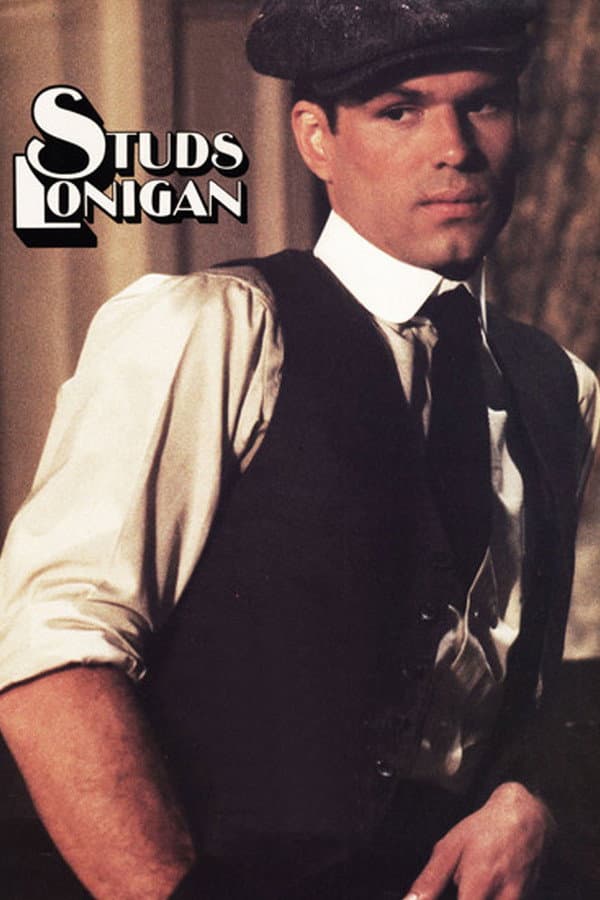
Studs Lonigan
1979 • Drama
Studs Lonigan is a three-part American television miniseries produced by Lorimar Television for NBC, based on the 1932–35 novel trilogy by American author James T. Farrell. Each story is represented in 100-minute episodes: Young Lonigan, The Young Manhood of Studs Lonigan, and Judgment Day.
From 1918 and 1930, Irish-American Bill 'Studs' Lonigan comes of age in Chicago, Illinois, a city full of temptations.
Buy related books from Amazon
As an Amazon Associate I earn from qualifying purchases. Read the full disclosure.
Why you should read the novels
If the 1979 TV series Studs Lonigan intrigued you, the original Studs Lonigan books by James T. Farrell deliver the full, unfiltered story. Reading Young Lonigan, The Young Manhood of Studs Lonigan, and Judgment Day puts you inside early 20th-century Chicago with gritty, authentic detail that television can only hint at.
Farrell’s prose unlocks Studs’s inner life—ambition, fear, Catholic guilt, family pressure, and street bravado—through interior monologue and razor-sharp realism. The trilogy’s language, atmosphere, and social history made it a landmark of American literature and a cornerstone of Chicago fiction.
Choose the novels if you want the uncompromised themes and complete arc: immigration and working-class struggle, ethnic tensions, youthful promise eroded by environment, and the price of choices. For readers of American realism and urban history, the Studs Lonigan trilogy is essential—rich, immersive, and unforgettable.
Adaptation differences
Scope and structure: The 1979 Studs Lonigan TV series vs book trilogy necessarily compresses three novels into limited screen time. Timelines are condensed, minor characters are merged or omitted, and subplots are simplified, which streamlines the story but reduces the books’ sweeping social panorama.
Narrative perspective: Farrell’s novels rely on interior monologue and free indirect discourse to chart Studs’s shifting thoughts, insecurities, and rationalizations. On screen, this psychological depth is externalized into dialogue and performance, changing how audiences understand motives and diminishing the novels’ intense, subjective realism.
Content boundaries: Television standards of the late 1970s soften depictions of sexuality, bigotry, street violence, and raw language present in the books. The adaptation often tones down the harsher naturalism and trims some religious, ethnic, and political controversies, narrowing the gritty texture that defines the novels.
Tone and environment: The series focuses more tightly on key relationships and pivotal incidents, while the books dwell on neighborhood routines, labor clashes, and everyday Chicago street life. As a result, the adaptation can feel more linear and occasionally more sympathetic, whereas the novels sustain a bleaker, deterministic mood and a denser sense of place.
Studs Lonigan inspired from
Young Lonigan
by James T. Farrell
Judgment Day
by James T. Farrell
The Young Manhood of Studs Lonigan
by James T. Farrell