The Adventures of Tom Sawyer
1968 • Action & Adventure
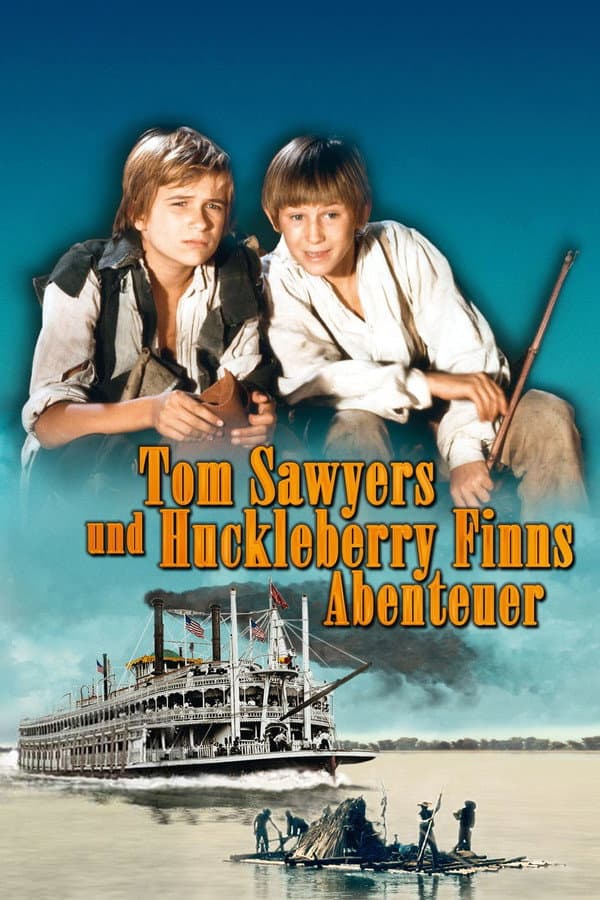
Tom Sawyer and Huckleberry Finn live in a small town on the Mississippi River above St. Louis. Tom is raised by his Aunt Polly, with whom he lives together with his brother Sid. Huckleberry, known as Huck, is homeless and does not go to school—his father is an alcoholic and has been missing for some time, with many believing him to be dead. But Tom and Huck are friends—and will remain so, come what may.
Buy related books from Amazon
As an Amazon Associate I earn from qualifying purchases. Read the full disclosure.
Why you should read the novels
Experience Mark Twain's The Adventures of Tom Sawyer and Adventures of Huckleberry Finn as classic American literature. The original novels deliver wit, adventure, and nuanced satire that television adaptations cannot fully capture.
Reading the unabridged books reveals authentic 19th century dialect, sharp social commentary, and layered character development. Explore the Mississippi River world through Twain's voice, imagery, and humor at your own pace.
Available in affordable editions and public domain ebooks, these Mark Twain novels are ideal for students, teachers, and lifelong readers. Choose the source texts to enjoy deeper themes, richer language, and unforgettable scenes.
Adaptation differences
The 1968 television adaptation, like many family oriented versions, condenses and reorders events. It often blends episodes from The Adventures of Tom Sawyer and, at times, Adventures of Huckleberry Finn into a single episodic arc.
To meet broadcast standards of the era, menace and violence are softened. The graveyard murder, the cave's terror, and Injun Joe's brutality are toned down or abbreviated, with clearer morals and lighter comic emphasis.
Dialogue and dialect are standardized. Twain's vernacular, irony, and narrative asides are reduced, while characters such as Becky Thatcher and Aunt Polly typically receive expanded, more sympathetic screen time, and Huck appears less conflicted.
Production constraints lead to simplified settings and faster resolutions. Scenes conclude neatly for episodic television, and complex themes—race, conscience, superstition, and satire—are streamlined compared with the depth found in the original novels.
The Adventures of Tom Sawyer inspired from
The Adventures of Tom Sawyer
by Mark Twain
Adventures of Huckleberry Finn
by Mark Twain