The Last Convertible
1979 • Drama, Soap, War & Politics
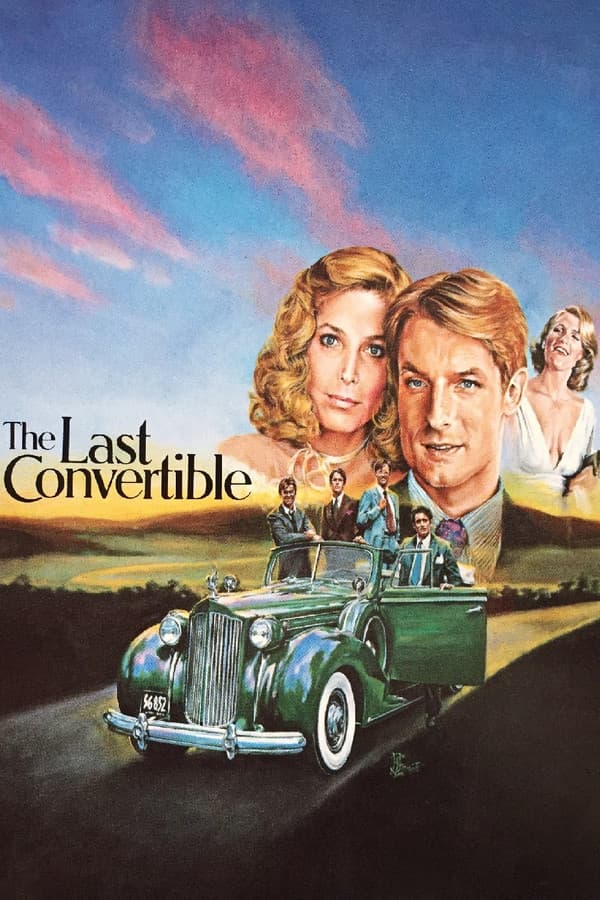
A star-laden adaptation of Anton Myrer's sprawling 1978 novel tracing the lives of five Harvard roommates of the class of '44, following them through the next 30 years. At the center of the story is a green 1939 Packard convertible and Chris Farris, a beautiful Radcliffe girl.
Buy related books from Amazon
As an Amazon Associate I earn from qualifying purchases. Read the full disclosure.
Why you should read the novel
Before you watch the 1979 television adaptation, experience The Last Convertible in its richest form: the acclaimed novel by Anton Myrer. The book offers layered character development, sweeping historical detail, and a deeply felt exploration of friendship, love, and loss across decades of American change.
Reading The Last Convertible by Anton Myrer gives you the complete, uncompressed narrative that inspired the series. The novel immerses you in prewar campus life, World War II’s upheaval, and the postwar search for identity, with nuanced motivations and interior reflections the screen can only hint at. It’s ideal for readers who love historical fiction, campus novels, and multi-generational American sagas.
Choose the book for its evocative prose, rich period atmosphere, and unforgettable symbolism surrounding the titular convertible. Discover why The Last Convertible remains a beloved classic of American literature—perfect for book clubs, collectors of twentieth-century fiction, and anyone seeking the definitive source behind the TV miniseries.
Adaptation differences
The TV miniseries streamlines Anton Myrer’s expansive narrative to fit a limited runtime. Expect condensed timelines, re-ordered events, and composite scenes that move briskly through eras the novel explores at a reflective pace. Significant transitions that unfold gradually in the book may appear as quick montages or simplified turning points on screen.
Character depth is necessarily reduced in the adaptation. Secondary figures are merged or minimized, backstories are trimmed, and much of the interior reflection that shapes motivations in the novel is externalized into dialogue or visual cues. Relationships that evolve over many chapters in the book may seem faster, tidier, or less ambiguous in the series.
Tone and thematic emphasis shift as well. While the show leans into romance, nostalgia, and period spectacle, the novel devotes more space to class privilege, postwar disillusionment, and the costs of ambition and conformity. The car’s glamour reads vividly on screen, but the book layers it with symbolism about freedom, fate, and the passing of an era.
Several subplots and wartime sequences are abbreviated or omitted, altering the weight of certain choices and their consequences. The adaptation often favors clarity and momentum over the novel’s digressions, social context, and epilogues. Reading the source restores those textures—historical nuance, moral complexity, and the long aftermath that the miniseries can only touch upon.
The Last Convertible inspired from
The Last Convertible
by Anton Myrer