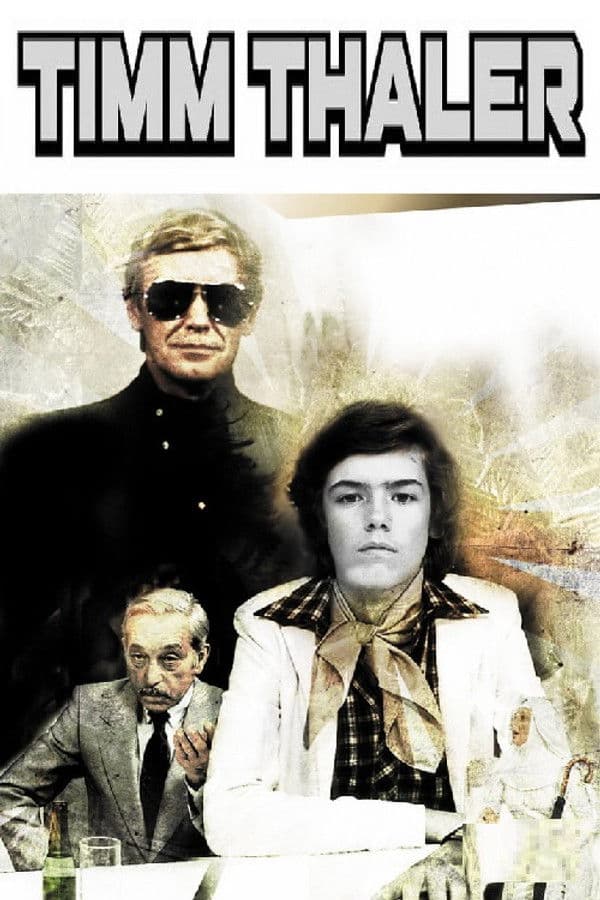
The Legend of Tim Tyler: The Boy Who Lost His Laugh
1979 • Drama, Kids, Sci-Fi & Fantasy
Timm Thaler is a 1979 children's television miniseries based on the 1962 children's novel by German writer James Krüss. The series originally aired in Germany as the first Christmas series on German national broadcaster ZDF. In 1988, the series was acquired for transmission in the United Kingdom by the BBC. The English version was produced by Angela Beeching, with script by Nel Romano, and retitled The Legend of Tim Tyler. It aired during Children's BBC in the weekday afternoons. The screenplay was written by Justus Pfaue and Peter M. Thouet and differs somewhat from the original novel. Directed by Sigi Rothemund, the series became a hit in Germany and made then 14-year-old Tommi Ohrner, in the lead role of Timm Thaler, a popular teen idol of the era. The role of the Baron was played by Horst Frank.
Buy related books from Amazon
As an Amazon Associate I earn from qualifying purchases. Read the full disclosure.
Why you should read the novel
If you loved The Legend of Tim Tyler: The Boy Who Lost His Laugh (1979), discover the irresistible source: Timm Thaler, or The Traded Laughter by James Krüss. The novel’s sparkling voice, sly wit, and emotional depth turn a clever premise into a timeless classic you’ll want to revisit.
Reading the James Krüss novel delivers a richer journey than any screen version. You’ll find nuanced moral questions, lyrical wordplay, and satirical observations that make this Faustian bargain story uniquely thought‑provoking—perfect for fans of classic children’s literature and modern fairy tales alike.
Choose the book to experience Krüss’s full storytelling magic: the rhythm of his prose, the inner life of Timm, and the sharper bite of its social critique. Find Timm Thaler, or The Traded Laughter in print, ebook, or audiobook and enjoy the definitive version of this beloved tale.
Adaptation differences
Structure and pacing: the 1979 TV serial expands the plot into episodic adventures and chase-driven set pieces suited to television. The novel is tighter and more fable-like, propelled by a distinctive narrative voice rather than action.
Tone and themes: the series emphasizes family-friendly humor and adventure, softening some of the story’s darker, Faustian implications. The book probes conscience, free will, and the price of success with sharper satire and a more reflective mood.
Character focus: to sustain multiple episodes, the adaptation broadens or invents supporting arcs and gives the antagonist a more screen‑ready presence. On the page, Timm’s inner life and the allegorical, enigmatic nature of Baron Lefuet take center stage, adding psychological and moral complexity.
Setting and resolution: the show feels anchored in a contemporary late‑1970s world and tends to resolve conflicts neatly. The novel reads as more timeless, and its conclusion preserves a bittersweet aftertaste—underscoring consequences and restoring nuances that screen storytelling can only hint at.
The Legend of Tim Tyler: The Boy Who Lost His Laugh inspired from
Timm Thaler, or The Traded Laughter
by James Krüss