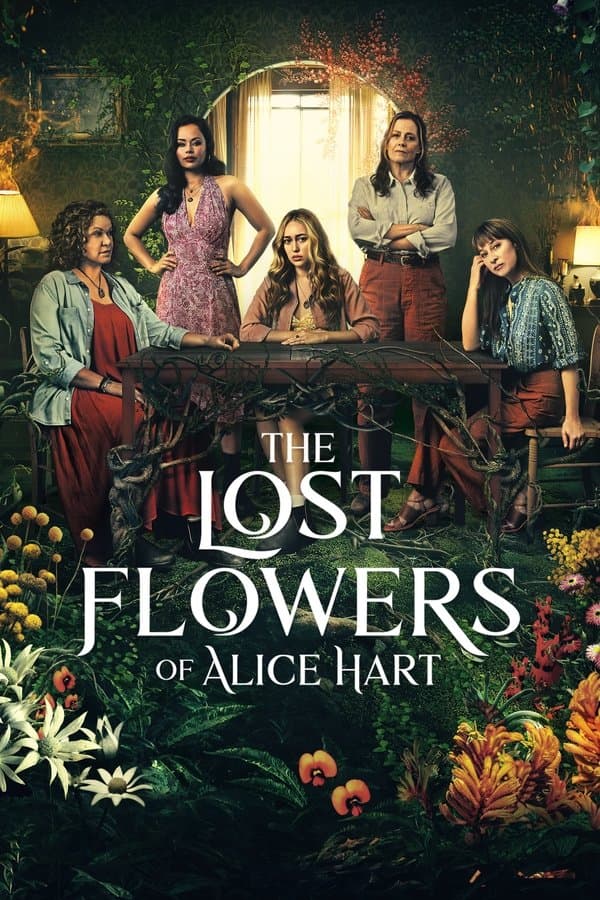
The Lost Flowers of Alice Hart
2023 • Drama, Mystery • TV-MA
After losing her parents in a mysterious fire, nine-year-old Alice Hart is raised by her grandmother June on a flower farm where she learns there are secrets within secrets. But years on, an unearthed betrayal sees Alice forced to face her past.
Buy related books from Amazon
As an Amazon Associate I earn from qualifying purchases. Read the full disclosure.
Why you should read the novel
If you loved the TV series, read The Lost Flowers of Alice Hart book by Holly Ringland to experience the story in its richest form. The novel’s lyrical prose, intimate interiority, and vivid Australian flora create layers of meaning the screen can only suggest. Discover the original vision that inspired the adaptation—perfect for readers seeking emotionally resonant literary fiction with depth and heart.
Holly Ringland’s novel offers the complete language of Australian native flowers, weaving their meanings into every chapter. This immersive detail turns the book into a meditation on survival, identity, and healing. For book lovers comparing The Lost Flowers of Alice Hart book vs TV series, the page delivers symbolism, nuance, and context that reward slow, reflective reading.
Choose the novel to explore scenes, backstories, and character motivations that unfold with quiet power. Whether you prefer paperback, ebook, or audiobook, reading The Lost Flowers of Alice Hart lets you pause, underline, and return to favorite passages. Start with the source material to appreciate the adaptation more—and to savor a contemporary Australian classic on its own terms.
Adaptation differences
One of the clearest differences between the TV series and the book is narrative focus. The show frequently intercuts timelines and expands June’s and Agnes’s perspectives, while the novel primarily centers Alice’s inner world, especially early on. Readers who want the most complete understanding of Alice’s thoughts, memories, and private reckonings will find them more fully developed on the page.
The series condenses and reorders events for momentum, adding or combining supporting characters to externalize themes and conflicts. The book’s pacing is more measured, allowing relationships and revelations to unfold gradually. If you are searching for differences between The Lost Flowers of Alice Hart book and series, expect streamlined plot beats on screen versus layered, incremental discovery in the novel.
Floral symbolism operates differently in each medium. The novel embeds a detailed language of Australian native flowers—often framing chapters with meanings that mirror Alice’s emotional shifts. The show uses visual motifs and select references but cannot replicate the book’s full botanical lexicon or the weight of Alice’s internal associations. Reading the source lets you decode each bloom’s significance in context.
Tone and resolution also diverge. The adaptation leans into clearer on-screen catharsis and more definitive confrontations, while the novel often favors quieter ambiguity and reflection. For viewers wondering what the show changed, the book offers subtlety, interior stakes, and an ending that resonates in a more contemplative register—rewarding readers who want a deeper, literary conclusion.
The Lost Flowers of Alice Hart inspired from
The Lost Flowers of Alice Hart
by Holly Ringland