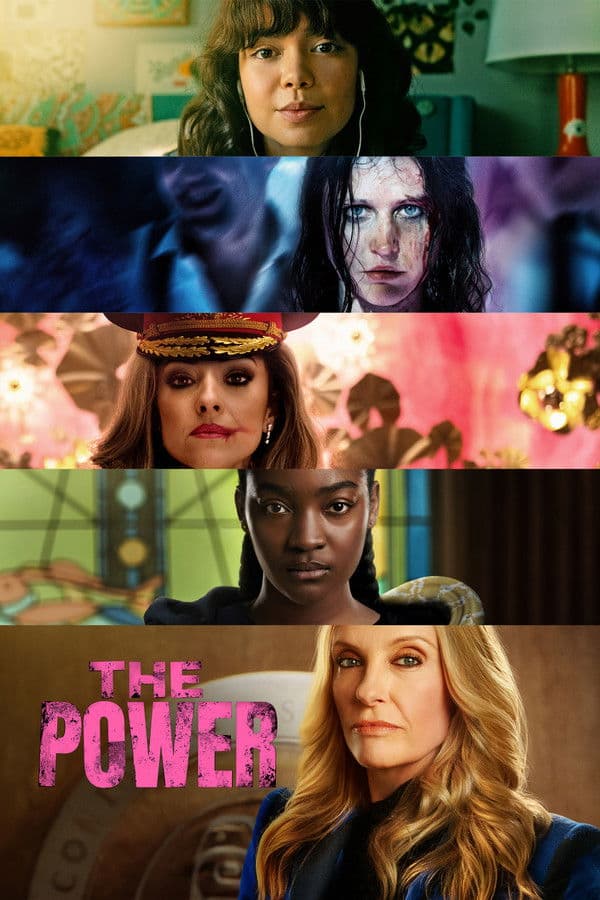
The Power
2023 • Drama, Mystery, Sci-Fi & Fantasy • TV-MA
The world of The Power is our world, but for one twist of nature. Suddenly teenage girls develop the power to electrocute people at will. Following remarkable characters from London to Seattle, Nigeria to Eastern Europe, the Power evolves from a tingle in teenagers’ collarbones to a complete reversal of power balance.
Buy related books from Amazon
As an Amazon Associate I earn from qualifying purchases. Read the full disclosure.
Why you should read the novel
Before you stream The Power TV series, experience Naomi Alderman’s groundbreaking novel that started it all. The Power is a provocative, award-winning dystopian science fiction book that reimagines gender, control, and the cost of revolution with breathtaking clarity.
The novel’s multi-perspective narrative—spanning Roxy, Allie (Mother Eve), Tunde, and Margot—delivers razor-sharp social commentary, immersive worldbuilding, and a daring structure you can only fully appreciate on the page. Its inventive framing device and satirical bite make the reading experience uniquely gripping and thought-provoking.
Winner of the 2017 Women’s Prize for Fiction, The Power offers twists, scope, and an audacious ending the show has not yet reached. Read the original source material to get the complete vision, deeper context, and unforgettable shocks.
Adaptation differences
Structure and framing: The novel uses a bold meta framing device—presented as a historical text with letters and artifacts—that satirically flips gendered assumptions. The TV series tells the story more straightforwardly, dropping the epistolary frame and faux-academic materials.
Scope and timeline: Naomi Alderman’s book spans years and a widening global upheaval, tracing how societies reorganize and conflict escalates. Season 1 of the adaptation largely stays in the early days of the phenomenon, focusing on origin stories and immediate consequences rather than the novel’s long-term endgame.
Character emphasis and pacing: Both versions follow Roxy, Allie (Mother Eve), Tunde, and Margot, but the series redistributes emphasis and slows certain transformations. The show expands family dynamics and personal fallout around Margot and Jocelyn, deepens on-the-ground reportage with Tunde, and lingers on Allie’s formation of a movement, while streamlining or delaying later-book turns.
Tone and depiction: On the page, the satire is sharper and more overt, with chilling historical asides and a mounting sense of inevitability. On screen, the tone skews more intimate and survival-focused, visualizing the power (skein) with effects, updating tech and social media textures, and tempering some of the book’s broader geopolitical sweep and darkest implications—at least in the early going.
The Power inspired from
The Power
by Naomi Alderman