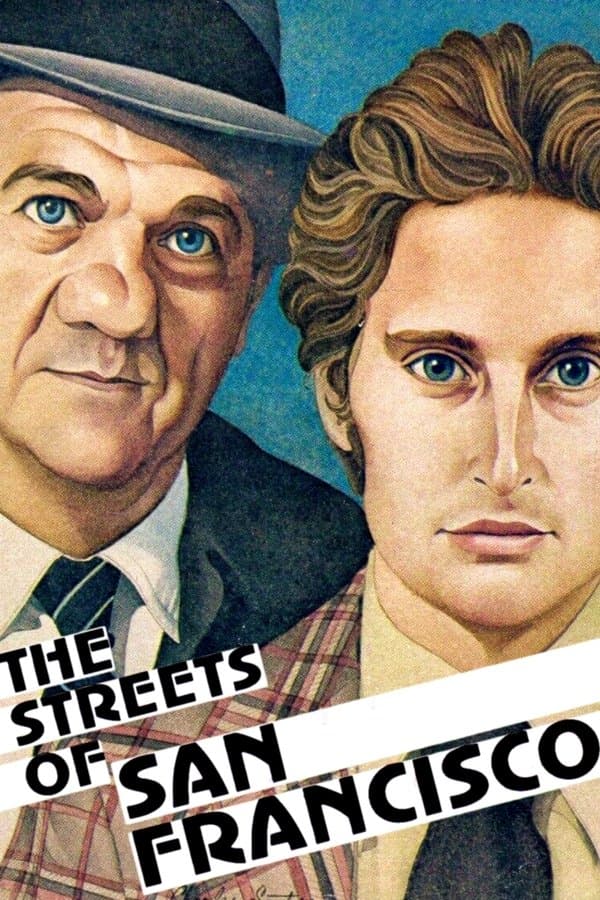
The Streets of San Francisco
1972 • Action & Adventure, Crime, Drama • TV-PG
Two police officers, the older Lt. Stone and the young upstart Inspector Keller, investigate murders and other serious crimes in San Francisco. Stone would become a second father to Keller as he learned the rigors and procedures of detective work.
Buy related books from Amazon
As an Amazon Associate I earn from qualifying purchases. Read the full disclosure.
Why you should read the novels
Before the classic 1972 TV series The Streets of San Francisco, there was Carolyn Weston’s breakout crime novel Poor, Poor Ophelia. Reading the original book reveals the sharper edges, richer atmosphere, and authorial intent behind the source material that inspired the show’s mentor–rookie dynamic.
On the page, veteran detective Al Krug and college-educated Casey Kellog deliver a deeper, more psychologically layered partnership than network TV could consistently portray. Weston’s brisk prose, tight plotting, and Santa Monica streetscapes create a vivid crime-fiction experience that rewards readers who crave authentic police work and character nuance.
If you love the series, explore the complete Al Krug and Casey Kellog trilogy—Poor, Poor Ophelia, Susannah Screaming, and Rouse the Demon—for unfiltered suspense, gritty realism, and the original voice that shaped a television landmark. Discover why crime-fiction fans still seek out these novels to compare page versus screen.
Adaptation differences
Source and setting: the TV series is loosely based on Carolyn Weston’s novel Poor, Poor Ophelia, which is set in Santa Monica, not San Francisco. Moving the action north fundamentally changes the city’s texture—foggy hills, cable cars, and bayfront vistas replace West L.A.’s sun-baked neighborhoods—shifting mood, case types, and local color.
Characters reimagined: Weston’s detectives are Al Krug, a gruff veteran cop, and Casey Kellog, a younger, college-educated partner. The series rebrands them as Lt. Mike Stone and Inspector Steve Keller, keeping the generational push–pull but altering backstories, temperament, and even the mentorship tone to suit Karl Malden and Michael Douglas’s on-screen chemistry.
Tone and structure: the novels lean darker and more procedural, with interior viewpoints, moral ambiguity, and adult tension. Network television imposed standards and an episodic Quinn Martin format—cold open, act breaks, and climactic chases—that trims psychological detours, softens violence and sexuality, and resolves cases neatly within the hour.
Plotlines and themes: the TV pilot condenses and reshapes Poor, Poor Ophelia to fit a one-episode arc, streamlining suspects and subplots. Recurring novel threads and bureaucratic frictions are reduced or removed, while the series emphasizes case-of-the-week morality and location-driven action. Reading the books reveals the original pacing, thematic depth, and character arcs behind the adaptation.
The Streets of San Francisco inspired from
Rouse the Demon
by Carolyn Weston
Poor, Poor Ophelia
by Carolyn Weston
Susannah Screaming
by Carolyn Weston