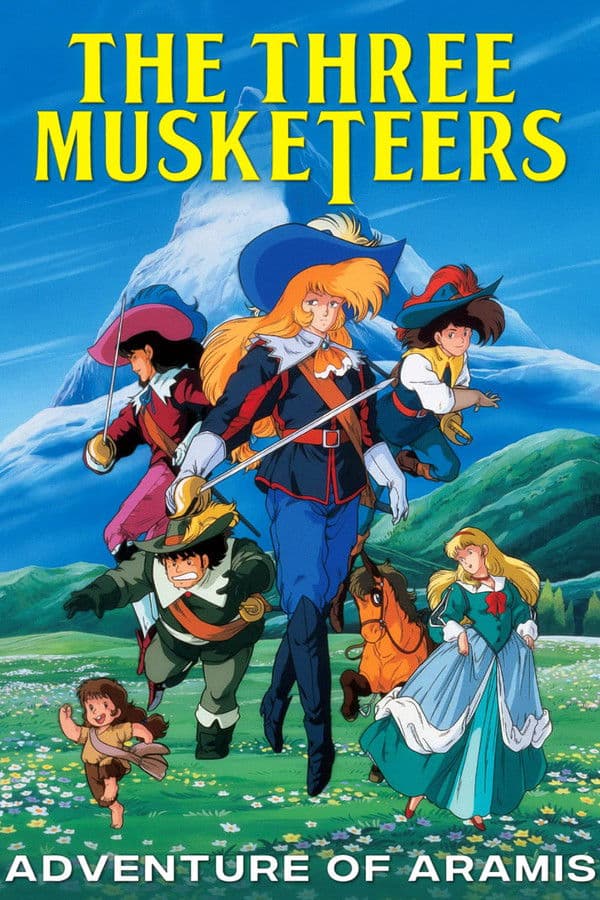
The Three Musketeers: Adventure of Aramis
1987 • Action & Adventure, Animation, Family
D'Artagnan journeys from Gascony to Paris to become a musketeer. He meets Jean, Constance, and three legendary swordsmen. Together they face Cardinal Richelieu, Rochefort, Milady, and the Man in the Iron Mask.
Buy related books from Amazon
As an Amazon Associate I earn from qualifying purchases. Read the full disclosure.
Why you should read the novels
Before you stream The Three Musketeers: Adventure of Aramis (1987), experience the vivid originality of Alexandre Dumas’s The Three Musketeers in English. The novel’s daring duels, high-stakes politics, and sparkling wit unfold with a depth no screen version can fully match.
Reading the source unlocks richer character motives, razor-sharp dialogue, and the full scope of intrigue around Richelieu, the Queen, and Buckingham. Dumas’s pacing and humor make the classic irresistible, whether you choose an unabridged print, ebook, or audiobook edition.
And the adventure doesn’t stop at one book: continue with Twenty Years After and The Vicomte of Bragelonne: Ten Years Later (including the Man in the Iron Mask arc). These sequels expand Aramis’s ambitions, the musketeers’ evolving loyalties, and the historical sweep that adaptations only hint at.
Adaptation differences
The most striking change in The Three Musketeers: Adventure of Aramis (1987) is Aramis’s portrayal. The series presents Aramis with a concealed identity that reframes relationships and plot beats, while Dumas’s novel depicts Aramis as a male musketeer—pious, poetic, and politically astute—whose clerical ambitions and intrigues shape the trilogy’s long game.
Tone and audience also diverge. The 1987 series leans into family‑friendly adventure, softening violence, romantic entanglements, and the darker consequences of espionage. By contrast, the book features sharper moral ambiguity, perilous duels, assassination plots, and adult complexities surrounding Cardinal Richelieu, Milady de Winter, and Constance Bonacieux.
Plot structure is streamlined for television. The adaptation condenses timelines, reorders events, and adds original episodic capers, often abbreviating or reshaping arcs tied to La Rochelle, Buckingham, and Milady. Dumas’s narrative builds intricate cause‑and‑effect, where letters, disguises, and shifting alliances pay off across many chapters with meticulous detail.
Characterizations shift to fit the series’ emphasis on camaraderie and lighthearted heroism. D’Artagnan’s recklessness is gentler, Milady is less ruthlessly depicted, and Richelieu is framed with simpler motivations. In the novel, personal ambition (especially Aramis’s), political calculation, and moral compromise drive outcomes—elements the adaptation trims or recasts to keep the story brisk, upbeat, and suitable for younger viewers.
The Three Musketeers: Adventure of Aramis inspired from
Twenty Years After
by Alexandre Dumas
The Three Musketeers
by Alexandre Dumas
The Vicomte of Bragelonne: Ten Years Later
by Alexandre Dumas