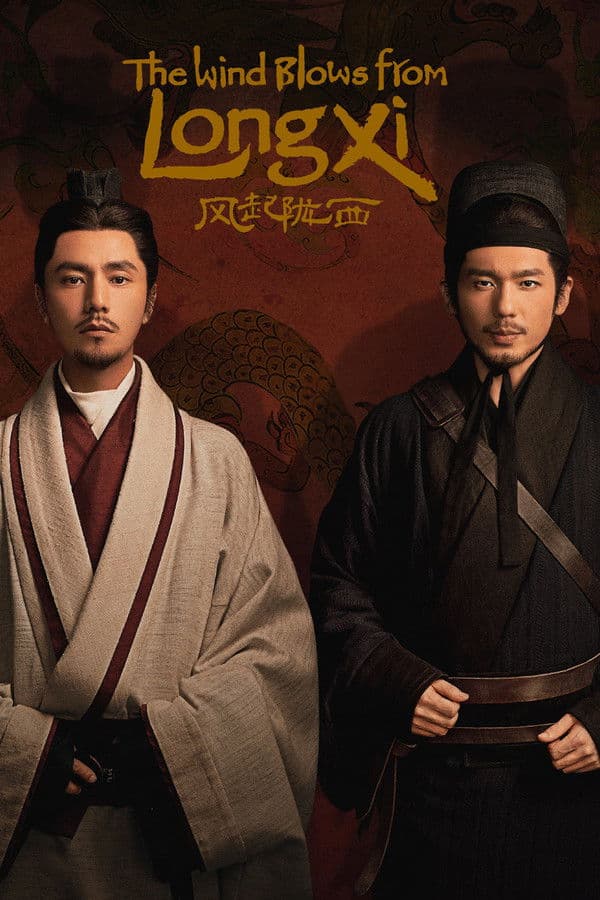
The Wind Blows From Longxi
2022 • Drama, Mystery
The year is 228 of the Common Era, and China is divided into Three Kingdoms, which find themselves at odds with each other. A seemingly decisive battle has just taken place, with the Shu army clashing with the Wei. But military leaders in the state of Shu believe that the battle’s result was swayed by a campaign of misinformation – with faulty information leading to a critical misjudgment. They believe that this was all masterminded by Chen Gong (Chen Kun), a powerful spy believed to be located somewhere in Wei lands.
“The Wind Blows from Longxi” is a 2022 Chinese drama series that was directed by Lu Yang.
Buy related books from Amazon
As an Amazon Associate I earn from qualifying purchases. Read the full disclosure.
Why you should read the novel
If the taut, shadowy world of The Wind Blows from Longxi captivated you on screen, the original Ma Boyong novel offers an even sharper edge. On the page, you’ll find leaner pacing, tighter cat-and-mouse maneuvers, and a richer immersion in Three Kingdoms tradecraft that rewards close reading and rereading.
Ma Boyong’s prose dives deep into authentic intelligence methods—codes, couriers, covers, and countermeasures—set against meticulously researched historical logistics. Every dead drop, forged dispatch, and misdirection carries weight, building a cerebral, slow-burn tension that historical spy fiction readers love.
Choose the book if you want unfiltered access to the spies’ inner lives—their doubts, loyalties, and moral calculations that blur the line between survival and duty. Reading The Wind Blows from Longxi is the most direct way to experience Ma Boyong’s intent and the full nuance often compressed in any screen adaptation.
Adaptation differences
Scope and structure: the novel stays tightly focused on the mechanics of espionage and a contained chain of operations, while the series broadens the canvas. On screen, you’ll see expanded world‑building across Shu and Wei, more intercut command-room decisions, and added set pieces that space out key revelations for episodic cliffhangers.
Characterization and point of view: the book privileges close interiority—particularly around key operatives—so you inhabit their calculations moment by moment. The adaptation necessarily externalizes much of that through dialogue, flashbacks, and visual cues, while also amplifying secondary figures and, at times, consolidating or renaming minor roles to streamline the cast.
Tone and emphasis: the source reads like historical noir—morally gray, restrained, and methodical. The series leans further into themes of allegiance, sacrifice, and statecraft, smoothing a few rough edges of tradecraft minutiae and dialing up visual mood, costuming, and action to meet cinematic expectations and pacing.
Plot mechanics and outcomes: the show often reorders when and how information surfaces, clarifies certain codes or procedures for clarity, and condenses investigations that unfold more granularly on the page. Endings and epilogues are tuned for closure and resonance on television, whereas the novel leaves more room for ambiguity and lingering moral aftertaste.
The Wind Blows From Longxi inspired from
The Wind Blows from Longxi
by Ma Boyong