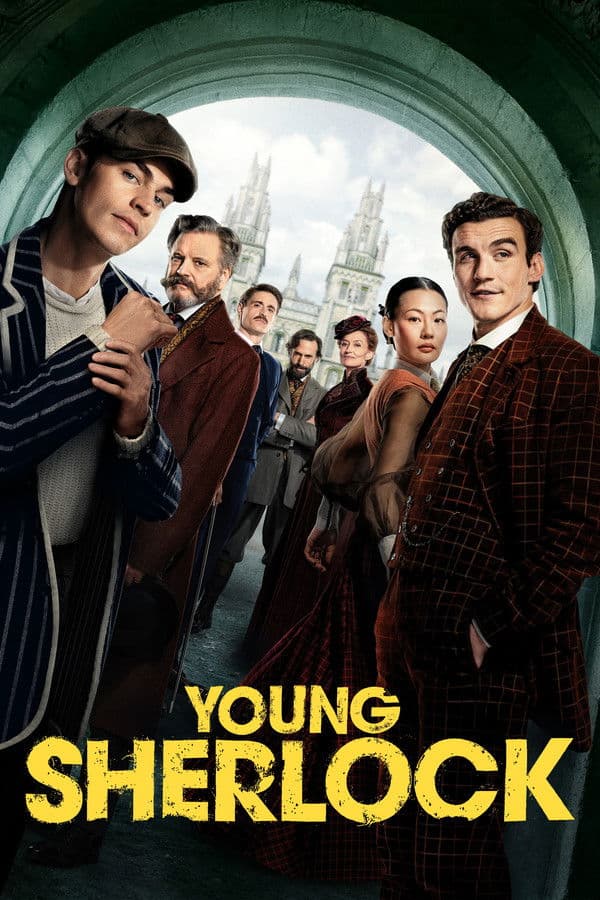
Young Sherlock
2026 • Action & Adventure, Mystery • TV-14
Sherlock Holmes is a disgraced young man, raw and unfiltered, when he finds himself wrapped up in a murder case that threatens his liberty. His first ever case unravels a globe-trotting conspiracy that changes his life forever.
Buy related books from Amazon
As an Amazon Associate I earn from qualifying purchases. Read the full disclosure.
Why you should read the novels
Before you stream a single episode, step into the original Young Sherlock Holmes novels by Andrew Lane. Beginning with Death Cloud, these richly researched adventures plunge you into Victorian Britain as a brilliant boy learns observation, logic, and courage the hard way. Lane’s world-building, historical texture, and grounded mysteries deliver a slow-burn origin story no screen can fully match.
Across eight page-turning books, you’ll follow Sherlock’s evolving friendships, complicated family ties, formative mentors, and dangerous nemeses. Each novel layers cunning puzzles with character growth, revealing how setbacks, experiments, and moral choices forge the detective we love. If you crave vivid settings, clever twists, and authentic detective craft, the books are the definitive experience.
Available widely in paperback, ebook, and audiobook, the series is easy to start and impossible to put down. Begin with Death Cloud, then continue through Red Leech (Rebel Fire), Black Ice, and beyond for a complete, immersive journey. Read the source and discover the sharpest version of young Sherlock—on the page, where every clue counts.
Adaptation differences
Scope and pacing are where readers will notice the biggest gap. The Young Sherlock Holmes books build mysteries across chapters—and sometimes across volumes—allowing clues, red herrings, and historical detail to breathe. A TV adaptation typically compresses timelines, combines plot threads, and restructures chronology for episodic momentum, which can streamline intrigue but trims the novels’ layered buildup.
Character focus often shifts on screen. In the books, Sherlock’s mentorship, his complex rapport with Mycroft, and friendships formed in peril receive substantial, reflective page time. Television frequently merges characters, adjusts ages, or revises backstories to keep ensembles tight and arcs immediate. The novels offer deeper interiority—what Sherlock thinks, fears, and deduces—while an adaptation may externalize that with dialogue and action.
Tone and theme can diverge as well. Andrew Lane balances grit with a YA sensibility: intellectual curiosity, ethical dilemmas, and the costs of genius. Series adaptations tend to dial up spectacle, romance subplots, or contemporary humor to broaden appeal. Expect different calibrations of peril and violence on screen; the books lean into method, consequence, and growth in ways that reward attentive reading.
Finally, the mechanics of deduction inevitably change mediums. On the page, you sit inside Sherlock’s head as he tests hypotheses, runs experiments, and learns fieldcraft step by meticulous step. Television must visualize that process—through montages, stylized graphics, or rapid cuts—which can be thrilling but shorter on rationale. Reading the source gives you every breadcrumb, letting you solve the case alongside him and appreciate how each tiny observation unlocks the truth.
Young Sherlock inspired from
Young Sherlock Holmes: Night Break
by Andrew Lane
Young Sherlock Holmes: Red Leech (Rebel Fire in the US)
by Andrew Lane
Young Sherlock Holmes: Death Cloud
by Andrew Lane
Young Sherlock Holmes: Knife Edge
by Andrew Lane
Young Sherlock Holmes: Snake Bite
by Andrew Lane
Young Sherlock Holmes: Black Ice
by Andrew Lane
Young Sherlock Holmes: Stone Cold
by Andrew Lane
Young Sherlock Holmes: Fire Storm
by Andrew Lane