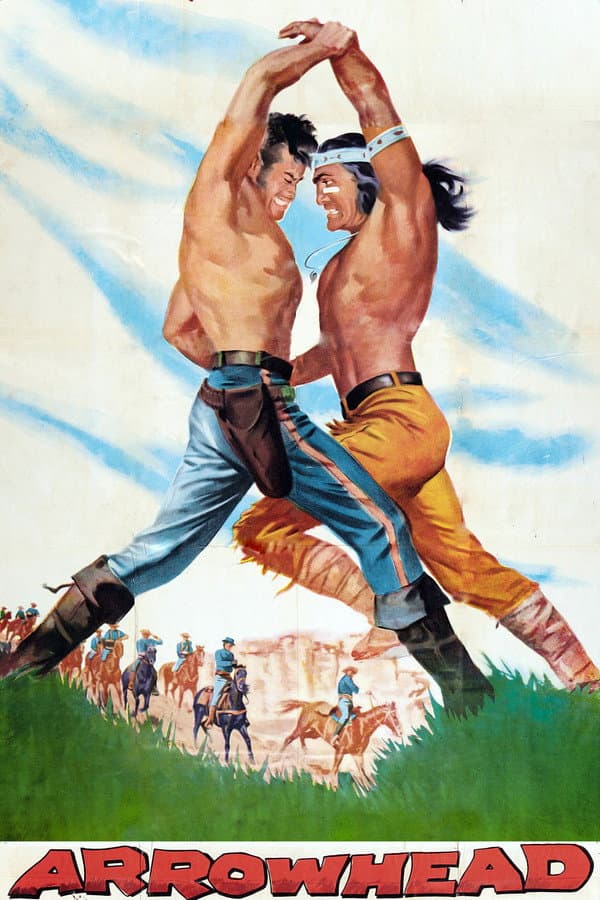
Arrowhead
1953 • Action, Western • NR
Chief of Scouts Ed Bannon works for the US Army at Fort Clark, Texas and he dreams of aiding in bringing peace to the region, despite opposition from both the Army and the Apaches.
Runtime: 1h 45m
Buy related books from Amazon
As an Amazon Associate I earn from qualifying purchases. Read the full disclosure.
Why you should read the novel
Before you watch Arrowhead (1953), experience W. R. Burnett’s original vision in the novel Adobe Walls. This classic Western delivers richer context, layered motivations, and an immersive frontier atmosphere that the screen can only hint at.
Burnett’s storytelling places you inside tense negotiations, fraught alliances, and hard choices shaped by terrain, policy, and pride. His sharp prose gives every character—from seasoned scouts to military officers and tribal leaders—distinct voices and credible stakes, crafting a world that feels earned, not staged.
If you love robust historical detail, morally complex showdowns, and the unvarnished grit of the American West, Adobe Walls is the definitive way to engage with Arrowhead’s source material. Read the book to discover the nuance behind the movie’s most explosive moments.
Adaptation differences
The Arrowhead film streamlines the broader canvas of Adobe Walls, narrowing the story to faster confrontations and a single driving conflict. The novel unfolds across a wider field of viewpoints and tensions, spending more time on strategy, policy, and the uneasy truce between frontier communities and the Army.
Characterization is deeper in the book. Adobe Walls explores internal monologues, backstories, and shifting loyalties, while the adaptation condenses or renames figures and merges roles to keep the plot brisk. On screen, archetypes dominate; on the page, even antagonists gain complexity and unexpectedly sympathetic angles.
Tonal emphasis changes, too. The movie heightens action and romance beats, trims political nuance, and aligns outcomes with era-specific studio and Production Code expectations. Burnett’s novel sustains a harsher moral ambiguity, franker violence, and a more pointed critique of frontier policy and its human costs.
Setting and cultural detail are simplified in the film. Adobe Walls offers more granular geography, treaty context, and cross-cultural dynamics, while the adaptation compresses timelines and particulars to maintain pace. The result is a clearer, punchier climax on screen, versus the novel’s more lingering, consequential aftermath.
Arrowhead inspired from
Adobe Walls
by W. R. Burnett