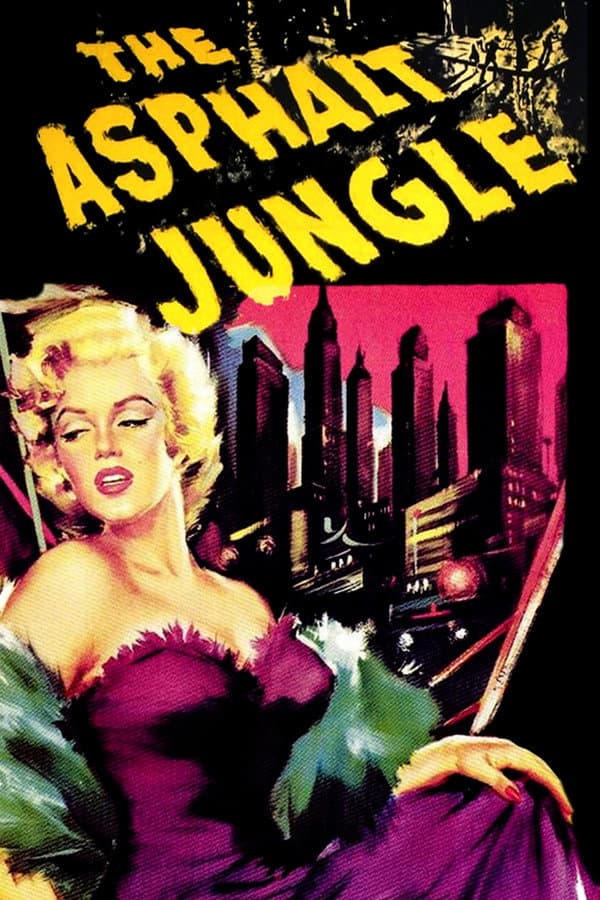
The Asphalt Jungle
1950 • Crime, Drama
Recently paroled from prison, legendary burglar "Doc" Riedenschneider, with funding from Alonzo Emmerich, a crooked lawyer, gathers a small group of veteran criminals together in the Midwest for a big jewel heist.
Runtime: 1h 53m
Buy related books from Amazon
As an Amazon Associate I earn from qualifying purchases. Read the full disclosure.
Why you should read the novel
Before you stream The Asphalt Jungle, discover the raw power of W. R. Burnett’s original novel. The Asphalt Jungle book delivers a deeper, darker, and more immersive dive into the criminal underworld that inspired the classic film noir, written by one of the architects of American crime fiction.
Burnett’s prose gives you the full scope: layered motivations, competing loyalties, and the authentic mechanics of a meticulously planned jewel heist. If you crave vivid character psychology and street-level detail, the novel offers far more than the movie can show, making it essential reading for fans of noir and true-crime realism.
Choose the source material to experience the story as it was first imagined—unfiltered, unhurried, and unforgettable. Whether in print, ebook, or audiobook, The Asphalt Jungle novel is the definitive way to explore this crime classic and appreciate why Burnett’s storytelling still sets the benchmark.
Adaptation differences
Scope and perspective are the biggest shifts. Burnett’s novel moves through multiple points of view—Doc, Dix, Doll, Emmerich, the fence, the cops—creating a complete ecosystem of the city’s underworld. The film keeps the ensemble but trims interiority and secondary figures, compressing subplots and merging functions to sharpen momentum and screen time.
Tone and content reflect Production Code limits. On the page, vice, corruption, and language are harsher and more explicit. The adaptation softens sexual material, downplays systemic police corruption, and adds clear moral framing through dialogue and emphasis—ensuring audiences see that crime cannot pay—while the book sustains a grimmer, more ambiguous fatalism.
The heist itself is streamlined for the screen. Both versions hinge on Doc Riedenschneider’s jewel job, but the novel devotes more space to recruitment, underworld negotiations, logistics, and the painstaking technical craft. The film condenses planning, simplifies timing and on-the-fly fixes, and tightens Emmerich’s double-cross to keep the plot taut and cinematic.
Character balance shifts notably. Doll Conovan’s inner life and resilience receive greater depth in the book, while the film elevates Angela (Emmerich’s young mistress) for dramatic contrast and star presence. Doc’s vulnerabilities are more thoroughly explored in the novel, where his compulsions carry heavier psychological weight. The movie underscores inevitable downfall with clear punishment for every principal, whereas the novel lingers longer on motivations and consequences, heightening the story’s bleak texture rather than delivering only a swift moral reckoning.
The Asphalt Jungle inspired from
The Asphalt Jungle
by W. R. Burnett