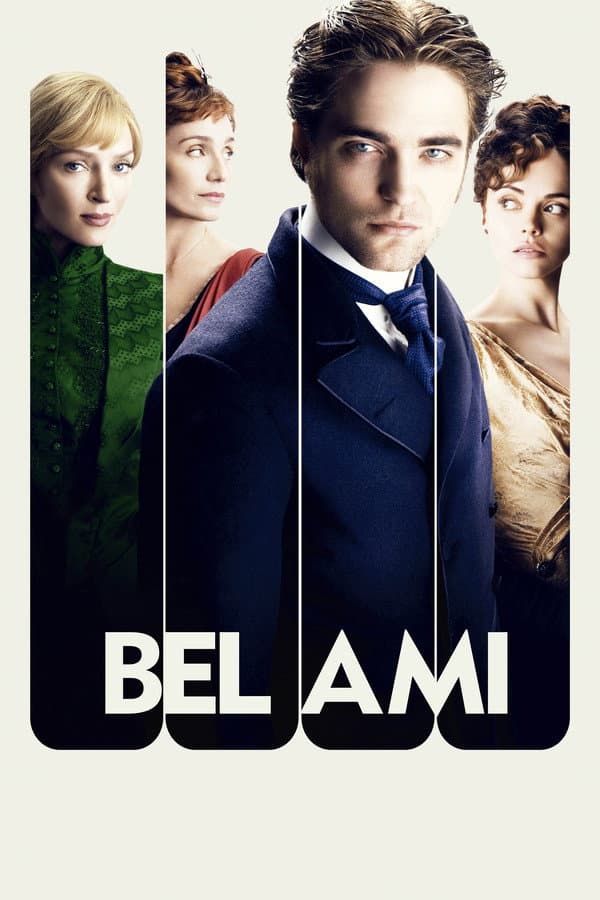
Bel Ami
2012 • Drama, Romance • R
Georges Duroy travels through 1890s Paris, from cockroach ridden garrets to opulent salons, using his wits and powers of seduction to rise from poverty to wealth, from a prostitute’s embrace to passionate trysts with wealthy beauties, in a world where politics and media jostle for influence, where sex is power and celebrity an obsession.
Runtime: 1h 42m
Buy related books from Amazon
As an Amazon Associate I earn from qualifying purchases. Read the full disclosure.
Why you should read the novel
Before you stream Bel Ami (2012), experience the fierce original: Guy de Maupassant’s Bel-Ami, a classic novel of ambition, seduction, and media power set in glittering 1880s Paris.
Reading Bel-Ami reveals razor-sharp social satire, psychological depth, and the inner voice the film can’t show. Follow Georges Duroy’s calculations, the churn of the press, and the entanglement of money, politics, and desire.
Choose the book over the movie: explore authoritative English translations of Bel-Ami by Guy de Maupassant. Ideal for students, book clubs, and lovers of classic French literature and historical fiction.
Adaptation differences
Tone and focus differ markedly. The novel is a scathing, darkly comic critique of bourgeois Paris—journalism, corruption, class pretensions—while the film foregrounds romance and sensuality, softening the satire and social breadth.
Characterization shifts too. On the page, Georges Duroy is colder, calculating, and often cruel; the film grants him more vulnerability and glamour. The women—Madeleine Forestier, Clotilde de Marelle, Virginie Walter—are richer and more politically astute in the book, with interior lives and agency the camera compresses.
Plotlines and context are streamlined on screen. The novel’s newsroom intrigue, ownership struggles, and financial/colonial speculation arcs receive fuller treatment in print, while the adaptation condenses timelines and centers erotic entanglements. Certain episodes—like dueling etiquette and editorial maneuvering—are minimized or reconfigured.
Even the ending’s emphasis diverges. In the book, Duroy’s society marriage lands as a triumphant yet chilling indictment of a system that rewards cynicism. The film frames the climax more as personal conquest and romantic betrayal, diluting the novel’s broader institutional critique.
Bel Ami inspired from
Bel-Ami
by Guy de Maupassant