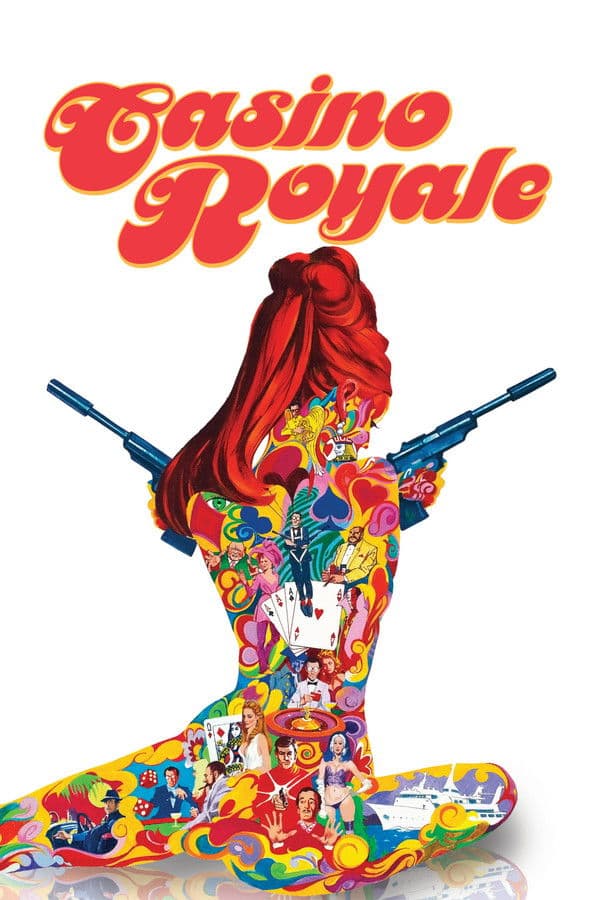
Casino Royale
1967 • Action, Adventure, Comedy • PG
Sir James Bond is called back out of retirement to stop SMERSH. In order to trick SMERSH, James thinks up the ultimate plan - that every agent will be named 'James Bond'. One of the Bonds, whose real name is Evelyn Tremble is sent to take on Le Chiffre in a game of baccarat, but all the Bonds get more than they can handle.
Runtime: 2h 11m
Buy related books from Amazon
As an Amazon Associate I earn from qualifying purchases. Read the full disclosure.
Why you should read the novel
Skip the spoof and experience the source: Casino Royale by Ian Fleming, the lean, elegant spy novel that launched James Bond. Its razor‑sharp prose and real espionage tradecraft deliver suspense no screen parody can match.
Fleming’s debut introduces 007, Vesper Lynd, and Le Chiffre in a taut tale of high‑stakes baccarat at Royale‑les‑Eaux. You’ll feel the tension at the card table, the menace of SMERSH, and the human cost behind Bond’s cool exterior.
If you crave atmosphere, psychology, and sophisticated intrigue, read the original book. Casino Royale is a classic spy thriller available in English as paperback, ebook, and audiobook—perfect for fans of authentic espionage fiction.
Adaptation differences
The 1967 Casino Royale is an all-star parody; the novel is a straight, hard-edged thriller. Fleming’s book builds gritty realism and moral ambiguity, while the film embraces broad comedy, pop-art excess, and meta-jokes about the Bond phenomenon.
Plot and structure diverge sharply. The novel follows a focused mission in France: Bond must bankrupt Le Chiffre at baccarat, triggering brutal reprisals. The movie splinters into multiple storylines, multiple “James Bonds,” and an over-the-top SMERSH/Dr. Noah conspiracy, trading tight suspense for sketch-style chaos.
Key characters shift in tone and purpose. Book-Vesper is complex and tragic, a coerced double agent whose choices scar Bond; film-Vesper becomes a capricious comic foil. Book-Le Chiffre is a genuinely frightening, desperate fixer; his movie counterpart is played for laughs. Even M’s role changes—alive and commanding in the novel, abruptly dispatched in the film to set up farce.
Set pieces illustrate the gap. The novel’s baccarat duel is a taut psychological knife-edge, followed by stark, unforgettable torture and a devastating aftermath. The film turns the casino into a carnival of gags, replaces brutality with psychedelic hijinks, and ends in an anarchic free‑for‑all—where the book closes on quiet heartbreak that defines Bond’s future.
Casino Royale inspired from
Casino Royale
by Ian Fleming