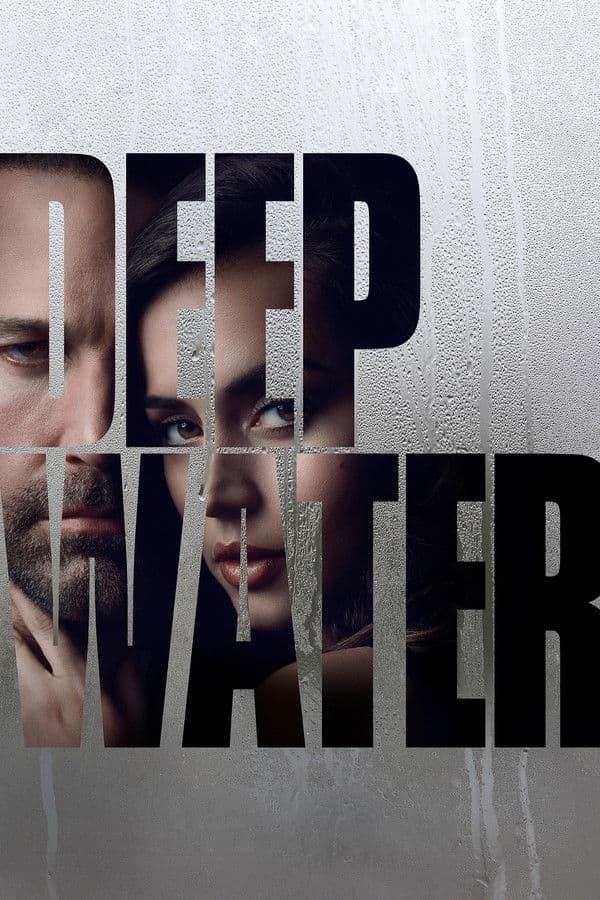
Deep Water
2022 • Drama, Mystery, Thriller • R
A well-to-do husband who allows his wife to have affairs in order to avoid a divorce becomes a prime suspect in the disappearance of her lovers.
Runtime: 1h 56m
Buy related books from Amazon
As an Amazon Associate I earn from qualifying purchases. Read the full disclosure.
Why you should read the novel
Before you stream the movie, experience Patricia Highsmith’s Deep Water in its original, razor‑edged form. The novel delivers the full psychological depth, dread, and dark wit that made Highsmith a legend—nuances a screen adaptation can only hint at. If you crave elegant tension and morally complex characters, the book is the definitive version.
Highsmith’s prose traps you inside suburban lives coming apart with exquisite precision. Every page tightens the screws: shifting power dynamics, unreliable perceptions, and a community humming with suspicion. It’s a masterclass in psychological suspense that rewards close reading with layers of motive, menace, and irony.
Searching for “Deep Water book vs movie” or “best psychological thriller novels”? Start here. Reading the source illuminates character motivations, subtext, and themes the film compresses. For fans of Patricia Highsmith, Ripley, and slow-burn domestic noir, the novel offers the richest, most chilling journey.
Adaptation differences
Setting and era: Patricia Highsmith’s Deep Water is rooted in mid‑century American suburbia, where social conformity and small‑town gossip sharpen the tension. The 2022 film updates the story to a contemporary Gulf Coast milieu, trading postwar anxieties for modern decadence and humidity‑drenched spectacle. The shift reframes how marriage, infidelity, and reputation operate within the community.
Point of view and psychology: The novel keeps you tightly inside Vic’s psychology, cultivating dread through interior monologue, subtle tells, and incremental moral slippage. The film externalizes that inner turmoil through looks, staging, and atmosphere, sacrificing some of the book’s intimate access for visual ambiguity. Melinda’s provocations are more explicitly staged on screen, while the novel lets insinuation and rumor do much of the damage.
Plot texture and tone: Highsmith’s crimes accrue like hairline fractures—quietly, plausibly, and often offstage—intensifying the slow burn. The adaptation compresses timelines, spotlights confrontations, and favors on‑screen suspense sequences, altering the rhythm from literary unease to cinematic set pieces. The movie leans into erotic‑thriller heat; the book sustains a cooler, crueler, more clinical dread.
Themes and backstory updates: The film introduces a sleek modern backstory for Vic’s wealth and status, adding contemporary moral shading that isn’t in the novel. Side characters and investigative threads are streamlined or combined, shifting who suspects what—and when. Crucially, the film opts for a more open, ambiguous endpoint, while the book resolves Vic’s trajectory with greater finality, underscoring Highsmith’s brutal sense of consequence.
Deep Water inspired from
Deep Water
by Patricia Highsmith