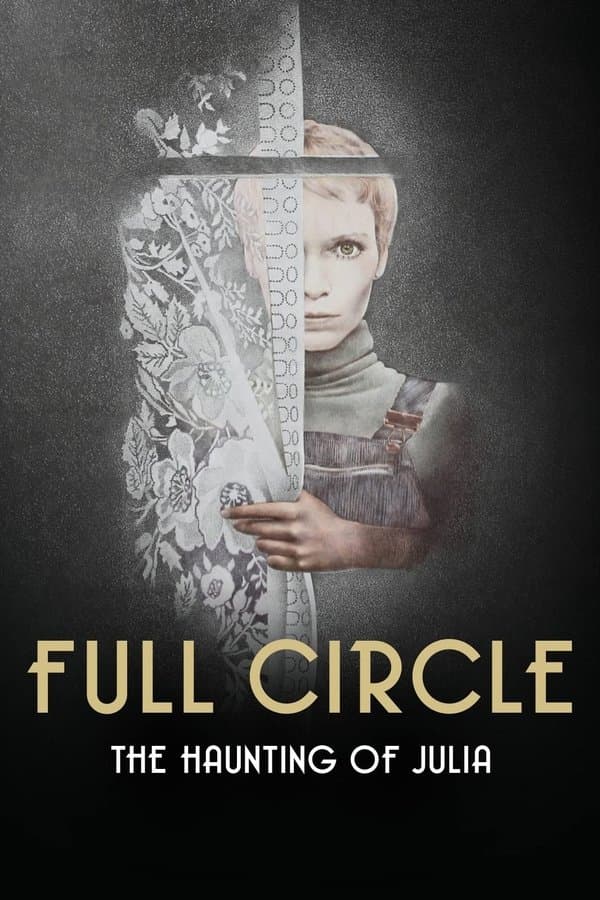
Full Circle
1978 • Drama, Horror, Mystery • R
After the death of her daughter, wealthy housewife Julia Lofting abruptly leaves her husband and moves into an old Victorian home in London to re-start her life. All seems well until she is haunted by the sadness of losing her own child and the ghosts of other children.
Runtime: 1h 38m
Buy related books from Amazon
As an Amazon Associate I earn from qualifying purchases. Read the full disclosure.
Why you should read the novel
Before you watch Full Circle (1978), discover the source novel that inspired it: Julia by Peter Straub. This acclaimed psychological ghost story immerses you in the raw, interior experience of grief, guilt, and obsession that a film can only hint at. Straub’s prose builds unease with precision, rewarding readers who crave atmosphere, nuance, and genuine chills.
Fans of Full Circle and its U.S. title The Haunting of Julia will find Straub’s original book richer and more layered, with London’s haunted corners rendered in unsettling detail. The novel’s carefully paced revelations, complex character work, and eerily believable haunt turn every page into a nail-biting investigation of sorrow and the supernatural. It’s essential reading for devotees of literary horror.
If you love Shirley Jackson, Susan Hill, or psychological horror with depth, make Julia your next read. Experience Peter Straub’s masterful control of dread, the intimate psychology of his heroine, and the full scope of the mystery that the movie adapts. Read the original novel to appreciate the story’s roots—and to feel its shivers linger long after the last page.
Adaptation differences
One key difference between the book and the movie lies in perspective and tone. Peter Straub’s Julia anchors readers deep inside the protagonist’s consciousness, blurring grief, memory, and the supernatural with intimate psychological detail. The film translates that interiority into images and atmosphere, resulting in a more external, stylistic haunting that is less ambiguous moment to moment.
The novel provides a broader, more intricate backstory to the haunting, patiently uncovering local history, neighborhood secrets, and the disturbing legacy of a cruel child. The movie streamlines this mythology for pace and mood, offering selective clues and visual motifs rather than the layered documentation and interviews found in the book. As a result, motivations and timelines feel more explicit on the page and more suggestive on screen.
Characterization also shifts in adaptation. In Straub’s novel, relationships—particularly Julia’s fraught dynamic with her controlling husband and certain family figures—receive sustained, unsettling development, intensifying themes of gaslighting and isolation. The film compresses or redistributes some of these interactions, prioritizing eerie set pieces and visual dread over the dense interpersonal maneuvering that drives the book’s tension.
Finally, the endings diverge in emphasis. The book’s climax is more psychologically ambiguous and inward-facing, leaving readers to wrestle with unsettling implications about identity, agency, and haunting. The movie crafts a more stylized, visually explicit resolution that underscores its spectral presence. Both are chilling, but the novel’s conclusion lingers differently—quieter, crueler, and harder to shake.
Full Circle inspired from
Julia
by Peter Straub
