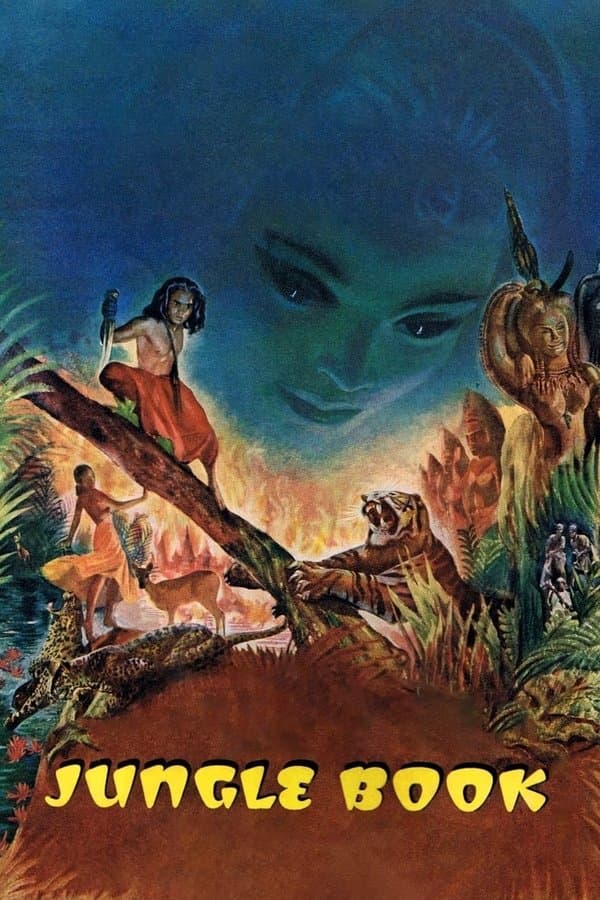
Jungle Book
1942 • Adventure, Family, Fantasy • NR
Mowgli, lost in the jungle when a toddler, raised by wolves, years later happens upon his human village and reconnects with its inhabitants, including his widowed mother. Continuing to maintain a relationship with the jungle, adventures follow.
Runtime: 1h 46m
Buy related books from Amazon
As an Amazon Associate I earn from qualifying purchases. Read the full disclosure.
Why you should read the novels
Before you watch or rewatch Jungle Book (1942), experience Rudyard Kipling’s The Jungle Book and The Second Jungle Book in their original English. These classic stories deliver Mowgli’s world with lyrical prose, moral depth, and the authentic Law of the Jungle that no screen can fully capture.
Reading Kipling brings you closer to Bagheera’s wisdom, Baloo’s lessons, and Kaa’s surprising heroism, all shaped by richly crafted language and vivid atmosphere. The books reward every page with symbolism, folklore, and timeless coming‑of‑age insights that make the jungle feel alive in your imagination.
Beyond Mowgli, you’ll discover unforgettable tales like Rikki‑Tikki‑Tavi, Toomai of the Elephants, and The White Seal—expanding the universe far beyond any single movie. Choose the original literature to understand why The Jungle Book endures as a cornerstone of classic English storytelling.
Adaptation differences
Jungle Book (1942) condenses multiple Kipling stories into one continuous adventure, while the books are episodic collections. On the page, animals speak at length and debate the Law of the Jungle; the film largely relies on real animals, visual action, and human drama, shifting emphasis from fable to spectacle.
In Kipling’s canon, Shere Khan’s defeat comes through Mowgli’s strategy—he orchestrates a buffalo stampede to kill the tiger in Tiger! Tiger!. The 1942 adaptation replaces that tactical climax with a more direct, knife-and-fire confrontation, trading the book’s cunning and communal planning for cinematic immediacy.
The film elevates human intrigue: the treasure in a ruined city, a greedy hunter (Buldeo), and a romantic thread for Mowgli. Kipling’s The King’s Ankus treats treasure as a moral parable about greed and death; the movie transforms this into a central plot engine, recasting Kaa as a menacing guardian rather than the complex mentor found in the stories.
Kipling’s arc tracks Mowgli’s difficult passage between wolf pack, jungle allies, and village life, culminating in The Spring Running with his move toward the human world. The 1942 film simplifies this identity struggle, steering Mowgli toward the jungle and framing humanity mainly through jealousy and avarice, softening the books’ bittersweet, nuanced resolution.
Jungle Book inspired from
The Jungle Book
by Rudyard Kipling
The Second Jungle Book
by Rudyard Kipling