Kensuke's Kingdom
2024 • Adventure, Animation, Drama, Family
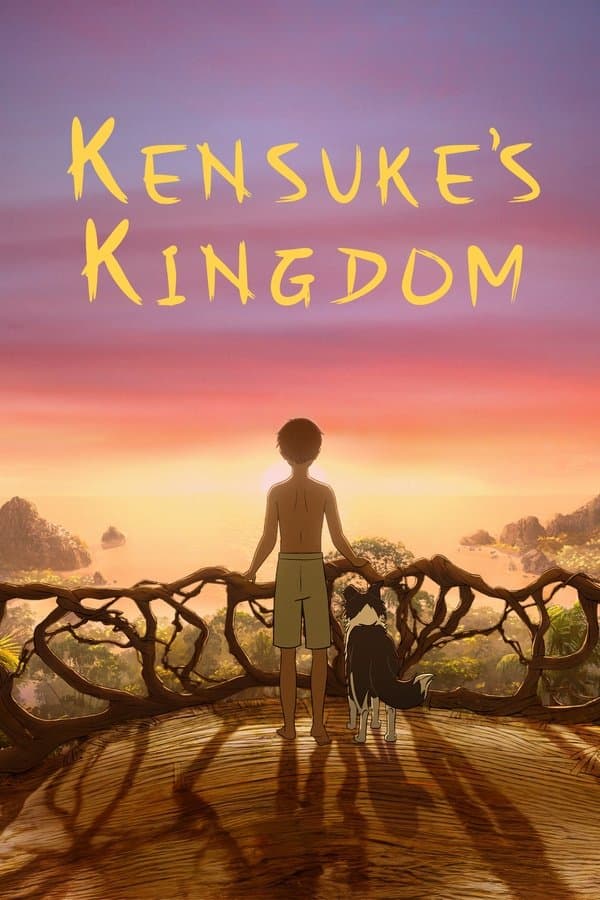
A young boy and his family set off on a sailing trip of a lifetime until a violent storm erupts, sweeping Michael and his dog overboard. After washing up on a remote island, terrified, they struggle to survive and adjust to life alone, One day, Michael discovers he is not alone when he is confronted by a mysterious Japanese man who has lived there secretly since World War II, angry that Michael has arrived. However, as dangerous invaders threaten their fragile island paradise, Michael and the old man, Kensuke, join forces to save their secret world.
Runtime: 1h 24m
Buy related books from Amazon
As an Amazon Associate I earn from qualifying purchases. Read the full disclosure.
Why you should read the novel
Before you watch the 2024 animated film, discover the unforgettable power of Michael Morpurgo’s original novel Kensuke’s Kingdom. The book’s first-person voice, vivid island setting, and emotional depth create an immersive reading experience that no screen can fully capture. If you love survival stories, heartwarming friendships, and lyrical storytelling, the source novel will move you page after page.
Reading Kensuke’s Kingdom lets you experience every quiet moment and hard-won lesson that shapes Michael and Kensuke’s bond. Morpurgo’s prose lingers on small details—the rhythms of the tide, the watchful orangutans, the healing routines—that build a richer, more intimate world than a fast-paced movie can show. For book lovers and families, it’s an ideal read-aloud that invites reflection and conversation.
If you’re searching for the best way to understand the heart of Kensuke’s Kingdom, start with the book. It offers the complete arc, themes, and nuances behind the film, making it perfect for classrooms, book clubs, and readers who want the authentic source material. Choose the novel first to appreciate the adaptation more—and to carry the story with you long after the final chapter.
Adaptation differences
Book vs movie differences begin with perspective and tone. Michael Morpurgo’s Kensuke’s Kingdom is told in a reflective first-person narrative, unfolding like a remembered journal. The 2024 adaptation naturally shifts toward an external, cinematic viewpoint, prioritizing visual storytelling, dialogue, and momentum over the novel’s quiet introspection and internal monologue.
The pacing and emphasis on adventure are also distinct. The novel savors routine, survival craft, and the slow growth of trust between Michael and Kensuke. The film, designed for family audiences, typically heightens set pieces—storms, island perils, and human threats—to sustain energy, compress timelines, and keep younger viewers engaged, altering the story’s rhythm compared with the book.
Another key difference is how the adaptation frames Kensuke’s past and the environmental conflict. The book reveals Kensuke’s wartime history and his guardianship of the island’s wildlife with deliberate, gentle disclosure. On screen, these threads are often streamlined and visualized sooner, with the poacher/outsider danger brought forward to create clearer stakes and a more direct antagonist than the novel’s subtler, slow-burn tension.
Finally, the ending and aftermath are handled differently. The novel closes with an epilogue written years later, using letters and memory to deliver a poignant, reflective resolution. Film adaptations commonly condense or reframe that long-view coda to deliver a more immediate emotional payoff. As a result, the movie’s conclusion feels swifter and more present-tense, while the book leaves readers with a lingering sense of time, promise, and legacy.
Kensuke's Kingdom inspired from
Kensuke's Kingdom
by Michael Morpurgo