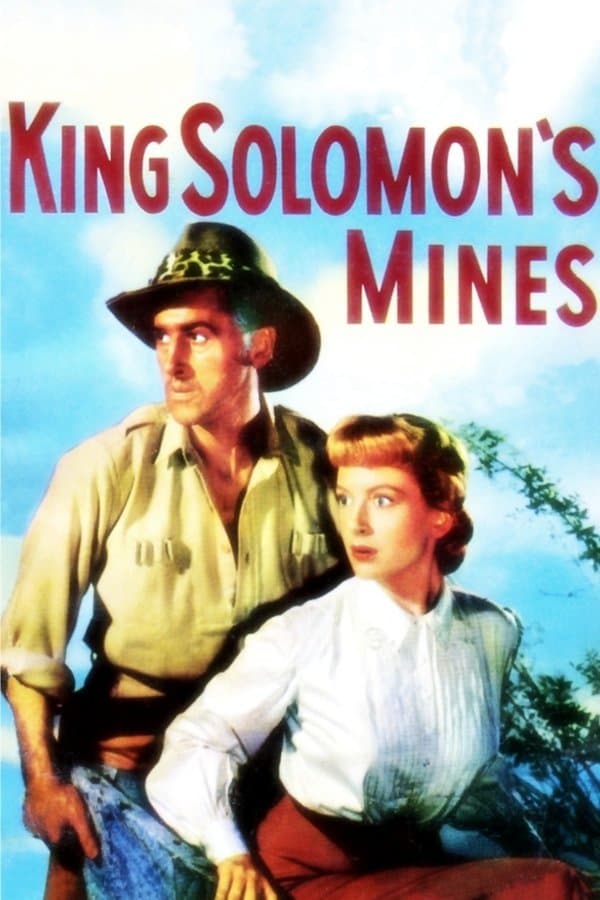
King Solomon's Mines
1950 • Action, Adventure, Romance
Fortune hunter Allan Quatermain teams up with a resourceful woman to help her find her missing husband lost in the wilds of 1900s Africa while being pursued by hostile tribes and a rival German explorer.
Runtime: 1h 43m
Buy related books from Amazon
As an Amazon Associate I earn from qualifying purchases. Read the full disclosure.
Why you should read the novel
Before you watch King Solomon's Mines (1950), read H. Rider Haggard's groundbreaking novel. Told in Allan Quatermain's gripping voice, the book delivers classic adventure, high stakes, and lost-world mystery that the screen can only hint at.
The King Solomon's Mines book is rich with survival realism, Victorian exploration detail, and layered cultural encounters. Its world-building, character motivations, and slow-burn revelations reward close reading and offer a deeper context for every perilous choice the expedition makes.
If you care about book vs movie differences, start with the source. Haggard's novel shaped modern treasure-hunt fiction and Allan Quatermain's legacy—making it the definitive way to experience this story before (or instead of) pressing play.
Adaptation differences
Plot setup and relationships change significantly in the 1950 movie vs the book. Haggard's novel has Sir Henry Curtis and Captain John Good hire Allan Quatermain to find Sir Henry's missing brother. The film introduces Elizabeth Curtis and reframes the quest around her search for a missing husband, adding interpersonal drama and shifting motivations from fraternal duty to romantic tension and marital rescue.
Characterization and tone also diverge. On the page, Quatermain is older, pragmatic, and ethically conflicted; the novel leans on introspection, dry humor, and frontier realism. The 1950 adaptation recasts him as a younger, dashing screen hero with a pronounced romantic arc, trims internal monologue, and emphasizes star charisma, pacing, and spectacle over the book's reflective voice.
Geography, cultures, and set pieces are reworked for cinema. The novel's fictional Kukuana kingdom, extended Kalahari crossing, and methodical tracking are condensed or altered, while the film showcases on-location African travelogue imagery, abundant wildlife sequences, and elaborate tribal ceremonies (including Watusi/Tutsi pageantry). These choices heighten visual impact but simplify the book's invented ethnography and political world-building.
Climax and themes are streamlined. The book devotes chapters to court intrigue, ritual trials, and power struggles culminating with Gagool, Twala, and the fabled mines; the 1950 movie trims or reshapes these elements and foregrounds escape-from-the-mine spectacle. As a result, the adaptation softens some of the novel's moral ambiguity and period-specific commentary, favoring momentum and wonder over the source's denser thematic architecture.
King Solomon's Mines inspired from
King Solomon's Mines
by H. Rider Haggard


