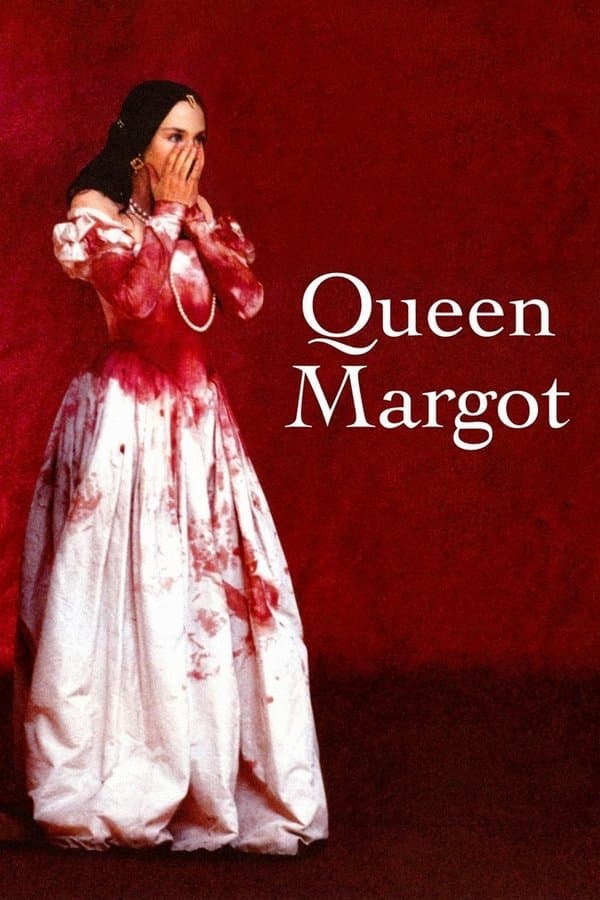
Queen Margot
1994 • Drama, History, Romance • R
Paris, Kingdom of France, August 18, 1572. To avoid the outbreak of a religious war, the Catholic princess Marguerite de Valois, sister of the feeble King Charles IX, marries the Huguenot King Henry III of Navarre.
Runtime: 2h 18m
Buy related books from Amazon
As an Amazon Associate I earn from qualifying purchases. Read the full disclosure.
Why you should read the novel
If Queen Margot (1994) left you fascinated by the Valois court, go straight to Alexandre Dumas's novel Queen Margot. The book delivers expansive historical fiction around the St. Bartholomew's Day Massacre with richer context, sharper intrigue, and daring twists that the film can only hint at.
Choose the unabridged English translation to meet the full cast in depth: Marguerite de Valois, Henry of Navarre, Catherine de' Medici, the Duke of Anjou, La Mole, and Coconnas. Dumas weaves political chess, romance, and swashbuckling adventure into a propulsive narrative that rewards every chapter.
For readers seeking classic literature, court intrigue, and immersive world-building, Queen Margot the novel outclasses the movie experience. Read the source to enjoy Dumas's wit, layered motivations, and panoramic storytelling—perfect for fans of historical novels and French Wars of Religion history.
Adaptation differences
Scope and tone differ sharply between the Queen Margot book and movie. Dumas crafts a sprawling, serial-style adventure that balances romance, political plotting, and dark humor, while the 1994 film favors a compressed, operatic tragedy with graphic immediacy and relentless intensity.
Characterization diverges in emphasis. The novel grants deeper interiority to Marguerite, Henry of Navarre, and even Charles IX, exploring calculation, ambivalence, and evolving loyalties; the film streamlines arcs, amplifies Catherine de' Medici's menace, and foregrounds raw survival over the book's witty maneuvers and psychological shading.
Plot structure is significantly condensed in the movie. Subplots, side courtiers, and extended intrigues that animate Dumas's pages are reduced or merged on screen; timelines tighten to the massacre and its immediate aftermath, while some poison conspiracies and political gambits are altered, abbreviated, or newly staged for cinematic impact.
The La Mole–Coconnas thread illustrates the adaptation gap. In the novel, their unlikely friendship, misadventures, and political entanglements add camaraderie and satirical bite; the film trims their development to keep focus on Margot's peril and the court's carnage, changing the balance from adventurous intrigue to stark survival drama.
Queen Margot inspired from
Queen Margot
by Alexandre Dumas