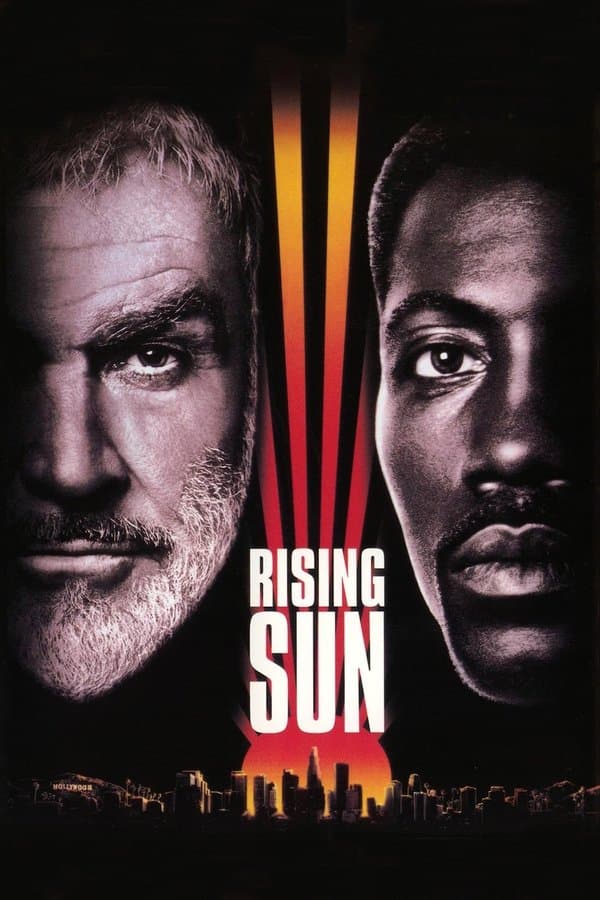
Rising Sun
1993 • Action, Drama, Thriller • R
When a prostitute is found dead in a Los Angeles skyscraper occupied by a large Japanese corporation, detectives John Connor and Web Smith are called in to investigate. Although Connor has previous experience working in Japan, cultural differences make their progress difficult until a security disc showing the murder turns up. Close scrutiny proves the disc has been doctored, and the detectives realize they're dealing with a cover-up as well.
Runtime: 2h 5m
Buy related books from Amazon
As an Amazon Associate I earn from qualifying purchases. Read the full disclosure.
Why you should read the novel
Before you press play, consider opening the pages of Rising Sun by Michael Crichton. The novel delivers a sharper, more layered techno-thriller experience, combining a taut murder mystery with deep insights into corporate power, global finance, and media manipulation. Readers who crave atmosphere, detail, and momentum will find the book impossible to put down.
Crichton’s Rising Sun novel gives you richer character psychology and a front-row seat to the cultural and economic tensions driving the plot. You will discover meticulous explanations of the technology, trade dynamics, and investigative strategies that the movie can only hint at, transforming a slick whodunit into a thought-provoking, high-stakes puzzle.
If you want the definitive Rising Sun story, read the source material. The book’s timely themes, propulsive prose, and immersive world-building provide context and clarity the film compresses. Choose the Michael Crichton original for a deeper, smarter, and more satisfying thriller.
Adaptation differences
Rising Sun movie vs book: the most consequential change is the identity and nationality of the culprit. The novel points to a Japanese corporate insider, underscoring Crichton’s critique of trade practices and boardroom power. The film shifts culpability toward an American power broker, softening accusations of Japan-bashing and reframing the conspiracy as cross-cultural rather than one-sided.
Perspective and characterization also diverge. The novel is a first-person, procedure-forward investigation narrated by a white LAPD officer named Peter Smith, steeped in analysis and nuance. The film reimagines him as Web Smith, played by Wesley Snipes, and pivots to a buddy-thriller dynamic with John Connor, emphasizing chemistry, pace, and action over the book’s extended cultural commentary.
Technology and investigation detail differ markedly. On the page, Crichton devotes substantial space to video fakery, data forensics, and the mechanics of corporate influence, complete with explanatory digressions. On screen, the evidence trail is streamlined, technical minutiae are trimmed, and set pieces, humor, and procedural shortcuts take center stage to maintain mainstream thriller momentum.
Tone and takeaway shift with the adaptation. The book closes on a bleaker, policy-tinged note about economic leverage and media control, challenging readers to confront uncomfortable realities. The film favors a more conventional thriller resolution, downplays polemical passages, and aims for accessibility, trading the novel’s exhaustive context for pace, clarity, and mass appeal.
Rising Sun inspired from
Rising Sun
by Michael Crichton