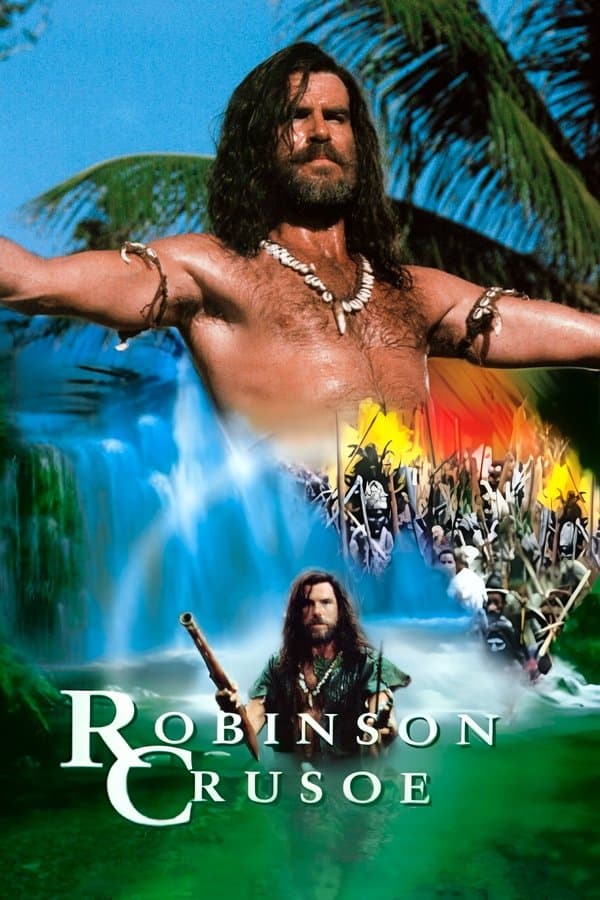
Robinson Crusoe
1997 • Adventure, Drama • PG-13
Robinson Crusoe flees Britain on a ship after killing his friend over the love of Mary. A fierce ocean storm wrecks his ship and leaves him stranded by himself on an uncharted island. Left to fend for himself, Crusoe seeks out a tentative survival on the island, until he meets Friday, a tribesman whom he saves from being sacrificed. Initially, Crusoe is thrilled to finally have a friend, but he has to defend himself against the tribe who uses the island to sacrifice tribesman to their gods. During time their relationship changes from master-slave to a mutual respected friendship despite their difference in culture and religion.
Runtime: 1h 32m
Buy related books from Amazon
As an Amazon Associate I earn from qualifying purchases. Read the full disclosure.
Why you should read the novel
Before you press play on the 1997 Robinson Crusoe movie, discover Daniel Defoe’s original classic. The Robinson Crusoe book delivers immersive first-person storytelling, meticulous survival detail, and the historical texture that shaped English literature.
Reading Robinson Crusoe reveals the depth of Crusoe’s inner life—his faith, fears, ingenuity, and perseverance—mapped through journals, calendars, farming, and craftsmanship the film can only hint at. It’s survival literature at its source.
Choose the unabridged novel or a well-annotated edition to explore context, language, and themes often simplified on screen. If you want the complete adventure, read Robinson Crusoe by Daniel Defoe in print, ebook, or audiobook.
Adaptation differences
The 1997 adaptation streamlines Crusoe’s backstory. The novel follows his disobedience to family, enslavement in Morocco, and years as a Brazilian planter before the shipwreck. The film replaces this with a fatal duel and flight, omitting the slavery and colonial trade context central to the book’s moral and economic framework.
Time on the island is also compressed. Defoe’s narrative spans decades of painstaking survival: building shelter, making tools, taming goats, farming, journaling, and tracking time. The movie condenses or reworks many of these processes, favoring brisk pacing, external peril, and rescue-ready momentum over the novel’s slow, methodical problem-solving and spiritual reflection.
Friday’s portrayal shifts markedly. In the book, Friday becomes Crusoe’s companion but is framed within a master–servant hierarchy and Christian conversion arc. The film emphasizes a more equal, dialog-driven friendship, granting Friday greater agency and challenging Crusoe’s assumptions—an update that reframes the story’s colonial dynamics for modern audiences.
The ending and tone diverge as well. While the novel leads to rescue, return to England, and further journeys, the 1997 film heightens tragedy and conflict in its climax, with Friday’s fate differing significantly and the rescue sequence reimagined. The result trades Defoe’s providential, economically restorative conclusion for a morally pointed, emotionally charged finale.
Robinson Crusoe inspired from
Robinson Crusoe
by Daniel Defoe