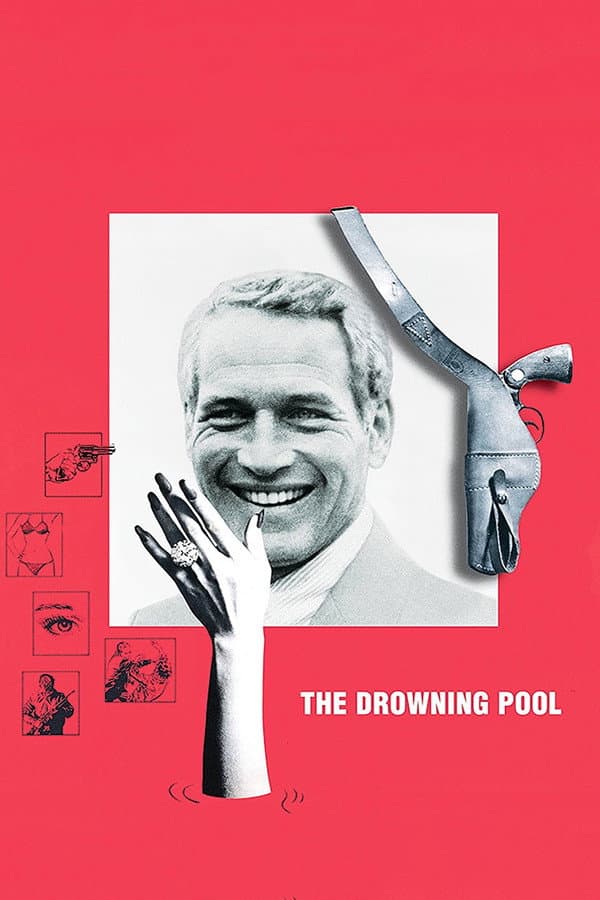
The Drowning Pool
1975 • Mystery, Thriller • PG
Harper is brought to Louisiana to investigate an attempted blackmail scheme. He soon finds out that it involves an old flame of his and her daughter. He eventually finds himself caught in a power struggle between the matriarch of the family and a greedy oil baron, who wants their property. Poor Harper! Things are not as straight-forward as they initially appeared.
Runtime: 1h 49m
Buy related books from Amazon
As an Amazon Associate I earn from qualifying purchases. Read the full disclosure.
Why you should read the novel
Trade the screen for the page with The Drowning Pool, Ross Macdonald’s classic Lew Archer novel. Its cool, incisive prose, layered clues, and moral complexity deliver a masterclass in hardboiled mystery fiction.
Macdonald weaves a taut investigation through postwar California’s mansions, oil money, and secrets, building a slow-burn puzzle that rewards close reading. The novel’s psychological depth and social insight go far beyond what a two-hour film can capture.
If you love noir, start with the source. Experience Lew Archer’s voice, the elegant craftsmanship of Macdonald’s sentences, and the satisfying, earned revelations that make The Drowning Pool an essential crime novel worth savoring.
Adaptation differences
Character and perspective shift: the book’s detective is Lew Archer, rendered through Macdonald’s restrained, first-person voice. The film rebrands him as Lew Harper and drops the novel’s introspective narration for a more external, movie-star-driven persona.
Setting and era: the novel unfolds in midcentury Southern California, steeped in coastal suburbs and oil-field money. The adaptation relocates the story to Louisiana, infusing bayou moods and Southern Gothic textures while updating details to the 1970s, changing cultural cues, slang, and social backdrops.
Plot compression: the film streamlines the family tangle, merges or omits supporting players, and heightens romance and action. Several investigative steps are condensed into set-piece confrontations, and new scenes are added to create chases and showdowns tailored to cinematic pacing.
Theme and resolution: the book emphasizes psychological motives, class rot, and moral ambiguity resolved through quiet but devastating revelations. The movie simplifies motives, adjusts culpability, and opts for a punchier, more sensational climax, trading the novel’s nuanced reckoning for a cleaner, high-stakes finish.
The Drowning Pool inspired from
The Drowning Pool
by Ross Macdonald