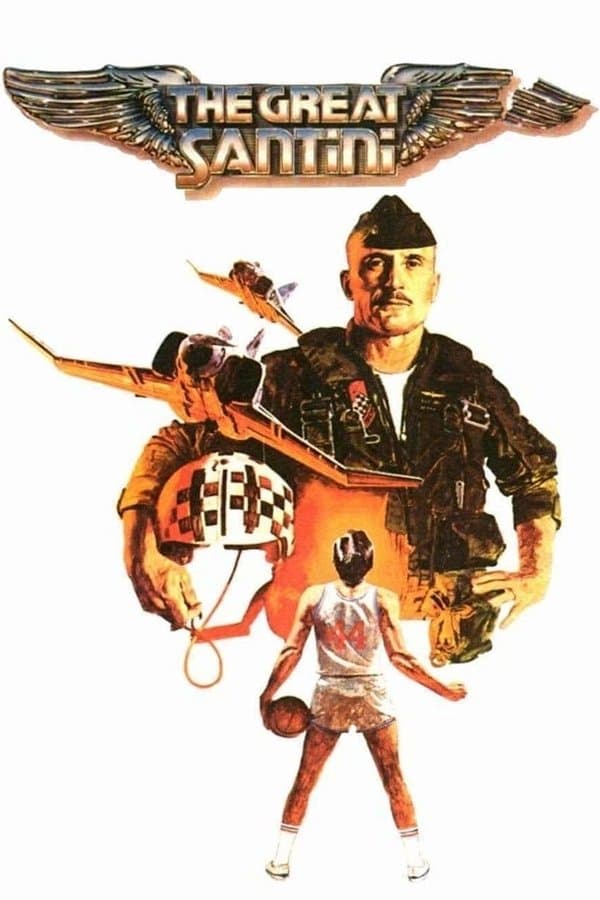
The Great Santini
1979 • Drama • PG
As he approaches manhood, Ben Meechum struggles to win the approval of his demanding alpha male father, an aggressively competitive, but frustrated marine pilot.
Runtime: 1h 55m
Buy related books from Amazon
As an Amazon Associate I earn from qualifying purchases. Read the full disclosure.
Why you should read the novel
Before you stream the film, experience Pat Conroy’s The Great Santini in its original form. The novel delivers layered psychology, razor-sharp dialogue, and lyrical Southern atmosphere that no screen can fully capture. If you crave richer character development and a deeper emotional arc, the book is the definitive way to meet the Meechum family.
Reading the source novel gives you direct access to Conroy’s celebrated prose—immersive, compassionate, and unflinching. You’ll trace Ben’s coming-of-age with an intimacy the camera can’t match, from private doubts and small victories to the pressures of living under a domineering Marine pilot father. The result is a fuller, more resonant journey.
For readers who love literary fiction grounded in place, The Great Santini shines with Lowcountry detail, social nuance, and cultural history. Discover the themes the movie touches only briefly—identity, loyalty, honor, and forgiveness—rendered with the nuance and complexity that made Conroy a modern American classic.
Adaptation differences
Book vs movie: scope and depth. The novel spans more family history and Marine postings, giving fuller context for Bull Meechum’s command style and its impact on each child. The film streamlines this timeline, centering on a single station and a tighter set of incidents to fit a feature-length narrative.
Point of view and interiority. Pat Conroy’s book opens the door to Ben’s inner life—and to Lillian and Mary Anne’s perspectives—through interior monologue and reflective passages. The adaptation, limited to external action and performance, inevitably trims that internal chorus, relying on visual cues where the novel provides sustained introspection.
Character shading and tone. On the page, Bull can be more volatile, contradictory, and self-justifying, with moments of menace countered by unexpected vulnerability. The film softens and simplifies certain extremes to maintain balance and momentum, emphasizing charisma and discipline while compressing or omitting smaller, accumulative episodes that build his complexity in the book.
Themes and aftermath. The novel invests more space in the family’s cultural world—Catholic faith, Southern manners, squadron culture—and follows the emotional aftermath of key events longer than the film. Where the movie aims for narrative economy and a poignant finish, the book lingers, tracing consequences, reconciliations, and scars with a granularity that rewards close reading.
The Great Santini inspired from
The Great Santini
by Pat Conroy