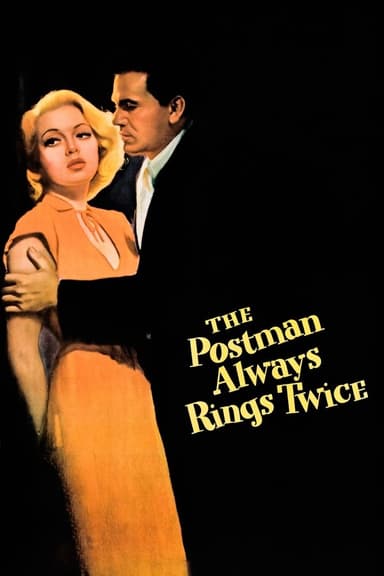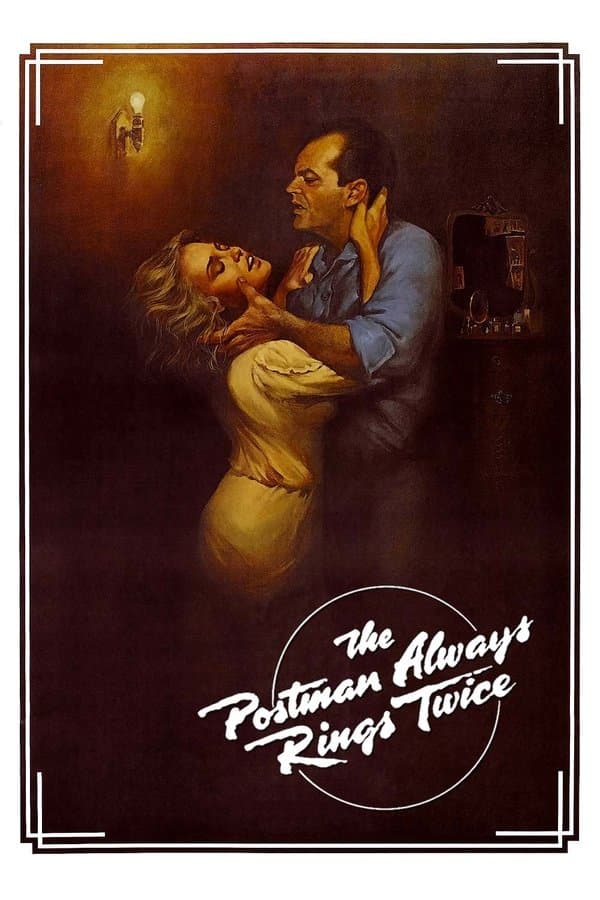
The Postman Always Rings Twice
1981 • Crime, Drama, Romance, Thriller • R
The sensuous wife of a lunch wagon proprietor and a rootless drifter begin a sordidly steamy affair and conspire to murder her Greek husband.
Runtime: 2h 2m
Buy related books from Amazon
As an Amazon Associate I earn from qualifying purchases. Read the full disclosure.
Why you should read the novel
Before pressing play, pick up James M. Cain’s The Postman Always Rings Twice and experience the original hardboiled noir classic that ignited generations of crime fiction and Hollywood adaptations. Cain’s lean prose, relentless pacing, and razor-edged tension deliver a reading rush no screen can fully replicate.
Reading the novel unlocks the raw psychology behind Frank and Cora’s choices—desire, desperation, and fate—filtered through a confessional voice that grips from the first page. You’ll feel the heat of the roadhouse, the stakes of every scheme, and the fatal pull of consequence in Cain’s exact words.
If you love atmospheric thrillers, vintage crime, and propulsive storytelling, this is essential. Discover why critics and authors cite Cain’s book as a cornerstone of American noir—and why the source text remains the most intense way to live this story.
Adaptation differences
Narrative perspective is the most striking difference. Cain’s novel is a first-person confession from Frank, immersing you in his impulses, rationalizations, and dread. The film observes from the outside, so the intimate, morally queasy interiority that defines the book becomes mood and performance rather than a direct pipeline to Frank’s mind.
Tone and emphasis also shift. On the page, the story is brutally economical—every line drives the plot and deepens the characters’ fatalism. The movie heightens sensuality and atmosphere, which can eclipse the novel’s relentless compression and the sickening inevitability that builds through Cain’s spare, clipped sentences.
The legal chess match is more intricate in the book. Cain details the DA’s pressure tactics and the defense’s cunning maneuvers, using letters, leverage, and insurance angles to twist outcomes. The film condenses and streamlines these machinations, preserving the broad beats but softening the labyrinthine strategy that makes the novel’s midsection so tense.
Subplots and meanings are calibrated differently. The novel spends more time on the repercussions of Frank’s straying and on the bleak logic of fate; it also foregrounds the “postman” motif as a metaphor explained in dialogue. The film retains the tragic arc but underplays that explicit thematic explanation, letting the title’s irony linger while the book spells out its fatal knock—twice.
The Postman Always Rings Twice inspired from
The Postman Always Rings Twice
by James M. Cain