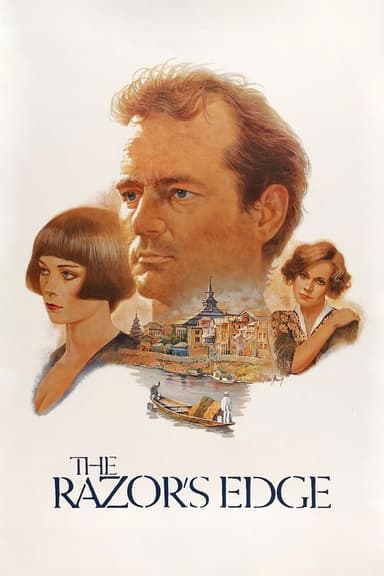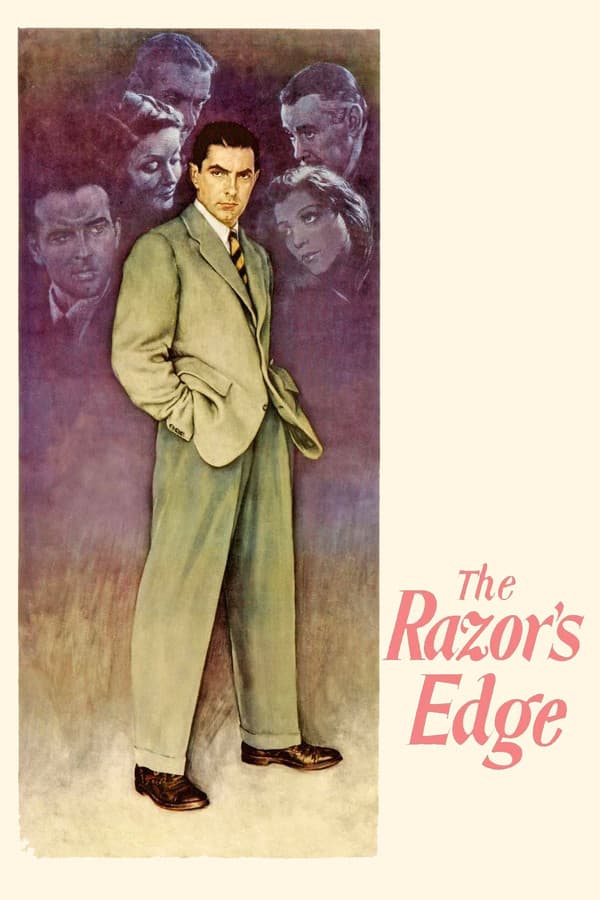
The Razor's Edge
1946 • Drama, Romance • NR
An adventurous young man goes off to find himself and loses his socialite fiancée in the process. But when he returns 10 years later, she will stop at nothing to get him back, even though she is already married.
Runtime: 2h 25m
Buy related books from Amazon
As an Amazon Associate I earn from qualifying purchases. Read the full disclosure.
Why you should read the novel
Discover the profound original novel The Razor's Edge by W. Somerset Maugham, a timeless classic that explores meaning, purpose, and redemption with far greater depth than any screen version. Maugham’s graceful prose, keen irony, and philosophical insight turn Larry Darrell’s search for enlightenment into an unforgettable reading experience.
On the page, you will travel from postwar Chicago and glittering Paris salons to quiet monasteries and the mountains of India, guided by Maugham’s signature narrator. The novel offers intimate access to Larry, Isabel Bradley, Sophie MacDonald, and Elliott Templeton, revealing motives and moral struggles the movie can only hint at.
If you are choosing between watching the 1946 film and reading the book, pick the source. Maugham’s The Razor's Edge delivers richer character development, nuanced themes, and exquisite language—perfect for book clubs, literature lovers, and anyone seeking a thoughtful, life-changing read in print, ebook, or audiobook.
Adaptation differences
The most significant difference between the 1946 film The Razor's Edge and the book is narrative voice. In the novel, W. Somerset Maugham appears as a character-narrator, filtering events through his observations and reflective commentary. The film nods to this device but necessarily trims interior monologues and philosophical asides, reducing the layered, essay-like texture that defines the book.
Larry Darrell’s spiritual journey is substantially compressed on screen. The novel dwells on study, manual labor, and extended time in India, illuminating ideas from Eastern philosophy and the slow maturation of Larry’s worldview. The movie uses elegant montages and brief dialogues to convey years of transformation, sacrificing the step-by-step intellectual and spiritual development readers experience in the text.
Character shading also shifts. The book portrays Isabel Bradley’s charm alongside her steely will and moral compromises with unsettling clarity, and it shows Sophie MacDonald’s descent into addiction with raw specificity. The 1946 adaptation, shaped by the era’s production codes, softens or suggests elements involving sex, addiction, and vice, making their arcs less starkly harrowing than in Maugham’s unsparing portrayal.
Tone and scope differ as well. The novel’s social satire of Paris high society, Elliott Templeton’s poignant vanity, and the ripple effects of the 1929 crash on Gray Maturin receive broader context and sharper irony on the page. The film favors romantic momentum, visual glamour, and closure, while the book lingers in ambiguity, offering a more expansive timeline, richer thematic debate, and a subtler, more open-ended final note about Larry’s chosen path.
The Razor's Edge inspired from
The Razor's Edge
by W. Somerset Maugham