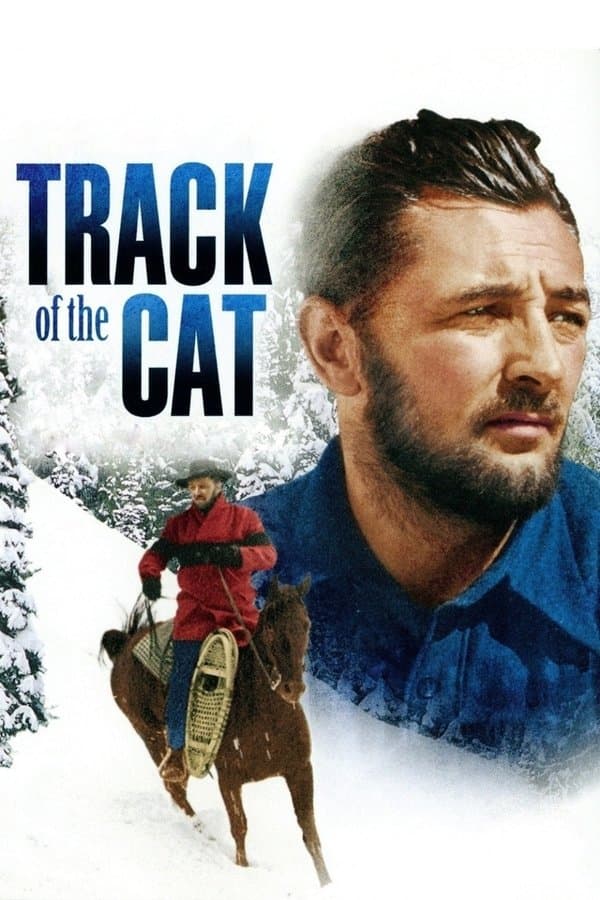
Track of the Cat
1954 • Drama, Western • NR
A family saga: In a stunning mountain valley ranch setting near Aspen, complex and dangerous family dynamics play out against the backdrop of the first big snowstorm of winter and an enormous panther with seemingly mythical qualities which is killing cattle.
Runtime: 1h 42m
Buy related books from Amazon
As an Amazon Associate I earn from qualifying purchases. Read the full disclosure.
Why you should read the novel
Choose Walter Van Tilburg Clark’s novel Track of the Cat to experience the story where it began: on the page, with taut psychological depth and a voice that the film can’t fully echo. Clark’s prose turns the high country winter into a living force, amplifying dread, longing, and fragile hope with every step taken in the snow.
The book offers multi-layered interiority—fears, memories, and rivalries—unfolding through richly textured perspectives that deepen each character far beyond what screen time permits. You’ll find an immersive portrait of a family under siege by nature, superstition, and their own unspoken histories, rendered with lyrical precision and hard-earned insight.
If you love literary Westerns and atmospheric psychological fiction, the Track of the Cat novel delivers the complete experience: nuanced themes, meticulous tracking details, and indelible symbolism. Read the source to grasp the full resonance of Clark’s vision and then decide how the movie measures up.
Adaptation differences
Track of the Cat book vs movie: the film leans on visual style—famously near-monochrome color and an often-unseen predator—to create suspense, whereas the novel relies on language, interior monologue, and layered symbolism. Clark’s detailed descriptions of landscape and weather shape mood and meaning in ways even the film’s striking imagery can only suggest.
Characterization diverges meaningfully. In the book, multiple points of view reveal the inner conflicts of each family member and the weight of history that binds them. The film condenses or simplifies some arcs, trims back interior lives, and reduces the cultural and spiritual context surrounding the hunt, especially as it relates to superstition and the ranch hand’s worldview.
Pacing and structure also differ. The movie compresses events to heighten immediacy and foreground the hunt, while the novel lingers on domestic rhythms, memory, and the meticulous craft of tracking. This means the book explores motives and consequences in greater depth, and the film emphasizes momentum, tension, and stark set pieces.
The endings resonate differently. The film steers toward a more streamlined resolution and a clearer note of renewal for the survivors, whereas the novel’s conclusion is more ambivalent, leaving moral and psychological wounds in uneasy balance. Readers will find the book’s themes—masculinity, fear, family power—posed as open questions rather than tidy answers.
Track of the Cat inspired from
Track of the Cat
by Walter Van Tilburg Clark