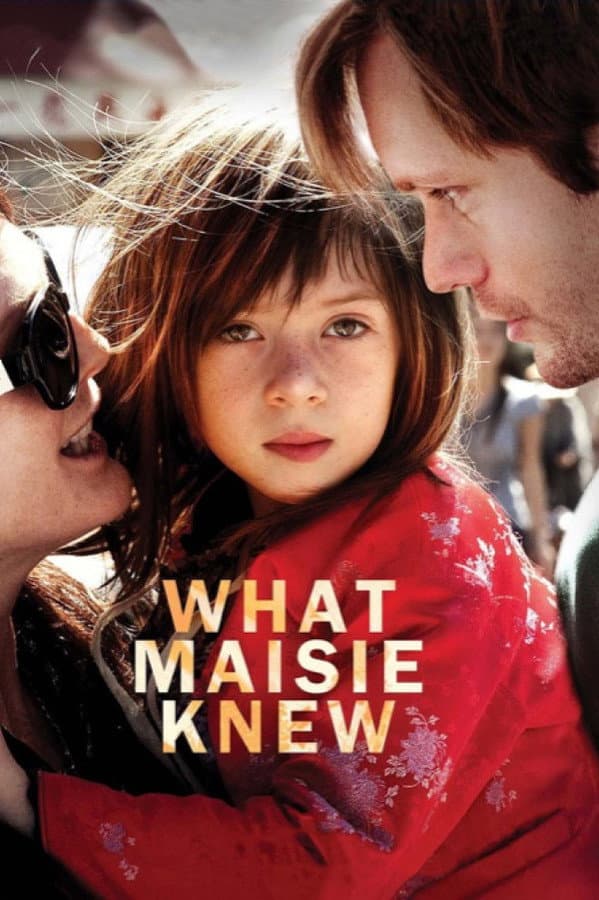
What Maisie Knew
2013 • Drama • R
In New York City, a young girl is caught in the middle of her parents' bitter custody battle.
Runtime: 1h 39m
Buy related books from Amazon
As an Amazon Associate I earn from qualifying purchases. Read the full disclosure.
Why you should read the novel
Read the original book What Maisie Knew by Henry James to experience the classic story as it was first imagined. This landmark novel offers a nuanced, intimate portrait of childhood amid divorce and shifting loyalties.
James’s prose and razor-sharp social insight reward careful reading. Through brilliantly controlled free indirect narration, the What Maisie Knew novel captures innocence, perception, and moral ambiguity in ways no screen can fully reproduce.
If the movie moved you, the book vs movie comparison favors the source. Meet Beale and Ida Farange, Sir Claude, Mrs. Beale, and Mrs. Wix on the page, and discover layers the adaptation simply can’t include.
Adaptation differences
One major difference between the What Maisie Knew movie and the book is the setting and era. Henry James places the story in late-Victorian London, using Maisie’s situation to critique divorce laws and social hypocrisy. The film relocates everything to contemporary New York City, reframing the conflict around modern careerism, celebrity culture, and the logistics of joint custody.
Key characters are reimagined. In the novel, Maisie’s parents are Beale and Ida Farange; the pivotal adults include Sir Claude, the governess Miss Overmore (who becomes Mrs. Beale), and the morally steadfast Mrs. Wix. The film changes Ida to Susanna, a rock musician, adds Lincoln as a gentle bartender who becomes a caring stepfather, and transforms the nanny into Margo; figures like Sir Claude and Mrs. Wix are omitted or merged in spirit.
The narrative method shifts dramatically. Henry James filters events through a child’s limited understanding with ironic, intricate prose, creating layers of implication the reader decodes over time. The adaptation leans on visual cues and naturalistic performances to suggest Maisie’s viewpoint, compresses timelines, and streamlines legal and social intricacies for clarity and pace.
Tone and ending diverge as well. The novel culminates in a morally fraught, ambiguous choice—Maisie’s renunciation that highlights James’s critique of adult selfishness and compromised love. The film concludes more hopefully, steering Maisie toward a nurturing, chosen family with step-parents who provide the stability and tenderness largely absent from her biological parents.
What Maisie Knew inspired from
What Maisie Knew
by Henry James