Wrong Move
1975 • Drama • NR
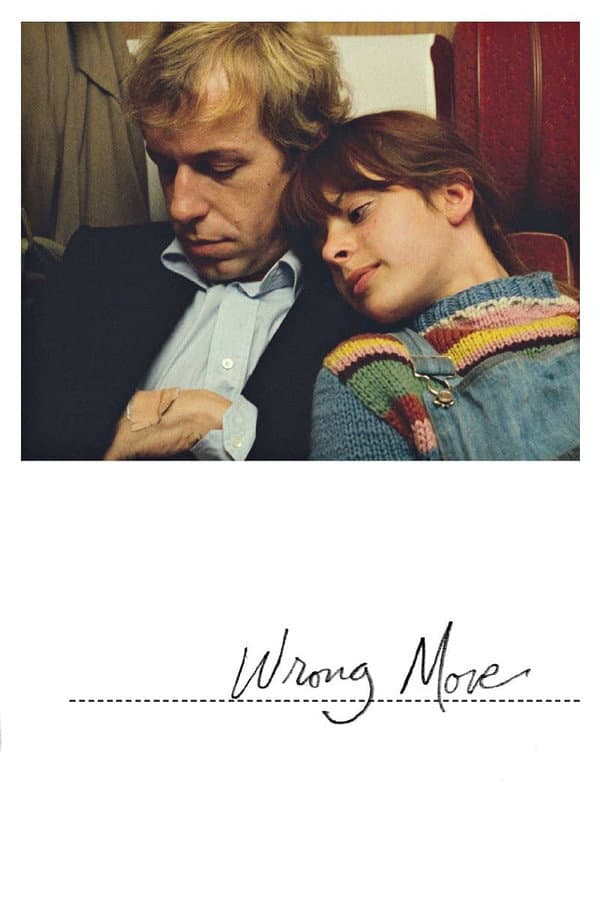
Six days in the life of Wilhelm: a detached man without qualities. He wants to write, so his mother gives him a ticket to Bonn, telling him to live. On the train he meets an older man, an athlete in the 1936 Olympics, and his mute teen companion, Mignon. She's an acrobat in market squares for spare change.
Runtime: 1h 45m
Buy related books from Amazon
As an Amazon Associate I earn from qualifying purchases. Read the full disclosure.
Why you should read the novel
Before you watch Wrong Move (1975), experience the full power of Goethe’s Wilhelm Meister's Apprenticeship in English. The novel’s rich psychological depth, theatrical milieu, and sweeping social canvas offer layers of meaning a two-hour film can’t match.
Reading Goethe reveals Wilhelm’s development in all its nuance—his evolving ideals, moral tests, and transforming relationships. You’ll meet unforgettable figures in greater detail and context, grasp the novel’s humor and irony, and follow a complete arc of growth that the movie only sketches.
If you’re searching for the definitive Wrong Move book vs movie experience, start with the source. Accessible English translations make Goethe’s classic alive and relevant, turning a road of alienation on screen into a journey of insight on the page.
Adaptation differences
Wrong Move (1975) is a loose, modernized adaptation of Goethe’s Wilhelm Meister's Apprenticeship, shifting the 18th‑century Bildungsroman into 1970s West Germany. The carriage roads and playhouses become trains, highways, and motels, turning the story into a contemporary road movie about dislocation and observation.
Goethe’s novel champions Bildung—personal formation through society, art, and responsibility—whereas Wim Wenders and screenwriter Peter Handke emphasize alienation, stasis, and ambiguity. The film’s cool minimalism, long silences, and introspective voiceover replace the book’s expansive social tapestry and steady maturation with a modern, anti‑Bildungsroman tone.
Characters are condensed and transformed. Wilhelm remains a would‑be writer, but companions arrive as a chance entourage rather than an organized theatrical world. Mignon appears as a largely mute adolescent, an enigmatic presence rather than the novel’s lyrical, memory‑haunted child, and the actress Therese blends traits of Goethe’s various theatrical women instead of mirroring a single counterpart.
Major plot architecture is streamlined or omitted. The novel’s intricate theatrical apprenticeship and the guiding Society of the Tower—central to Wilhelm’s integration—are minimized or absent. Instead of culminating in social belonging, the film ends more open‑endedly, privileging mood, landscape, and existential drift over the novel’s clearer arc of education and resolution.
Wrong Move inspired from
Wilhelm Meister's Apprenticeship
by Johann Wolfgang von Goethe