Inés of My Soul
2020 • Drama
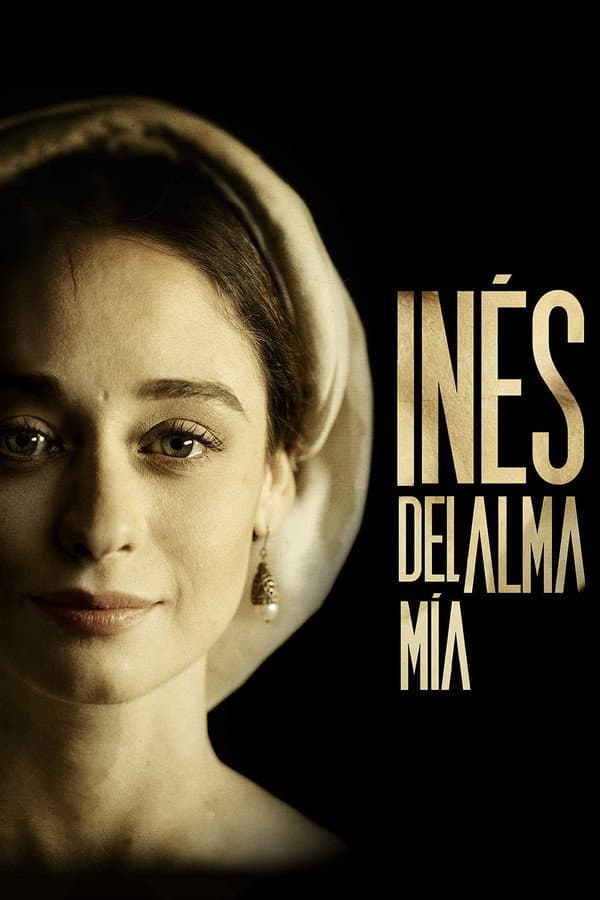
Inés Suárez, a young, humble woman from Extremadura who sets out for the New World to look for her husband, lost on the other side of the Atlantic along with his dreams of glory. Once there, Inés does not find her husband, but she does find the passionate love of Pedro de Valdivia, Francisco Pizarro's Field Master.
Buy related books from Amazon
As an Amazon Associate I earn from qualifying purchases. Read the full disclosure.
Why you should read the novel
Before pressing play on the 2020 TV series Inés of My Soul, discover the source: the novel Inés of My Soul by bestselling author Isabel Allende. This immersive historical fiction follows Inés Suárez from Extremadura to the New World, capturing endurance, ambition, and love amid the founding of Chile. Allende’s evocative prose, meticulous research, and moral nuance deliver depth the screen can only hint at—making the book the definitive way to experience this extraordinary life.
The novel’s first-person voice places you directly inside Inés’s heart and mind. You’ll explore the trek across Peru and into Chile, complex colonial politics, and encounters with Mapuche leaders with cultural and historical richness. Readers searching for Isabel Allende historical novels, Inés of My Soul book summaries, and authentic 16th‑century worldbuilding will find a layered narrative that rewards close reading and reflection.
If you’re choosing between the TV show and the book, pick the version that preserves every facet of character, context, and consequence. Find Inés of My Soul by Isabel Allende in paperback, ebook, or audiobook—perfect for book clubs, classroom reading, and fans of literary historical fiction. Search for Inés of My Soul book, buy Inés of My Soul by Isabel Allende, or read Inés of My Soul on Kindle to begin the journey.
Adaptation differences
The TV adaptation streamlines the timeline compared with the novel, condensing the Peru‑to‑Chile journey and civil strife while merging or simplifying several secondary conquistadors and officials. It adds clarifying scenes and composites to accelerate plot beats, and it foregrounds the central romance earlier and more consistently than the book. As a result, political subplots and expedition logistics receive less screen time than in Isabel Allende’s narrative.
Perspective is a major shift. The novel is framed as Inés Suárez’s first‑person memoir, addressed with intimate candor and retrospective judgment, whereas the series mostly uses an external, third‑person lens with brief voiceover at most. This change reduces interior monologue and moral debate while elevating spectacle, travel, and confrontation.
Battle scenes and cultural context are treated differently. Allende’s book devotes pages to governance, faith, supplies, and negotiations, and it carefully situates encounters with Mapuche leaders such as Lautaro and Michimalonco. The show emphasizes sieges, skirmishes, and turning‑point set pieces (including the defense of early Santiago), sometimes compressing causes and outcomes or adjusting chronology to heighten drama and clarity for viewers.
Character arcs are reshaped for television pacing. Relationships among Inés, Pedro de Valdivia, and Rodrigo de Quiroga are streamlined; motivations are clarified through dialogue and invented moments; and casting/ages and event timing may be adjusted. The novel closes with a reflective coda that underscores legacy and responsibility, while the series favors visually resonant closure and relationship payoffs, resulting in a more immediate but less meditative ending.
Inés of My Soul inspired from
Inés of My Soul
by Isabel Allende