The House of the Spirits
2026 • Drama • TV-MA
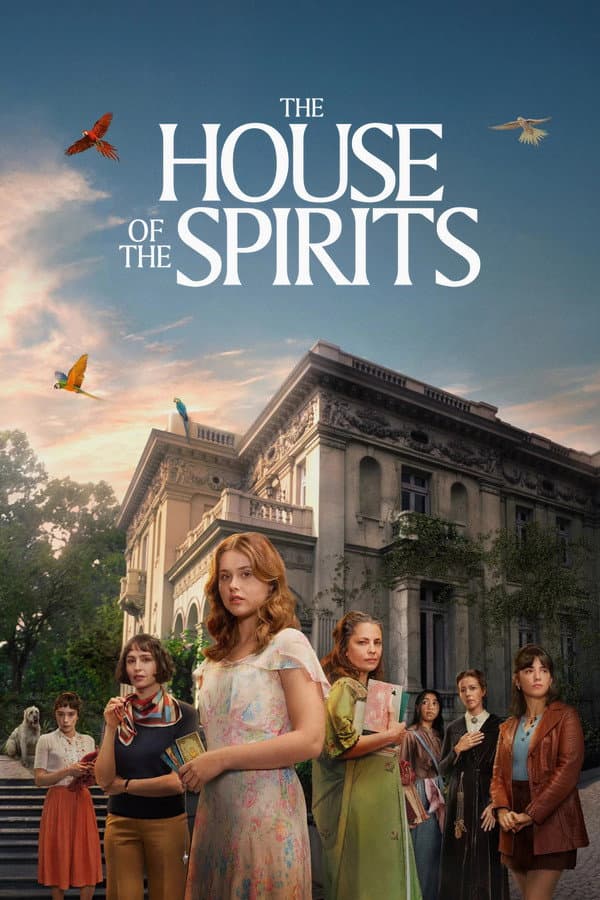
The epic tale of a proud and passionate family, secret loves, and bloody revolution. The Trueba family's passions, struggles, and secrets span a century of violent social change, culminating in a crisis that hurls the proud, tyrannical patriarch and his beloved granddaughter towards opposite sides of the fence.
Buy related books from Amazon
As an Amazon Associate I earn from qualifying purchases. Read the full disclosure.
Why you should read the novel
Before pressing play on the 2026 TV series, immerse yourself in The House of the Spirits book by Isabel Allende. This landmark of magical realism offers the complete, unfiltered vision behind the adaptation, capturing the Trueba family’s triumphs, tragedies, and enduring love with lyrical power. Reading the novel lets you experience the original voice, symbolism, and cultural texture that shaped a modern classic.
Allende’s prose gives you layers the screen can only hint at: intimate diary entries, shifting perspectives, and a living tapestry of memory, myth, and history. You will meet Clara, Esteban, Blanca, Alba, and a constellation of unforgettable characters in the depth only a novel can sustain. The book’s emotional range and political resonance unfold gradually, rewarding close reading with revelations that linger long after the final page.
Whether in paperback, ebook, or audiobook, The House of the Spirits is the definitive way to understand the world that inspired the show. It is ideal for book clubs, rereads, and anyone curious about Chilean history and magical realism. Read the source to appreciate every nuance that made this story endure.
Adaptation differences
Compared with the 2026 TV series adaptation, the novel’s structure is broader and more intricately layered. On the page, Allende interweaves family chronicles, personal notebooks, and shifting narrative voices that build meaning over time. A series format typically streamlines this approach into a clearer, more linear viewpoint to maintain pacing and accessibility across episodes.
Magical realism in the book is textured with symbolism, quiet miracles, and the everyday presence of the supernatural. In a screen version, these elements are often translated into visual motifs or effects, which can emphasize spectacle over the slow, luminous strangeness of the prose. As a result, the tone of the TV adaptation may feel more immediate and less meditative than the novel’s atmosphere.
The novel’s political and historical arc unfolds gradually, tracing social inequities, land, class, and the encroaching crisis with granular detail. To fit time constraints, the 2026 series is likely to compress timelines, combine events, or simplify context around the coup and its aftermath. This preserves narrative momentum but can soften the novel’s intricate cause-and-effect and the full moral weight of its consequences.
Character journeys and subplots in the book—relationships, generational echoes, and the subtle evolution of figures like Clara, Esteban, Blanca, and Alba—receive expansive development. Adaptations commonly merge secondary characters, reduce side stories, or re-sequence turning points to fit episodic structure. Reading the novel restores the interiority, symbolism, and connective tissue that make each character arc resonate across generations.
The House of the Spirits inspired from
The House of the Spirits
by Isabel Allende