North & South
2004 • Drama
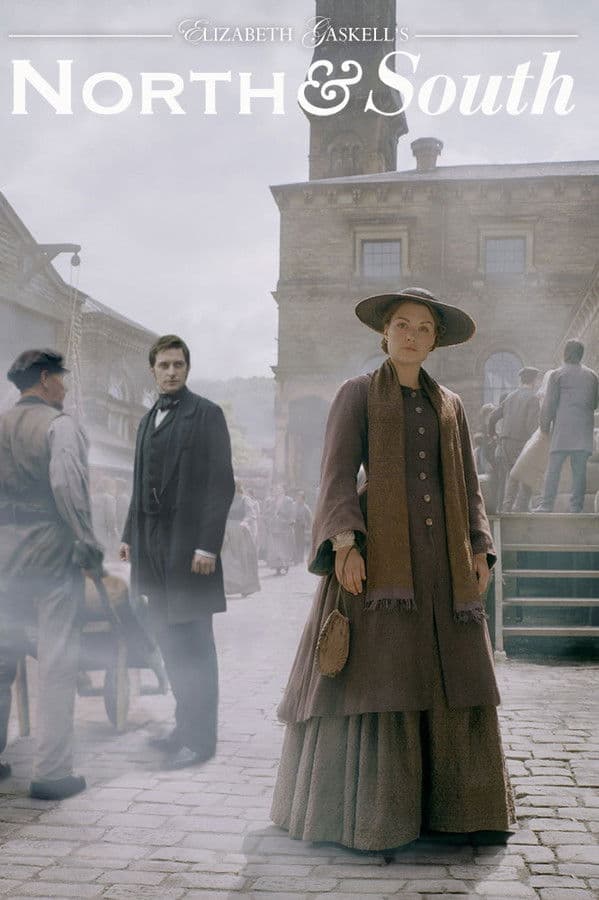
Margaret Hale is a southerner from a country vicarage newly settled in the industrial northern town of Milton. In the shock of her move, she misjudges charismatic cotton mill-owner John Thornton, whose strength of purpose and passion are a match for her own pride and willfulness. When the workers of Milton call a strike, Margaret takes their side, and the two are brought into deeper conflict. As events spiral out of control, Margaret - to her surprise - begins to fall in love with Thornton...
Buy related books from Amazon
As an Amazon Associate I earn from qualifying purchases. Read the full disclosure.
Why you should read the novel
Before pressing play, discover the power of Elizabeth Gaskell’s North and South in its original form. The novel delivers Margaret Hale’s and John Thornton’s inner lives with rich psychological depth that no screen can fully capture. You’ll experience the social, romantic, and moral stakes through Gaskell’s incisive prose—essential reading for anyone who loves Victorian literature and nuanced character development.
Gaskell’s novel is also a landmark exploration of industrial Britain. From Helstone’s pastoral calm to Milton’s smoke-filled mills, the book immerses you in class tensions, labor relations, faith, and conscience. If you’re seeking historical detail, social insight, and the slow-burn tenderness that builds through conversation and reflection, the novel offers a layered experience the series can only suggest.
Reading North and South unlocks storylines and context trimmed on screen: Mr. Hale’s theological crisis, Nicholas and Bessy Higgins’s voices, Frederick Hale’s peril, and Mr. Bell’s pivotal influence. Modern editions provide helpful notes, making the classic accessible and compelling for today’s readers. For a complete, SEO-friendly guide to Victorian romance and industry, start with the book, not the episode list.
Adaptation differences
North & South (2004) streamlines Gaskell’s broad social canvas into a tighter romance. The novel foregrounds religious doubt, moral philosophy, and social critique through an omniscient narrator and interior monologue. The series reduces theological debate and internal reflection, prioritizing visual storytelling and direct emotional beats. As a result, the book offers more context on belief, conscience, and class ideology.
Characterization diverges notably. The adaptation opens with a brutal mill scene that darkens Mr. Thornton early, while the book presents him as stern, principled, and self-made but not gratuitously violent. Margaret’s growth in the novel unfolds through layered introspection and gradual unlearning of southern prejudices; on screen, her arc is faster and more explicitly romantic. Secondary figures—Henry Lennox, Mrs. Thornton, and the workers—are more rounded and discursive in the text.
Key plots and structures shift. The famous train-station reunion and kiss is an invention of the 2004 series; in the book, reconciliation happens in London when Margaret, now an heiress, offers to invest in Thornton’s mill—an economic and emotional resolution combined. The novel gives Mr. Bell a larger mentoring role and develops Frederick Hale’s fugitive subplot in greater detail, while the show compresses or sidelines these threads for narrative pace.
Thematic emphasis changes too. Gaskell’s treatment of strikes, unions, masters-and-men negotiations, and Bessy Higgins’s spiritual reflections is fuller and more nuanced in print. The series evokes industrial atmosphere brilliantly but condenses labor politics and religious discourse. Even setting texture differs: Milton’s social geography, business networks, and drawing-room conversations carry analytical weight in the novel, providing insights only lightly sketched on screen.
North & South inspired from
North and South
by Elizabeth Gaskell