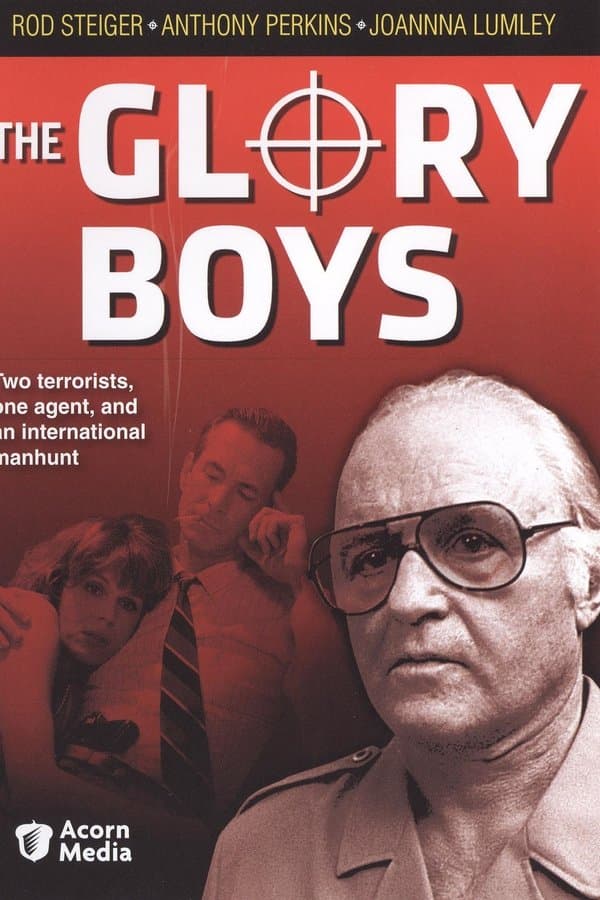
The Glory Boys
1984 • Crime, Drama
Set in London, this three-part British miniseries was adapted by Gerald Seymour from his own novel. A visiting Israeli scientist was targeted for assassination by two different terrorist organizations: one Irish, one Arab. After working at cross-purposes for an extended length of time, the hired killers from both factions decided to join forces to carry out their murderous assignment.
Buy related books from Amazon
As an Amazon Associate I earn from qualifying purchases. Read the full disclosure.
Why you should read the novel
Before you stream the TV series, experience The Glory Boys as Gerald Seymour originally wrote it. The novel delivers pulse-tightening suspense, layered tradecraft, and a street-level feel only a master of espionage fiction can sustain.
Seymour’s prose gives you what no screen can: the inner calculations of watchers and gunmen, the moral gray zones of counter-terror work, and the political crosscurrents that shape every decision. It’s a richer, more immersive thriller, page after page.
If you want the definitive version of this story—deeper motives, sharper stakes, and tension that builds with every chapter—choose the source. Read The Glory Boys and see why the book still outpaces its adaptation.
Adaptation differences
The TV adaptation streamlines the novel’s structure for limited-series pacing, condensing timelines and reordering some sequences to keep the on-screen momentum high. The book unfolds more gradually, building pressure through extended surveillance, stakeouts, and procedural detail that television necessarily compresses.
Characterization is more layered in the novel. You spend more time inside the heads of the would-be assassins and the watchers tailing them, absorbing doubts, convictions, and the small choices that spiral into big consequences. On screen, those inner monologues become glances and dialogue, which narrows nuance even when performances are strong.
Political texture is denser on the page. The novel situates the plot within intersecting conflicts and tradecraft realities, while the series simplifies affiliations, terminology, and backstory to remain clear and propulsive for a broad audience. Some roles are combined or trimmed, and a few locations are consolidated to fit production constraints.
Tone and outcome also shift. The book leans darker and more ambiguous, with violence and aftermath registering in unsettling, granular ways. The series favors cleaner set pieces and clearer resolution beats, reshaping or abbreviating certain subplots and confrontations to deliver a satisfying televised crescendo.
The Glory Boys inspired from
The Glory Boys
by Gerald Seymour