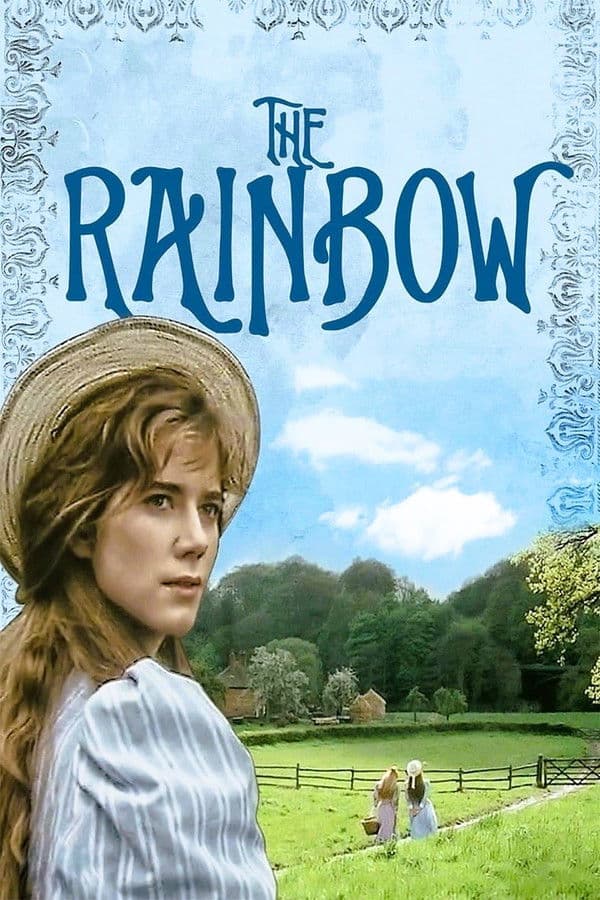
The Rainbow
1988 • Drama
Ursula Brangwen is the beautiful, naive daughter of a wealthy country squire, one of five children living in the Nottinghamshire mining heartland at the turn of the century. From wide-eyed sixteen-year-old to fully grown woman, the drama follows Ursula through the trials and tribulations of her burgeoning personal relationships in her quest to find fulfilment for her developing passionate and sensual nature. Adaptation of DH Lawrence's novel.
Buy related books from Amazon
As an Amazon Associate I earn from qualifying purchases. Read the full disclosure.
Why you should read the novel
Discover The Rainbow, the landmark novel by D. H. Lawrence. If you enjoyed the 1988 TV series, the original book delivers the complete Brangwen family saga with uncut depth and lyrical power.
On the page, Lawrence’s voice unveils fierce inner lives, sensual awakenings, and bold ideas about nature, industry, love, and freedom. Reading The Rainbow lets you experience every nuance the camera can only suggest, with rich symbolism and interior reflection that reward careful reading.
For the fullest experience, read The Rainbow by D. H. Lawrence in a trusted, unabridged edition—paperback, ebook, or audiobook. It’s perfect for literature study, book clubs, or personal discovery, and remains a cornerstone of modern British fiction.
Adaptation differences
Scope and structure differ significantly between the 1988 TV series and the book. D. H. Lawrence’s novel spans three generations of the Brangwen family before focusing on Ursula; the screen adaptation compresses this arc to foreground Ursula’s coming-of-age, abbreviating or reframing earlier Brangwen chapters and shifting the epic chronicle into a more concentrated character drama.
Characterization is also streamlined. The novel’s interior monologue gives deep access to Ursula’s doubts, desires, and contradictions, as well as complex portraits of figures like Anton Skrebensky and Winifred Inger. On television, dialogue and action replace sustained inner voice, secondary characters are reduced or combined, and some relationships receive less time and nuance than in the book.
Themes and tone are modulated for broadcast. The Rainbow novel is frank about sexuality, spiritual struggle, and the tension between nature and industrial modernity; the TV adaptation emphasizes romance, period atmosphere, and plot clarity, while Lawrence’s metaphysical debates, biblical imagery, and philosophical digressions are necessarily pared back.
Pacing and emphasis shift to fit limited runtime. Incidents are omitted or reordered, timelines are simplified, and politically inflected contexts receive less detail. Even when iconic moments—such as Ursula’s visionary response to the rainbow—appear on screen, they are rendered visually as a concluding motif rather than explored through the layered, interpretive prose of the original.
The Rainbow inspired from
The Rainbow
by D. H. Lawrence