Yoshitsune
2005 • Drama, War & Politics • NR
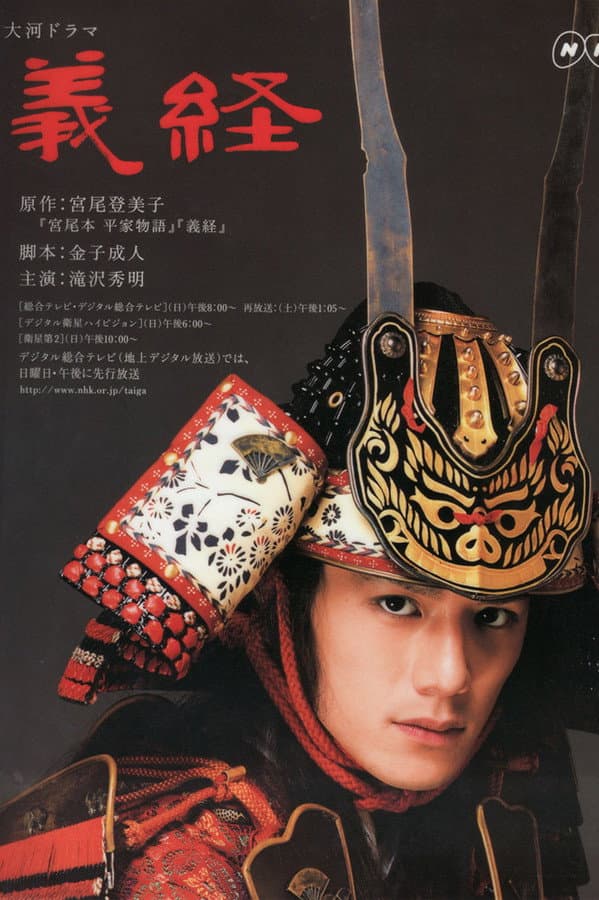
Yoshitsune is a Japanese television drama series originally broadcast between 9 January and 11 December 2005, with a three-part special compilation being aired from 24 December to 25 December 2005. The 44th Taiga Drama, the original work is by Miyao Tomiko, screenplay by Kaneko Narito and starring Hideaki Takizawa.
Buy related books from Amazon
As an Amazon Associate I earn from qualifying purchases. Read the full disclosure.
Why you should read the novels
If you love Yoshitsune (2005), reading the classic sources in English unlocks the epic at its origin. The Tale of the Heike and the Gikeiki chronicle offer the voices, poetry, and pathos that shaped Minamoto no Yoshitsune’s legend.
These books go beyond the show’s highlights, revealing Buddhist themes of impermanence, battlefield laments, and multi-sided perspectives on the Genpei War. With translations by Royall Tyler, Helen Craig McCullough, and others, you get authoritative, readable gateways into medieval Japan.
Prefer lasting depth over a weekend binge? Explore the Chronicle of Yoshitsune and The Tale of the Heike to experience pivotal episodes—Ichinotani, Dan-no-ura, Hiraizumi—through the original storytelling that inspired centuries of drama and art.
Adaptation differences
Scope and tone: Yoshitsune (2005) blends multiple sources—especially The Tale of the Heike and the Gikeiki—into a single heroic arc. The books are episodic and polyphonic, stressing Buddhist impermanence and the rise-and-fall of the Taira, while the series highlights Yoshitsune’s personal journey and streamlines timelines for narrative momentum.
Legend versus history: Gikeiki leans into folklore, from the fateful Gojo Bridge encounter with Benkei to superhuman feats and portentous omens. The TV drama foregrounds these as vivid set pieces yet tends to rationalize or humanize them—presenting rigorous training at Kurama and treating miracles as vision, rumor, or theatrical flourish rather than literal fantasy.
Characterization: In the sources, Yoritomo can appear colder and more distant, an austere counterpoint to Yoshitsune, while Benkei oscillates between fearsome warrior-monk and loyal retainer. The show expands emotional interiors—deepening Yoshitsune’s romance with Shizuka Gozen, shading Yoritomo’s politics with court pressures, and giving Benkei warmer, more companionable screen time.
Battles and politics: The books deliver layered battlefield tactics and a mosaic of voices (Taira and Minamoto, commoners and courtiers). The series simplifies command structures, merges minor figures, and choreographs major set pieces—Ichinotani’s cliff descent, Dan-no-ura’s naval turn, and the final tragedy in Hiraizumi—into tighter, visually driven sequences that differ from the texts’ granular, chant-like recounting.
Yoshitsune inspired from
The Gempei War 1180–85
by Stephen Turnbull
The Tale of the Heike
by Royall Tyler
The Tale of the Heike
by Hiroshi Kitagawa, Bruce T. Tsuchida
Yoshitsune: A Fifteenth-Century Japanese Chronicle (Gikeiki)
by Helen Craig McCullough