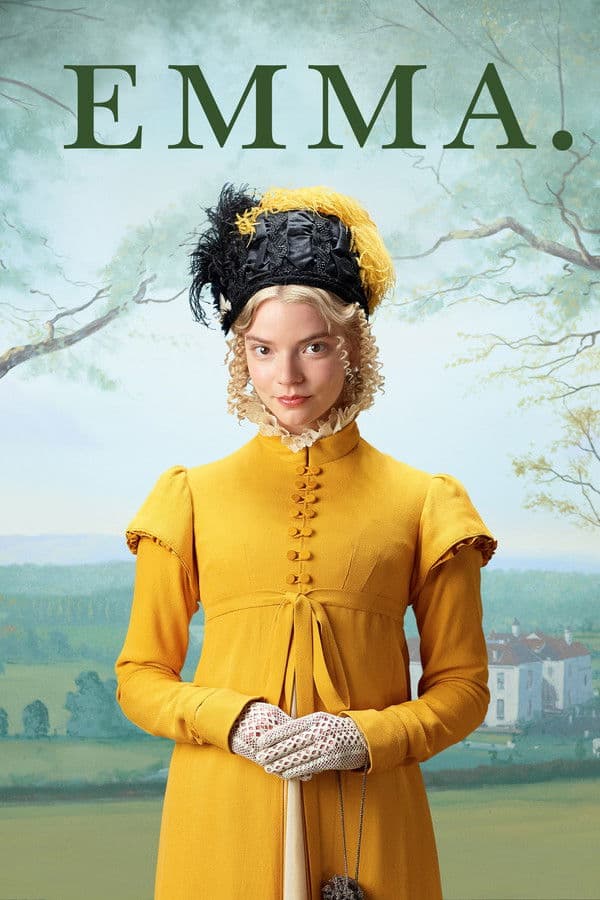
Emma.
2020 • Comedy, Drama, Romance • PG
In 1800s England, a well-meaning but selfish young woman meddles in the love lives of her friends.
Runtime: 2h 5m
Buy related books from Amazon
As an Amazon Associate I earn from qualifying purchases. Read the full disclosure.
Why you should read the novel
Thinking about watching Emma (2020)? Read Jane Austen’s Emma first. Austen’s novel delivers a witty, immersive portrait of Regency-era matchmaking, class, and self-discovery, crafted with her signature irony and charm. The original text invites you into Emma Woodhouse’s mind, revealing motives and misunderstandings the movie can only hint at. Start with the book to experience the full depth behind every flirtation, faux pas, and hard-earned epiphany.
Jane Austen’s Emma rewards readers with free indirect discourse—the narrative style that lets you feel Emma’s evolving judgments in real time. That literary intimacy builds suspense around Mr. Knightley, Frank Churchill, Jane Fairfax, and Harriet Smith in ways a fast-paced film cannot fully replicate. If you love character-driven romance and social satire, reading the novel unlocks nuances, irony, and clues that make every twist more satisfying.
For fans searching Emma book vs movie or should I read Emma before watching, the answer is yes. Choosing the classic novel first enriches every scene you’ll later see on screen. You’ll catch hidden foreshadowing, appreciate Austen’s precise language, and understand the stakes driving Highbury’s courtships. Read Emma by Jane Austen to enjoy the definitive version of this beloved story.
Adaptation differences
Emma (2020) compresses timelines and events from Jane Austen’s Emma to fit a feature runtime. Subplots involving the Westons, the Knightleys’ London visits, and day-to-day Highbury gossip are abbreviated or combined. The film streamlines letters and offstage revelations—especially around Frank Churchill and Jane Fairfax—into brisk scenes, while the novel unfolds clues gradually through conversations, correspondence, and shifting perspectives.
Tone and perspective differ markedly. Austen’s free indirect narration lets readers live inside Emma’s assumptions and blind spots, amplifying the irony of her errors. The Emma (2020) movie adaptation favors visual comedy, symmetrical compositions, and crisp pacing. Interior debates become glances, gestures, and staging; some motives are clearer or more playful on screen, while the book sustains ambiguity longer and rewards close reading.
Characterization also shifts. Mr. Knightley is more openly emotional in the film, and his declaration of love is staged with an invented comic flourish not in the book. Emma appears both haughtier and more vulnerable earlier on, Harriet Smith is slightly more assertive, and Mr. Woodhouse’s hypochondria is heightened for humor. Miss Bates’s Box Hill humiliation is faithful in spirit, but the novel’s aftermath explores guilt and reconciliation with greater psychological detail.
The ending emphasizes romance and spectacle. The adaptation accelerates disclosures about Harriet’s parentage and Frank and Jane’s engagement, then culminates in a picturesque wedding. Austen’s novel lingers on social consequences, family logistics, and Mr. Knightley’s practical decision to reside at Hartfield for Mr. Woodhouse’s comfort. Readers will notice dozens of smaller differences in dialogue, timing, and emphasis that shift themes from subtle social critique toward stylized romantic comedy.
Emma. inspired from
Emma
by Jane Austen