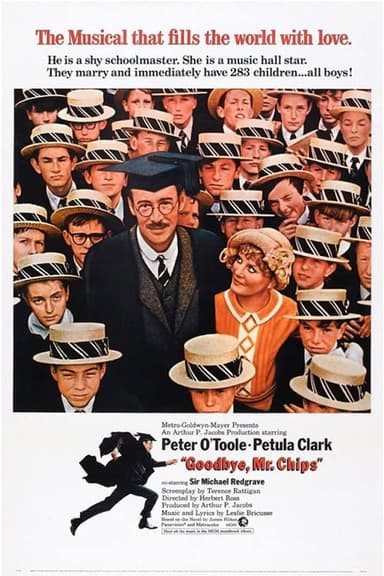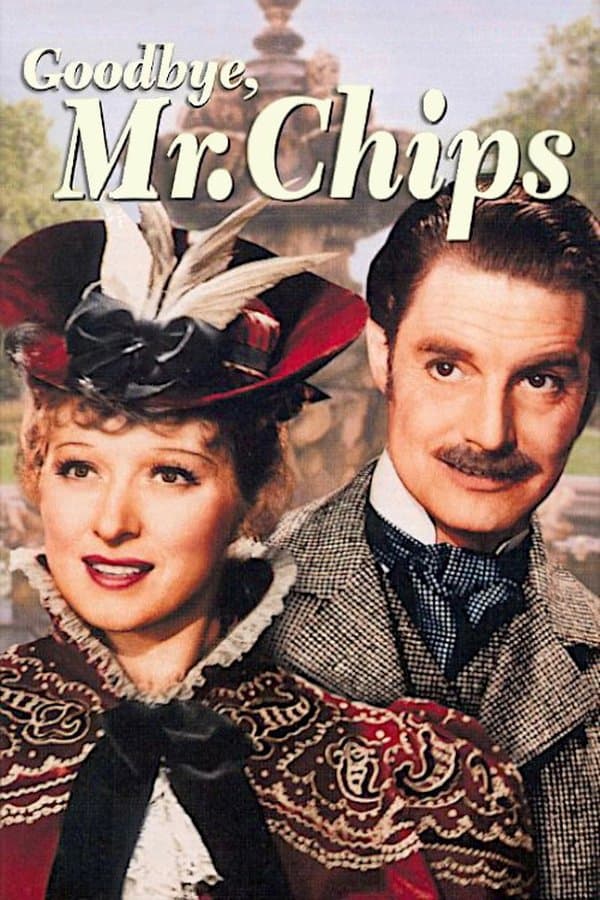
Goodbye, Mr. Chips
1939 • Drama, Romance • NR
Throughout the late 19th-century and early 20th-century, Mr Arthur Chipping rises from a shy, nervous teacher to the beloved, revered headmaster of Brookfield School, with his life and career shaped by his love for his wife and his unwavering dedication to his students.
Runtime: 1h 54m
Buy related books from Amazon
As an Amazon Associate I earn from qualifying purchases. Read the full disclosure.
Why you should read the novel
Before you watch the celebrated 1939 film, experience James Hilton’s original Goodbye, Mr. Chips. This compact 1934 novella delivers the authentic voice, wit, and tenderness that shaped the beloved schoolmaster’s legacy.
Hilton’s prose offers a richer, subtler portrait than any screen can capture—quiet humor, understated emotion, and piercing social observation about English public school life. The book’s rhythm of memories, staff-room banter, and classroom asides builds a humane world that rewards careful reading.
Short, affordable, and widely available, the Goodbye, Mr. Chips book is perfect for a weekend read or a book club discussion. Read the source material first to savor Hilton’s intent, then compare the movie adaptation with fresh insight.
Adaptation differences
Katherine Bridges is far more politically outspoken in James Hilton’s book—sympathetic to progressive causes and quick to challenge Brookfield’s conservatism. The 1939 movie softens that edge, emphasizing romance and warmth over her sharper social critiques, which subtly changes how and why Chips evolves.
The courtship itself changes location and emphasis. In the book, Chips meets Katherine during a holiday in the English Lake District, while the film relocates their meet‑cute to the Austrian Alps and expands it into a sweeping, picturesque romance, giving her much more screen time and shaping the movie’s emotional core.
Structure and tone differ, too. The novella is an episodic series of recollections—vignettes and staff-room snapshots told with dry irony—whereas the film smooths events into a more continuous, sentimental life story with set‑piece scenes, montage, and a lush score that heightens nostalgia.
Wartime and school politics are streamlined on screen. The film dramatizes assemblies, roll calls, and heroism, compressing characters and simplifying threads like anti‑German sentiment and the fate of colleagues such as the German master Max Staefel. The book treats these themes with greater nuance, preserving Hilton’s quieter critique of class and national prejudice.
Goodbye, Mr. Chips inspired from
Goodbye, Mr. Chips
by James Hilton