Great Expectations
1946 • Drama, Romance • NR
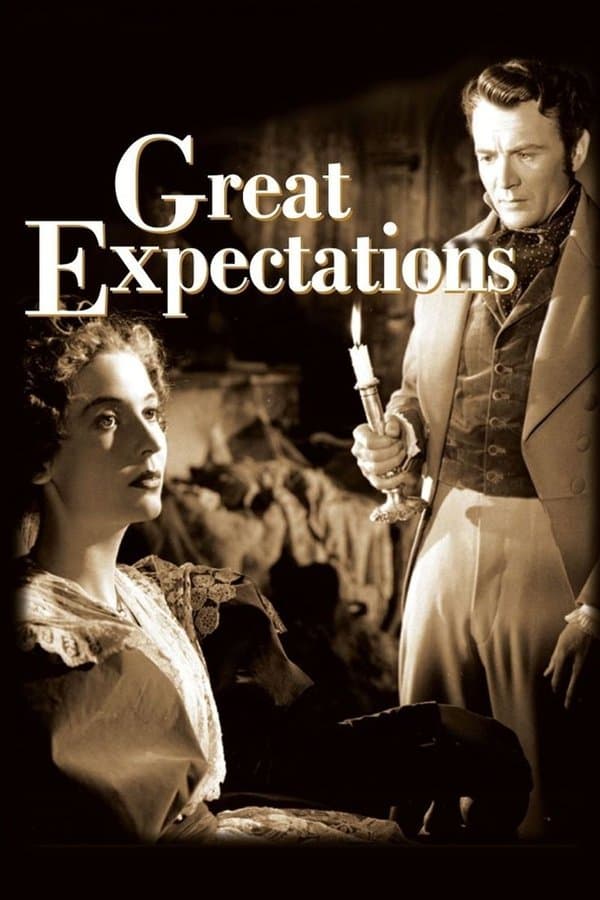
In this Dickens adaptation, orphan Pip discovers through lawyer Mr. Jaggers that a mysterious benefactor wishes to ensure that he becomes a gentleman. Reunited with his childhood patron, Miss Havisham, and his first love, the beautiful but emotionally cold Estella, he discovers that the elderly spinster has gone mad from having been left at the altar as a young woman, and has made her charge into a warped, unfeeling heartbreaker.
Runtime: 1h 58m
Buy related books from Amazon
As an Amazon Associate I earn from qualifying purchases. Read the full disclosure.
Why you should read the novel
Before watching the 1946 film, experience Great Expectations as Charles Dickens wrote it. The novel delivers richer character growth for Pip, Estella, Miss Havisham, and Magwitch, along with immersive Victorian detail only Dickens’s prose can provide. Readers discover a layered coming-of-age story that the screen can only suggest.
The Great Expectations book offers Dickens’s unforgettable first-person narration, sharp social satire, and humane wit. You’ll find themes of class, ambition, guilt, and redemption explored with nuance, plus side characters and subplots that deepen the world far beyond what a two-hour adaptation can cover.
If you love classic literature, reading Great Expectations is the best way to appreciate Dickens’s language, humor, and dramatic suspense. Choose a well-annotated edition, ebook, or audiobook and enjoy the complete Great Expectations novel—ideal for book clubs, students, and anyone seeking the definitive version of this timeless story.
Adaptation differences
Narrative perspective is the biggest shift between the Great Expectations 1946 film and the book. Dickens’s novel unfolds through Pip’s retrospective first-person voice, rich with confession, irony, and moral insight. David Lean’s adaptation necessarily externalizes this interior journey, favoring visual storytelling over Pip’s intimate self-critique and the novel’s extended psychological nuance.
The film streamlines plot and compresses time. Many secondary characters and comic-satiric subplots—such as Wemmick’s home life, Orlick’s menace, and Wopsle’s theater detour—are reduced or omitted, and London society episodes are tightened. This keeps the movie brisk and focused but sacrifices the breadth of Dickens’s social tapestry and the incremental texture of Pip’s education and expenses.
Tone and thematic emphasis also shift. Dickens balances Gothic atmosphere with pointed social criticism of class, patronage, and the legal system; the 1946 adaptation heightens the Gothic romance and visual spectacle (the marshes, the decaying Satis House) while downplaying some satire and moral ambiguity. As a result, Pip and Estella’s relationship feels more central and overtly romantic on screen than in the novel’s cooler, more critical treatment.
The ending differs significantly. Dickens published an original ending that was quite bleak and a revised ending that remained open to interpretation. The 1946 film chooses a more decisively uplifting reunion for Pip and Estella inside Satis House, providing clear closure. This cinematic choice contrasts with the novel’s ambiguity and alters the story’s final note about growth, regret, and possibility.
Great Expectations inspired from
Great Expectations
by Charles Dickens