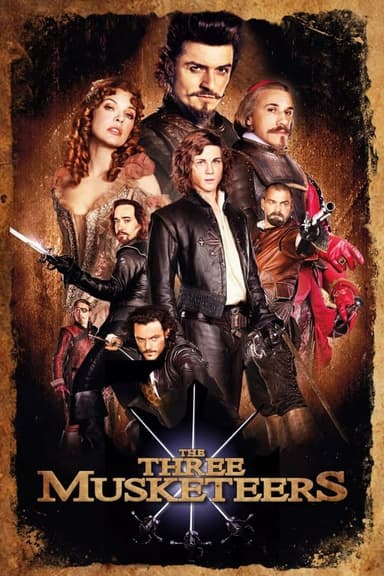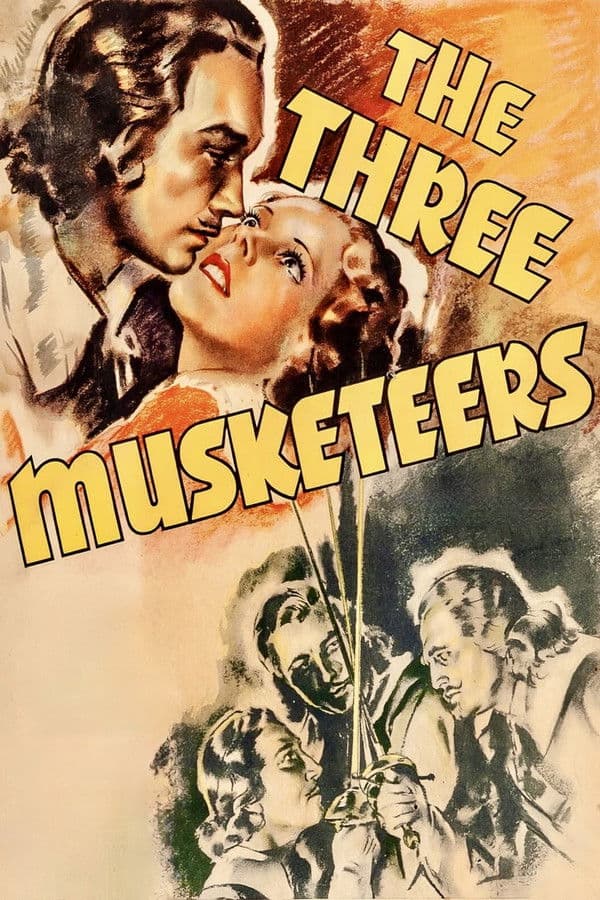
The Three Musketeers
1935 • Action, Adventure, History • NR
In 17th century France, young d'Artagnan wants to join the King's Musketeers, but instead befriends three legendary musketeers — Athos, Porthos, and Aramis — and together, they become embroiled in the political intrigue surrounding King Louis XIII and his adversaries, particularly the powerful Cardinal Richelieu.
Runtime: 1h 36m
Buy related books from Amazon
As an Amazon Associate I earn from qualifying purchases. Read the full disclosure.
Why you should read the novel
Before pressing play on the 1935 film, experience the original source that made swashbuckling famous: The Three Musketeers by Alexandre Dumas. The novel delivers exuberant adventure, courtly intrigue, and razor-sharp wit with a depth and scope no screen version can fully match.
Reading the book reveals richly drawn characters—d’Artagnan’s hot-blooded rise, Athos’s haunted nobility, Porthos’s flamboyant vanity, Aramis’s pious ambitions, and the brilliant, dangerous Milady de Winter—set against real historical tension. You’ll follow every daring ride, coded message, clandestine meeting, and political gamble that the movie can only suggest.
If you’re searching for “The Three Musketeers book vs movie,” the novel is the definitive adventure. It offers layered motivations, moral ambiguity, and unforgettable set pieces—from Paris streets to court chambers—crafted with Dumas’s irresistible momentum. Read the classic to savor the complete story the film only samples.
Adaptation differences
Scope and pacing are streamlined in the 1935 adaptation. The film condenses the novel’s bustling Parisian world, trims d’Artagnan’s early misadventures, and simplifies the musketeers’ day-to-day camaraderie and codes of honor. Much of the political chess surrounding the diamond studs plot is compressed to keep the action swift and focused on spectacle.
Character roles are adjusted for clarity and Production Code limits. Constance, who in the book is the landlord’s wife and a modest, resourceful go-between, is typically elevated on screen to a lady-in-waiting or royal confidante, changing her social position and agency. Cardinal Richelieu becomes a more straightforward villain, while the novel paints him as a subtle statesman with complex aims.
The darker currents of Dumas’s story are softened. Milady de Winter’s morally intricate backstory, branded past, and the novel’s stark justice are truncated or sanitized, and the assassination and siege elements are minimized or handled offscreen. The result shifts the tale from a morally gray political thriller to a cleaner swashbuckling romp suitable for 1930s Hollywood sensibilities.
Key character arcs flatten for time. Athos’s tragic history and its intimate link to Milady, Aramis’s genuine pull between theology and sword, and Porthos’s comic vanity tinged with pride receive lighter, broader strokes. The film favors breezy humor and continuous swordplay, whereas the book balances exhilarating action with slow-burn intrigue, romantic peril, and the sobering consequences of loyalty and ambition.
The Three Musketeers inspired from
The Three Musketeers
by Alexandre Dumas