Lady in the Lake
1946 • Crime, Mystery, Thriller • NR
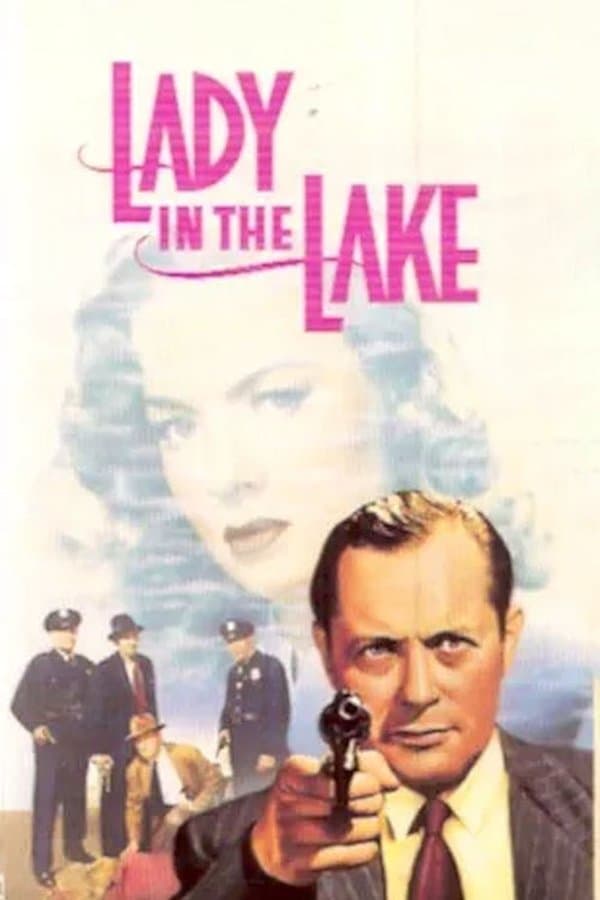
Private eye Phillip Marlowe wants to get out of the detective racket and into crime writing. But when he's called to the office of editor Adrienne Fromsett, it's not to talk about his story ideas — she wants him to locate the missing wife of her boss, Mr. Kingsby. The assignment quickly becomes complicated when bodies start turning up.
Runtime: 1h 45m
Buy related books from Amazon
As an Amazon Associate I earn from qualifying purchases. Read the full disclosure.
Why you should read the novel
Before you watch the movie, discover Raymond Chandler’s The Lady in the Lake, the classic Philip Marlowe novel whose sharp wit, atmospheric prose, and twisty plotting defined hardboiled detective fiction. The book’s immersive first-person narration pulls you straight into Marlowe’s mind in a way no screen can match.
Reading the Lady in the Lake book lets you savor Chandler’s celebrated similes, razor-edged dialogue, and the layered clues that build real suspense. You’ll explore the mountain resort, the shadowy city streets, and the morally gray corners of Southern California with the detail and nuance only the novel provides.
If you love crime noir, start with the source. The Lady in the Lake novel delivers richer character backstories, darker tension, and a more intricate mystery than the film. Experience Philip Marlowe as Chandler intended—page by page, clue by clue.
Adaptation differences
The most striking difference is perspective. The film uses a bold first-person camera to mimic Philip Marlowe’s point of view, while the novel delivers Marlowe’s voice directly through Chandler’s narration—full of sardonic humor, vivid similes, and inner analysis the camera can’t convey.
The movie reframes the setup with a magazine-publishing milieu and a Christmastime backdrop, streamlining how Marlowe takes the case. In the book, he’s hired more straightforwardly and moves between the city, a corrupt coastal town, and a mountain resort, with fuller emphasis on geography and atmosphere.
Characters are consolidated and rebalanced on screen. Adrienne Fromsett is elevated into a prominent, romantic co-lead, while several supporting figures are merged, renamed, or omitted. Production Code constraints also soften the story’s violence, sexuality, and police brutality that the novel treats more openly and darkly.
Plotting is tighter in the film, with fewer detours and a cleaner, more upbeat resolution. The book’s mystery is knottier, with additional bodies, red herrings, and morally ambiguous turns that deepen the stakes. Readers will find motives, methods, and revelations that unfold with greater complexity on the page.
Lady in the Lake inspired from
The Lady in the Lake
by Raymond Chandler