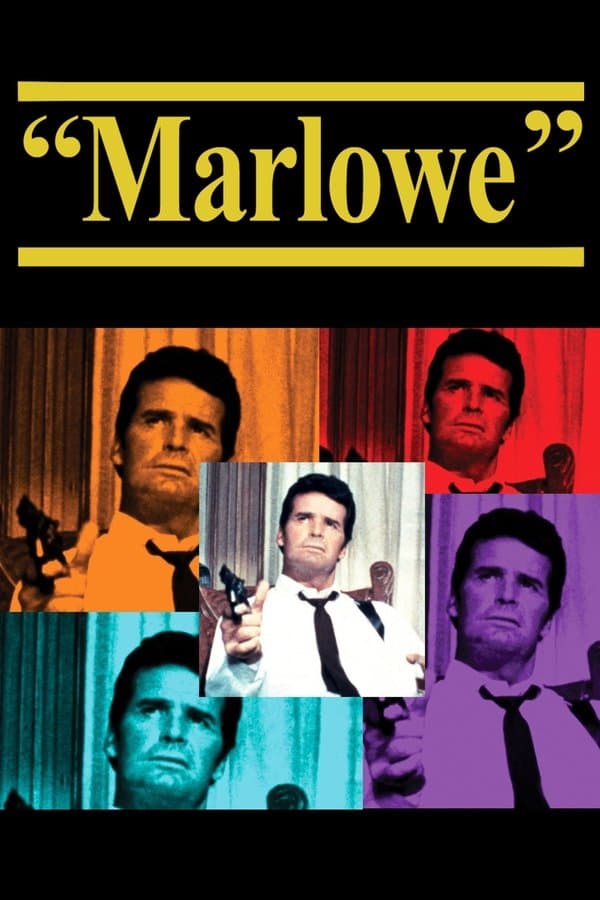
Marlowe
1969 • Crime, Drama, Mystery • PG
Mysterious Orfamay Quest hires Los Angeles private investigator Philip Marlowe to find her missing brother. Though the job seems simple enough, it leads Marlowe into the underbelly of the city, turning up leads who are murdered with ice picks, exotic dancers, blackmailed television stars, and self-preserving gangsters. Soon, Marlowe's life is on the line right along with his case.
Runtime: 1h 36m
Buy related books from Amazon
As an Amazon Associate I earn from qualifying purchases. Read the full disclosure.
Why you should read the novel
Skip the surface gloss of Marlowe (1969) and experience Raymond Chandler’s The Little Sister, the original Philip Marlowe mystery. The novel delivers razor-sharp wit, atmospheric Los Angeles noir, and a richer, darker puzzle.
Chandler’s prose makes every clue, alley, and interrogation crackle. The Little Sister offers layered motives, moral ambiguity, and character depth that a two-hour film can’t fully capture—essential reading for fans of hardboiled detective fiction.
If you love Philip Marlowe, read the book instead of watching the movie. The Little Sister is a cornerstone of Los Angeles noir and a definitive entry in Chandler’s canon that rewards close, immersive reading.
Adaptation differences
Setting and era shift: the film updates the story to contemporary 1969 Los Angeles, trading postwar shadows for sunlit boulevards, neon, and go-go clubs. This cultural refresh changes the case’s texture and how power and celebrity feel on-screen versus on the page.
Tone and detective persona: James Garner’s Marlowe is breezier and more sardonic, with a lighter, humorous touch. Chandler’s novel leans bleaker and more world-weary, emphasizing Marlowe’s loneliness, moral code, and acid observations that unfold through interior narration absent from the movie.
Plot streamlining and character changes: the adaptation compresses subplots, consolidates roles, and alters names (for example, Mavis Weld becomes Mavis Wald). It introduces showy elements like a martial-arts enforcer (Winslow Wong) and trims Midwestern backstory threads and industry side characters, simplifying the blackmail web and reducing Chandler’s intricate cause-and-effect.
Climax and thematic emphasis: the film favors spectacle—stunts, scuffles, and visual set pieces—while the novel resolves with bleaker revelations and lingering consequences. Chandler’s ending prioritizes psychological fallout and the cost of corruption; the movie opts for a tidier, more kinetic wrap-up that softens the book’s moral sting.
Marlowe inspired from
The Little Sister
by Raymond Chandler